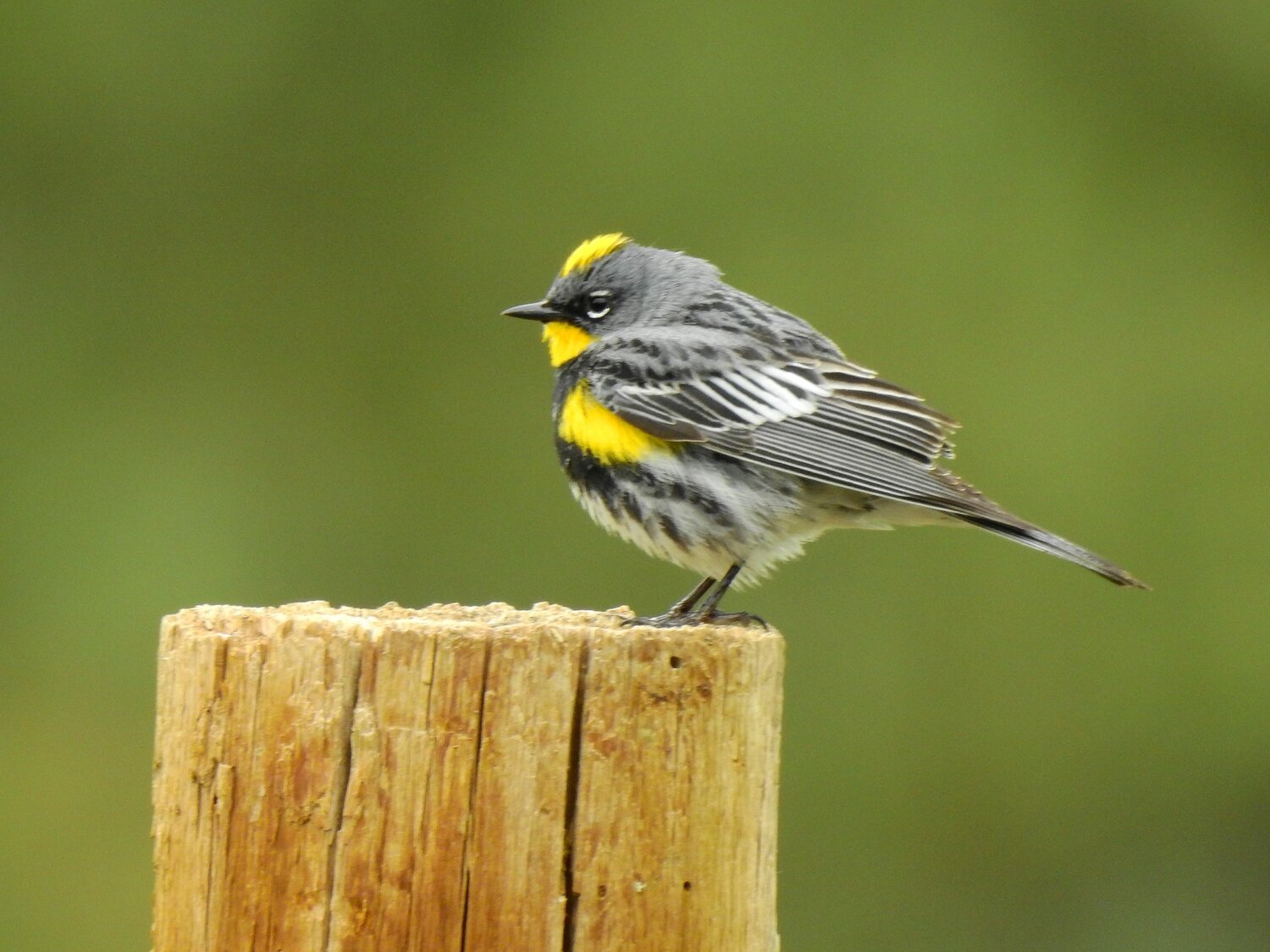
This week’s Bird of the Week, compliments of the Weminuche Audubon Society and Audubon Rockies, is the yellow-rumped warbler.
An early-spring and late-fall migrant, of the birds with “warbler” in their names this is one of the earliest to show up and the last to leave our area. It is one of the most common warblers and the main winter warbler in North America. While most of them migrate to the tropics in fall, some remain as far north as New England and Seattle year-round.
Their ability to digest the wax coatings of bayberries and wax myrtles, unique among warblers, is an adaptation that allows these birds to find food and winter so far north. Like other warblers, they mainly eat a wide variety of insects and spiders in summer and rely on them to feed their young. Showing up in their diet are spruce budworms, a serious forest pest. In trees, where males forage higher than females, they search among leaves, twigs, branches and trunks for food. They also fly out to catch insects on the wing and will pick them from the surface of rivers and oceans, from spiderwebs and manure piles.
When insects become less abundant, they will eat berries, including those of juniper, poison ivy, poison oak and dogwood, and fruits of grapes. They will also eat wild seeds and may come to feeders for sunflower seeds and suet.
Yellow-rumped warblers have a patch of yellow feathers on the head, referenced in their Scientific name, Setophaga coronata, which translates as crowned moth-eater. The more visible yellow patch on the rump has given them the name butterbutt. In the Audubon’s group, which resides in the mountainous west, yellow patches are also found on the throat and sides of a gray body with dark and white patches. Members of the Myrtle group in the eastern U.S. and the boreal forests of Canada have a white throat. In both, winter and female colors are more subdued than those of breeding males.
In spring and summer, the song of the male yellow-rumped warbler is a common sound in conifer forests. In fall, the frequently given “chek” call made by both sexes while flitting within the trees will help to locate it, at least for the second that one stays still.
For information on events, visit www.weminucheaudubon.org and www.facebook.com/weminucheaudubon/.
Photo courtesy Charles Martinez


 >