This week’s Bird of the Week, compliments of the Weminuche Audubon Society and Audubon Rockies, is the American kestrel.
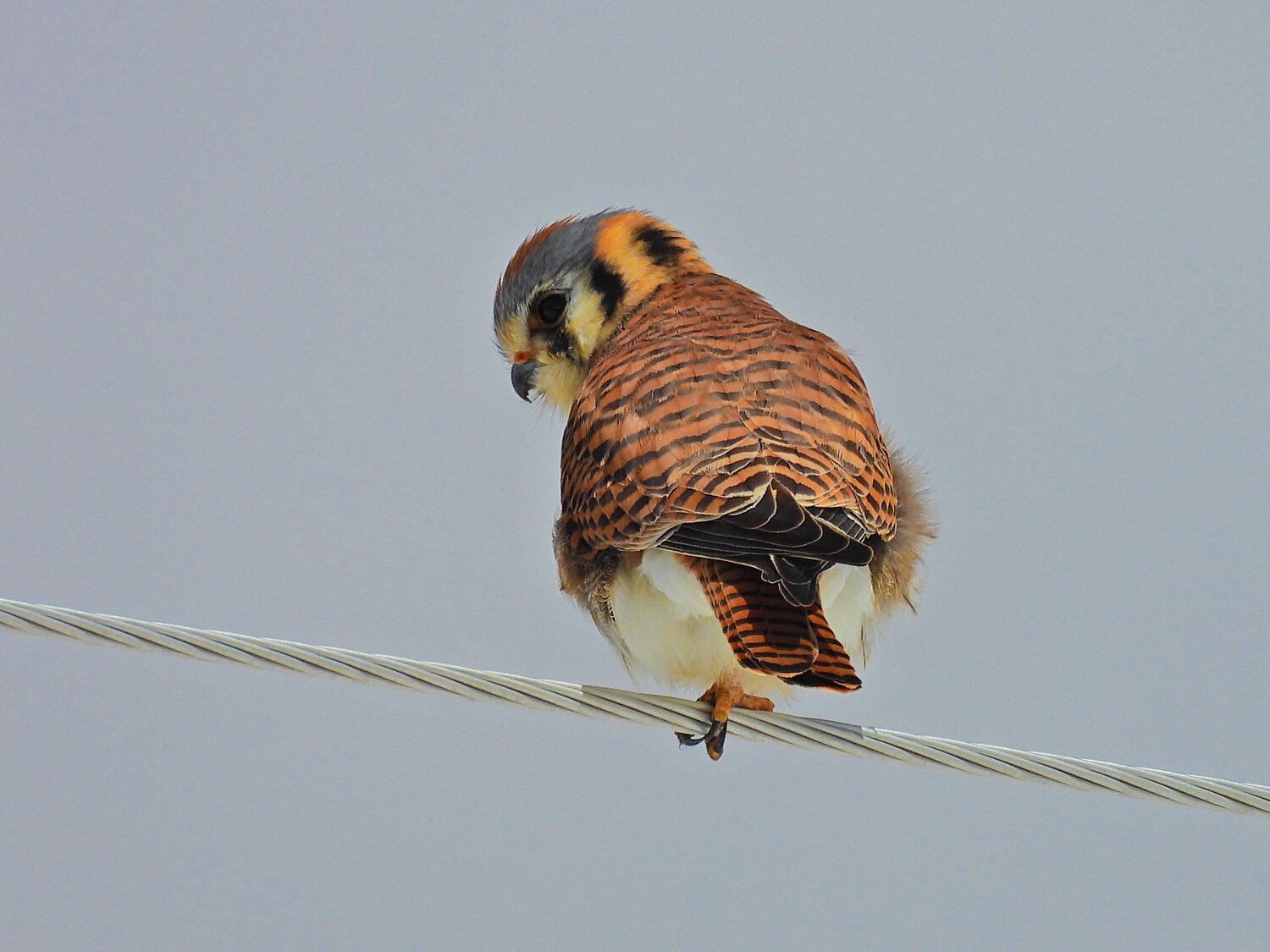
Scan the utility wires and fence posts bordering open areas and you just might find this familiar hunter perched and looking for a meal. This smallest falcon in North America occurs from the boreal forests of Canada and Alaska to the southern tip of South America. While northern breeders may head south for the winter, many are resident birds throughout this widespread range.
The kestrel is a sit-and-wait hunter equipped with extremely acute vision and is able to locate prey moving on the ground below before dropping down for the catch. Its diet includes grasshoppers and other insects, lizards, mice and small birds. An ability to see ultraviolet light reflected by the urine trails of rodents provides the kestrel a glowing path to this prey.
When a perch is not readily available, the kestrel can take advantage of wind currents to hover-hunt a short distance above the ground. Especially in fall and winter, surplus food items may be cached for later consumption.
Like other members of the Falco genus of birds, kestrels have dark eyes, a notched beak and unfeathered legs. The American kestrel is one of the most colorful raptors, but only about the size of a dove. It characteristically pumps its tail while perched. The northern male’s rusty-colored back is set off by slate-blue wings and head, and dark spotting on the underside. Larger females are rusty-colored overall with dark barring on the back and wings. Both sexes appear small-headed and have two black slashes on the face.
Although the American kestrel is still common, its population has experienced troubling and unexplained steep declines, especially in the northeast. Reasons are thought to be a complex combination of many factors, including climate change-related loss of insects and other prey, habitat conversion, pesticide use, predation by Cooper’s hawks, and loss of nesting cavities.
In 2012, The Peregrine Fund started the American Kestrel Partnership to promote the installation of nest boxes designed for these birds and to form a partnership between scientists and community members to collect observations that advance the understanding of breeding activity. Information on their efforts can be found on peregrinefund.org.
For information on events, visit www.weminucheaudubon.org and www.facebook.com/weminucheaudubon/.


 >
>