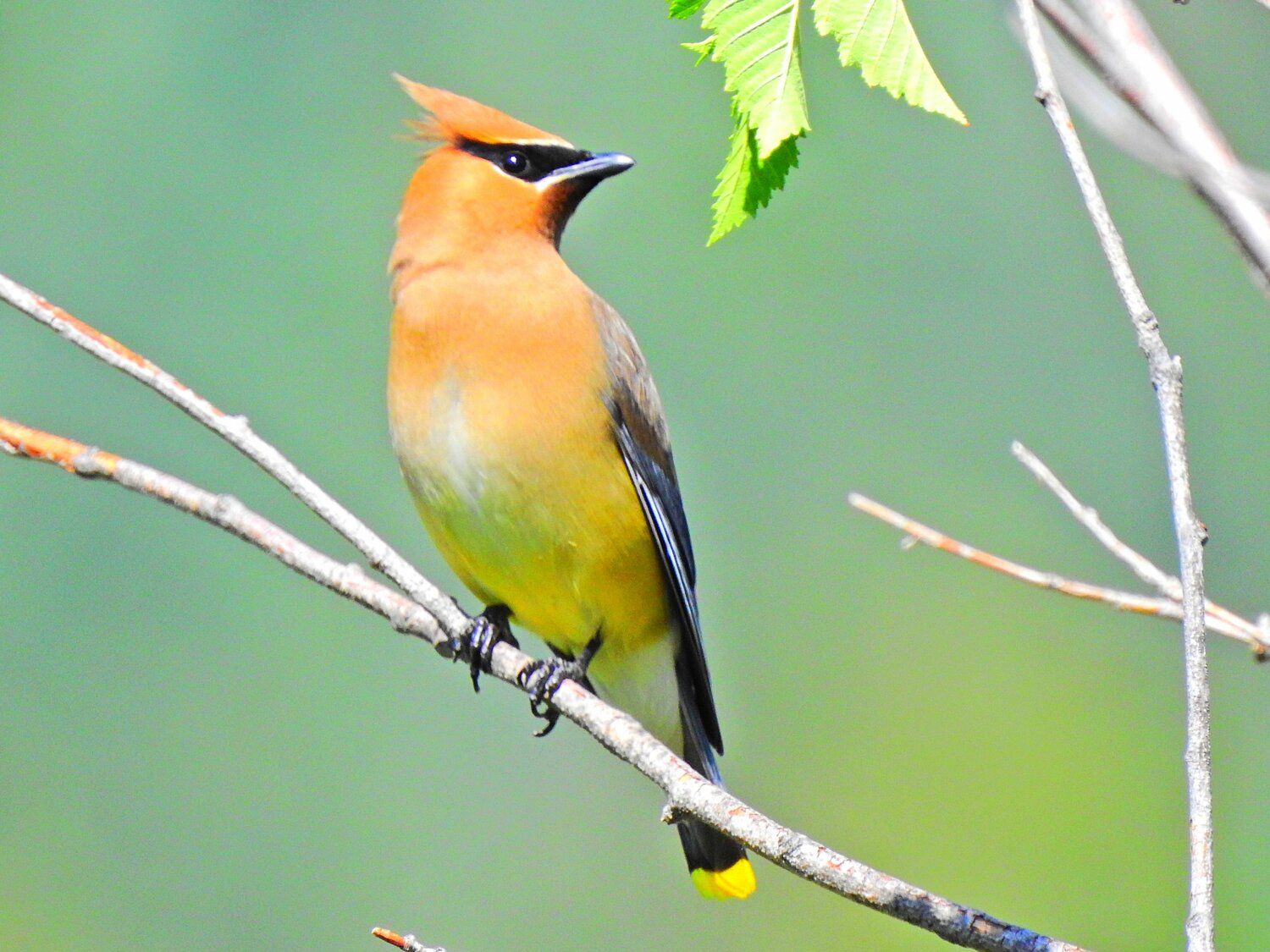
This week’s Bird of the Week, compliments of the Weminuche Audubon Society and Audubon Rockies, is the cedar waxwing.
This bird is one of the few in North America that specializes in eating fruit and that can survive on fruits alone for months at a time. Waxwings pluck small fruits one at a time and swallow them whole, acting as agents of seed dispersal when they fly off and eliminate the seed in a different location.
Native trees and shrubs like dogwood, serviceberry, juniper, cedar, mountain ash and hawthorn are all food sources. The popularity of using berry trees in landscaping has attracted these birds to towns and contributed to population gains.
Cedar waxwings delight us with their beauty and behaviors. They are painted in a palette of silky, shiny hues of brown, gray and lemon-yellow and have a yellow-tipped tail. A black facial mask and cinnamon crest give them a rakish look. Their red wingtips with the appearance of sealing wax are the source of their name.
Highly social birds, it is rare to see just one. Their high-pitched, insect-like calls announce their presence, often before they are seen. A group of waxwings may perch in a line on a branch and pass a berry back and forth until one bird swallows it. They have been known to become intoxicated after eating overripe berries in winter that have fermented to alcohol.
Performing a courtship ballet, a male and female hop toward each other, sometimes touching bills. The male passes a small food item to the female, who takes it and hops away, returning shortly to give it back. This dance is repeated a few times and ends when the female eats the gift. Like goldfinches, cedar waxwings delay breeding to match the availability of their plant food sources, in their case summer fruits.
Within their range, cedar waxwing flocks are nomadic, wandering irregularly in response to their food supply. Look for them now particularly in places near water with berry-producing trees and shrubs like our Riverwalk area.
For information on events, visit www.weminucheaudubon.org and www.facebook.com/weminucheaudubon/.


 >
>