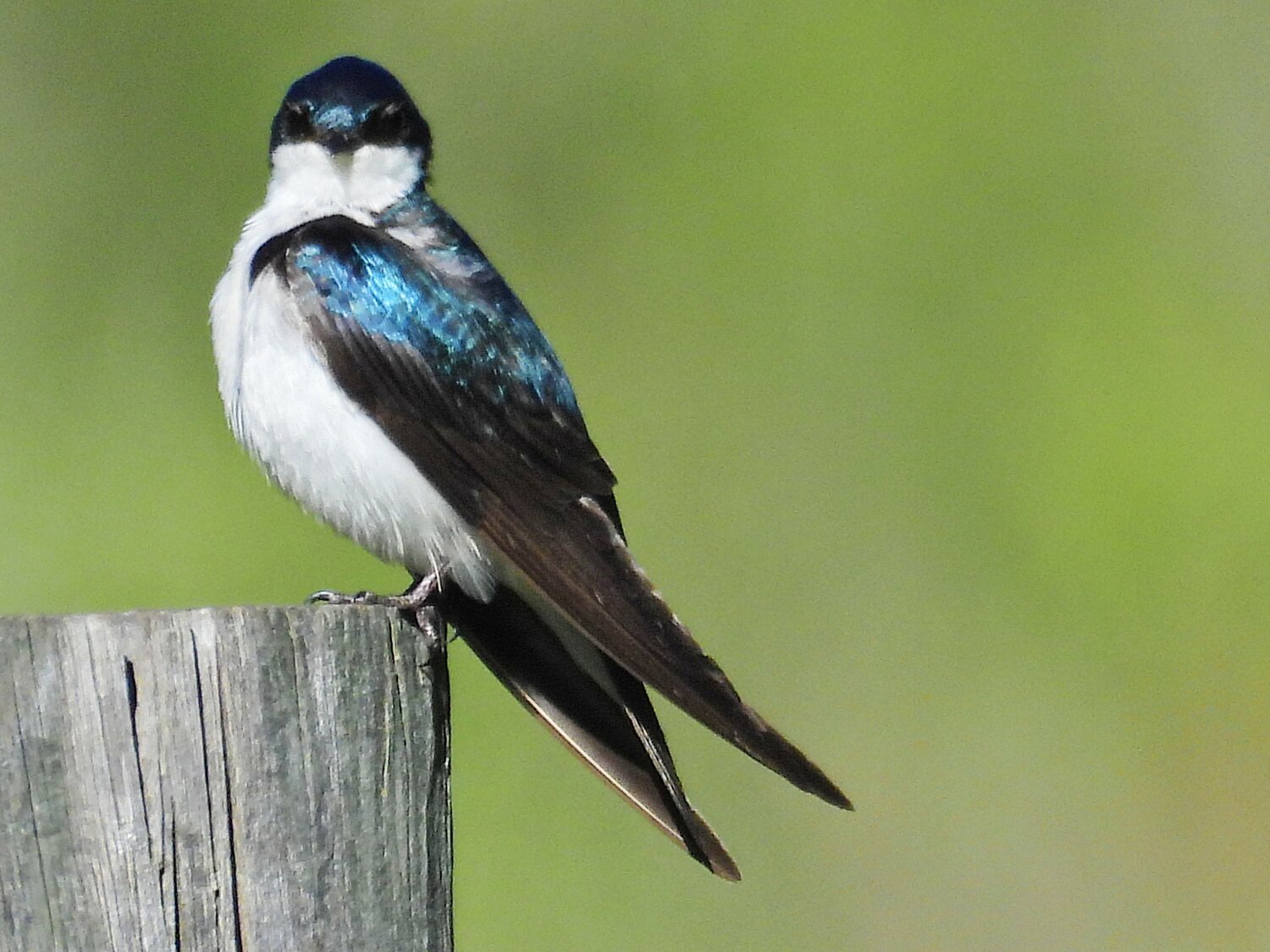
This week’s Bird of the Week, compliments of the Weminuche Audubon Society and Audubon Rockies, is the tree swallow.
From late spring through early fall, this pretty bird is a familiar sight gliding over fields and wetlands of northern North America. It winters farther north and arrives at breeding grounds in parts of northern and mountainous states, and across Canada into Alaska, earlier than other swallows.
Although tree swallows primarily eat flying insects, ranging in size from the minuscule to those up to 2 inches long, they are also able to supplement their diet with plant foods when insects are scarce. Their ability to eat berries allows them to survive late spring storms when strict insect eaters might starve. During the breeding season when egg production robs them of calcium, they obtain it by eating eggshells, invertebrate exoskeletons, clamshells and fish bones.
The tree swallow’s anatomy is designed for acrobatic flight. Like other swallows, this one has long wings, short legs, a short bill and feet adapted for perching. Adults are colored metallic blue above with clean white undersides. The blue color of the head extends to a thin black mask over the eyes. Young females can be more brownish, but attain the full blue plumage of males by the third year.
Tree swallows are named for their use of tree cavities for nesting. They have benefited from the popularity of bluebird nest boxes, which suit them just fine and where they often can be found perching. They are highly social birds, with pairs often nesting close to each other.
Feathers of other birds, which are used to line their nests, also play a role in social interactions between these birds. Studies have shown a preference for white feathers and a tree swallow carrying one in its beak is often chased. These chases that involve dropping the feather and retrieving it have the appearance of play.
Although the tree swallow is among the best-studied bird species in North America, there is still much to learn about its life during migration and during winter in the south. In all areas where they are found they provide free natural pest control.
For information on events, visit www.weminucheaudubon.org and www.facebook.com/weminucheaudubon/.


 >
>