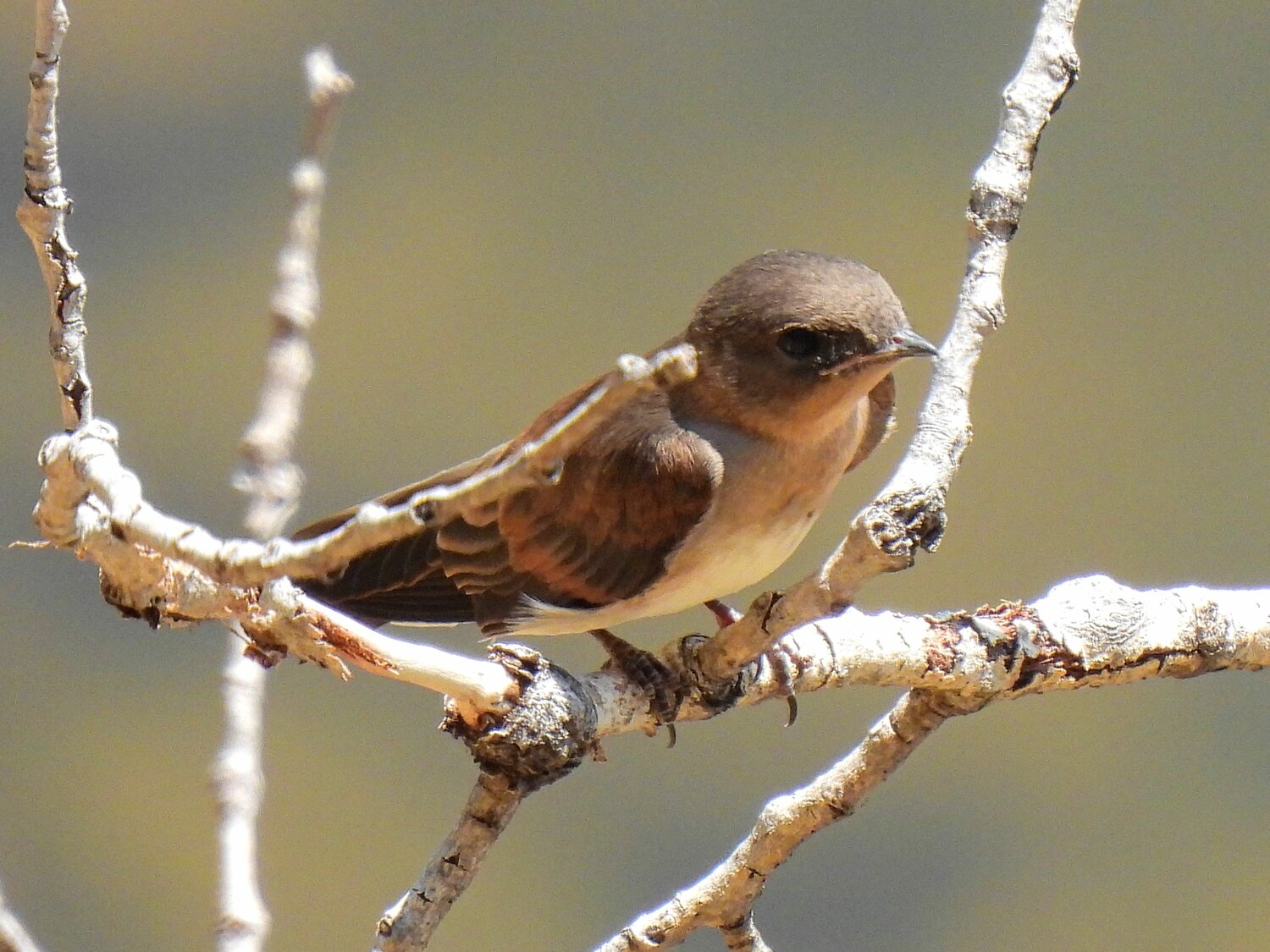
This week’s Bird of the Week, compliments of the Weminuche Audubon Society and Audubon Rockies, is the northern rough-winged swallow.
Swallows can fly for hours, swooping and gliding with pointed wings, sometimes high in the air, sometimes close to the ground, picking insects from the air. Birds of the rough-winged species typically fly lower and with slower wingbeats than other swallows. They are often found over water, dipping to snatch insects on the surface and in the air.
During summer, this small bird with a long name is common in open areas throughout the United States and southern Canada. Winter finds them in Mexico and Central America. The southern rough-winged swallow, recognized as a separate species, ranges from Panama south to Argentina. Both this swallow’s common and scientific names refer to the small hooks and points on their outer wing edges that give them a file-like feel. The advantage that this adaptation confers to these swallows is not apparent.
If you could perch our swallow species side by side, the differences in appearance would be apparent. Instead, we often watch them zipping by or high on a wire and a glimpse of the undersides is all we see. The northern rough-winged swallow is brown above and whitish below. The dingy wash on its chest and throat distinguish it from the also-brown bank swallow that has a gleaming white throat and dark breast band.
Swallow species that breed here employ different nesting strategies. Barn and cliff swallows gather mud and attach their outer nest structures to a vertical wall. Tree and violet-green swallows are cavity nesters. Both of the brown-colored swallows, bank and rough-winged, nest in holes in vertical dirt banks, often not far from water. The tunnels where rough-winged swallows build a nest may have been built by kingfishers, squirrels or other animals. They have also learned to use man-made cavities, including drain pipes, culverts and holes in buildings.
Not long after their young have left the nest and are independent, northern rough-winged swallows depart for the south. By mid-September, most have left western states. We can help these birds by eliminating our use of pesticides, which kill the food they depend on.
For information on events, visit www.weminucheaudubon.org and www.facebook.com/weminucheaudubon/.


 >
>