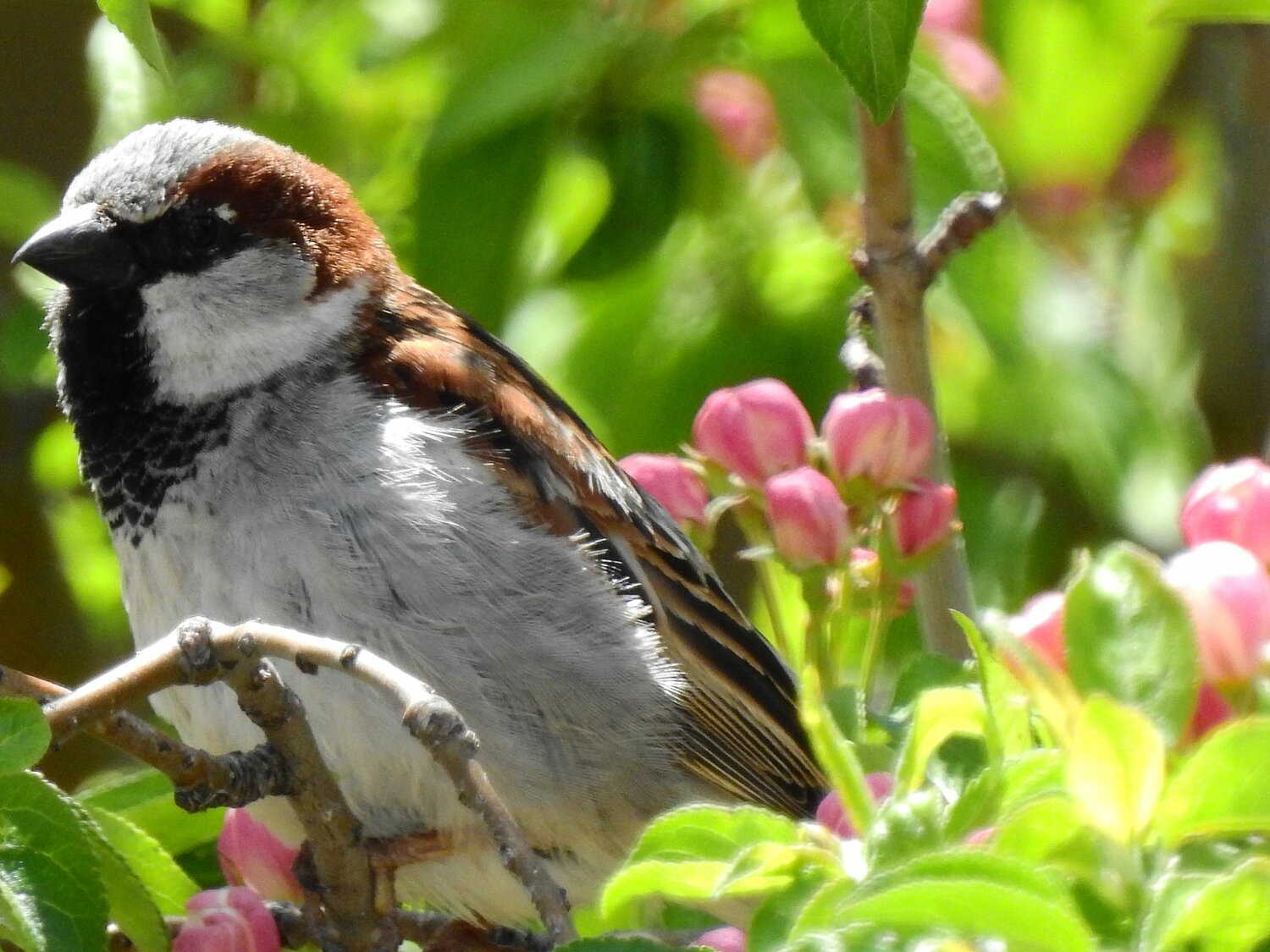
This week’s Bird of the Week, compliments of the Weminuche Audubon Society and Audubon Rockies, is the house sparrow.
During the Pagosa Christmas Bird Count in December 2024, of the more than 6,000 birds and 79 species counted, the combined total of only four species accounted for more than one-third of the total birds tallied. It is no surprise that Canada geese took the No. 1 spot, followed by American crows. American robins ranking at No. 4 is indicative of our unusual winter. Coming in at No. 3 was this week’s bird, the house sparrow.
These small birds, described as being tough, adaptable and aggressive, are found in most places where there are buildings and few where there aren’t. They are the sparrows that hop across the parking lot when you stop to buy groceries and show up under your feet when you eat your lunch at an outdoor restaurant.
To the dismay of some people who put up nest boxes, instead of tree cavities, house sparrows prefer man-made structures for nesting and will evict other birds from them.
House sparrows are chunkier and have more rounded heads and shorter tails than most of our native sparrows. Males have a chestnut-colored head with a gray crown, whitish cheeks and a black bib on the throat and chest. Plainer females have a light eyebrow and backs striped with brown, buff and black.
These plucky social birds feed in large flocks on grains and seeds, keeping in contact with their incessant cheeps. They will scour the ground under bird feeders and around livestock. In summer they eat insects and feed them to their young, recognizing the grills on vehicles as a great place to find smashed food.
House sparrows are not native to North America. From a small number imported to New York in the mid 1800s, in part as a way to control agricultural pests, by 1900 house sparrow populations had spread west to the Rocky Mountains. Today although their numbers are declining, they are common resident birds across all parts of North America except Alaska and far northern Canada.
You can be a part of a global winter bird census, the Great Backyard Bird Count, between Feb. 14 and 17. Find out how to participate at birdcount.org.
For information on events, visit www.weminucheaudubon.org and www.facebook.com/weminucheaudubon/.


 >
>