This week’s Bird of the Week, compliments of the Weminuche Audubon Society and Audubon Rockies, is the ring-necked duck.
In the time of American western exploration during the 1800s, it was common practice to name bird species for the place where they were collected or to honor a person.
Some of those species are named for people associated with the racism and violence of that period. In an effort to make the appreciation of birds more inclusive, a decision has been made to change the names of all birds which are named for people.
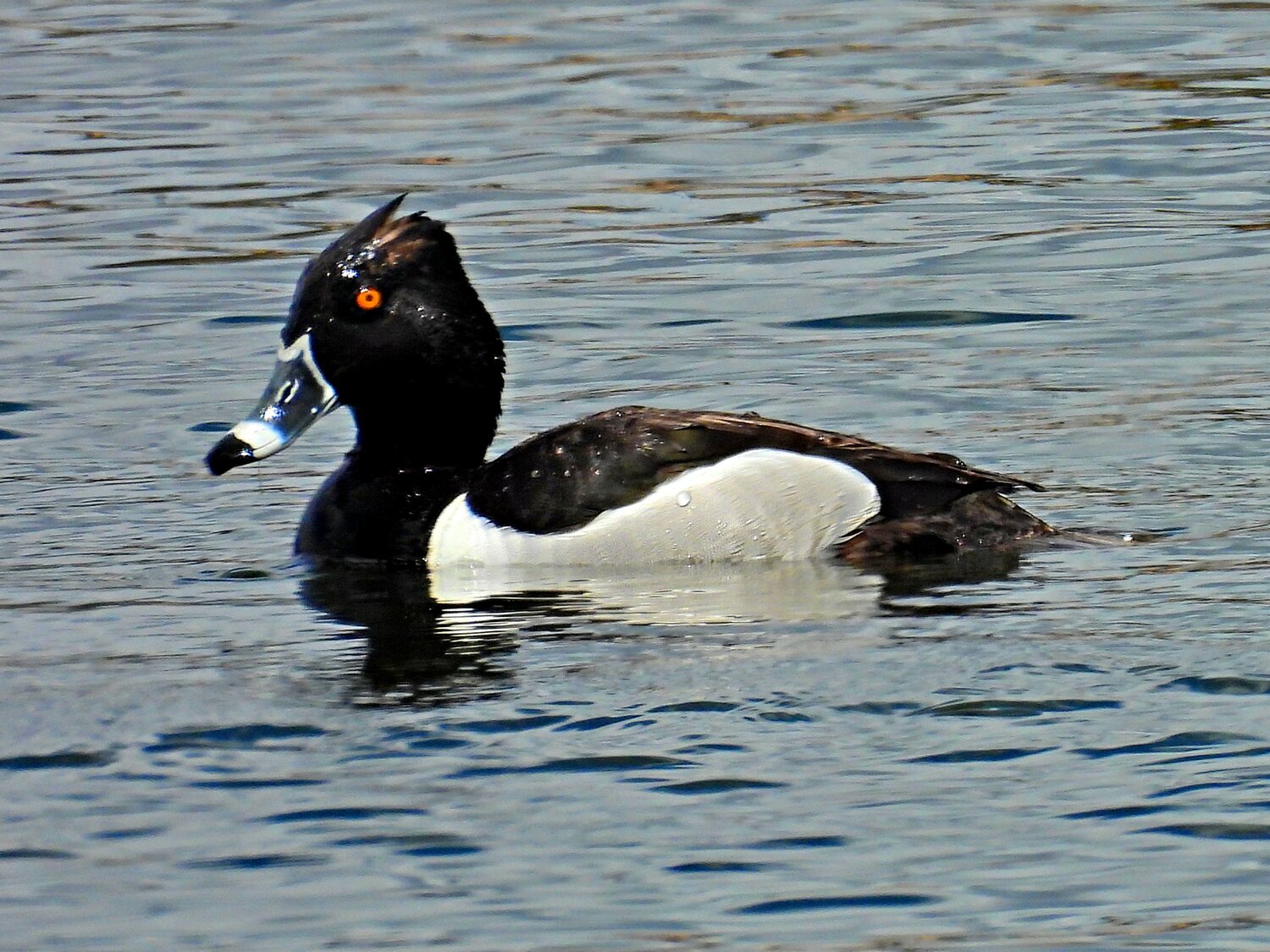
Even those bird names that relate to physical characteristics are often not very helpful in identifying the bird. Such is the case with the ring-necked duck, whose cinnamon-colored neck ring is rarely visible. Both males and females have a visible white ring just behind the black tip on the gray bill, making the name ring-billed duck seem a better choice.
Males are colored glossy black on the head, front, rear and back. The clean white patch on their sides is whale-shaped. The female is brownish with a gray face and white strip behind the bill. She sports a prominent white eye ring. In both sexes the head has a peaked shape.
Although the ring-necked is classified as a diving duck, they are frequently found in small, shallow wetlands with water 4 feet or less deep. They may even move into flooded fields to feed. On ponds and lakes they dive with a leap forward into the water and propel themselves underwater using only their feet.
These ducks feed primarily on the leaves, stems, seeds and tubers of submerged plants. These include pondweed, water lilies, wild celery, wild rice and others. Especially during the breeding season, mollusks, snails and insect larvae are added to their diet. During fall migration, flocks of several thousand can stop to feed on wild rice in Minnesota lakes.
Even though the use of lead shot for waterfowl hunting has been banned since the 1990s, ring-necked ducks are still vulnerable to lead poisoning from the ingestion of shot that has accumulated on wetland bottoms.
For information on events, visit www.weminucheaudubon.org and www.facebook.com/weminucheaudubon/.


 >
>