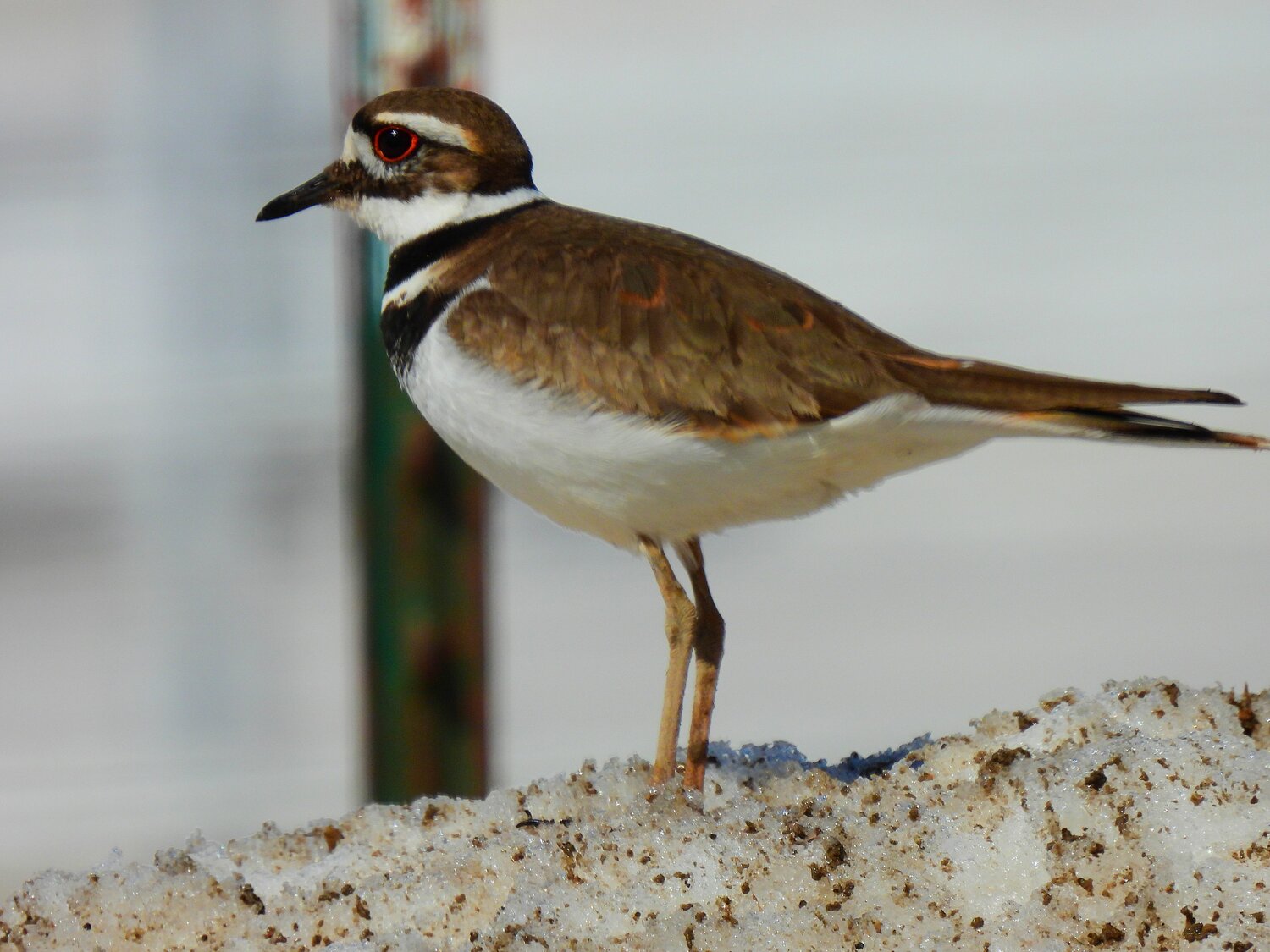
This week’s Bird of the Week, compliments of the Weminuche Audubon Society and Audubon Rockies, is the killdeer.
Across much of North America, this bird is a common sight during some or all of the year. Extending south from about the middle latitude of the United States and along the Pacific coast, it is a year-round resident. Some travel to the northern U.S. and Canada to nest in the summer, leapfrogging over the year-round areas and traveling to Mexico and Central America for the winter.
Killdeer are classified as shorebirds, but are often found living far from water. Preferring vegetation less than 1 inch tall, they are common to lawns, golf courses, athletic fields and even parking lots. At least part of their success as shorebirds stems from adapting to human-modified habitats and being willing to nest around people.
This robin-sized bird is brown above and white below. Like others in the plover family, it has a round head, large eyes and a short bill, but two black breast bands instead of one sets it apart.
Killdeer feed primarily on invertebrates, including aquatic insect larvae, but will also opportunistically hunt frogs and eat seeds in agricultural fields. Their common foraging style is to run a short spurt and then stop abruptly to look around for prey they may have stirred up. Their big voices carry the frequent kill-deer call for which they are named, often the first indication that one is around.
Deception and camouflage are tactics that this ground-nesting bird relies on to successfully raise young. A killdeer’s nest is little more than a scrape in the ground on or around rocks and gravel where its speckled eggs blend in. Sometimes the parent adds pebbles, but no lining protects the eggs. The killdeer is the master of the “broken wing display” feigning injury by dragging its wings while struggling across the ground and somehow staying one step ahead of potential danger. After leading a predator a safe distance away from the nest, the killdeer’s wings are miraculously healed and it flies away.
If you witness this display, watch your feet and stay clear of the area, where eggs or cute chicks may be hiding and are too easily stepped on.
For information on events, visit www.weminucheaudubon.org and www.facebook.com/weminucheaudubon/.


 >
>