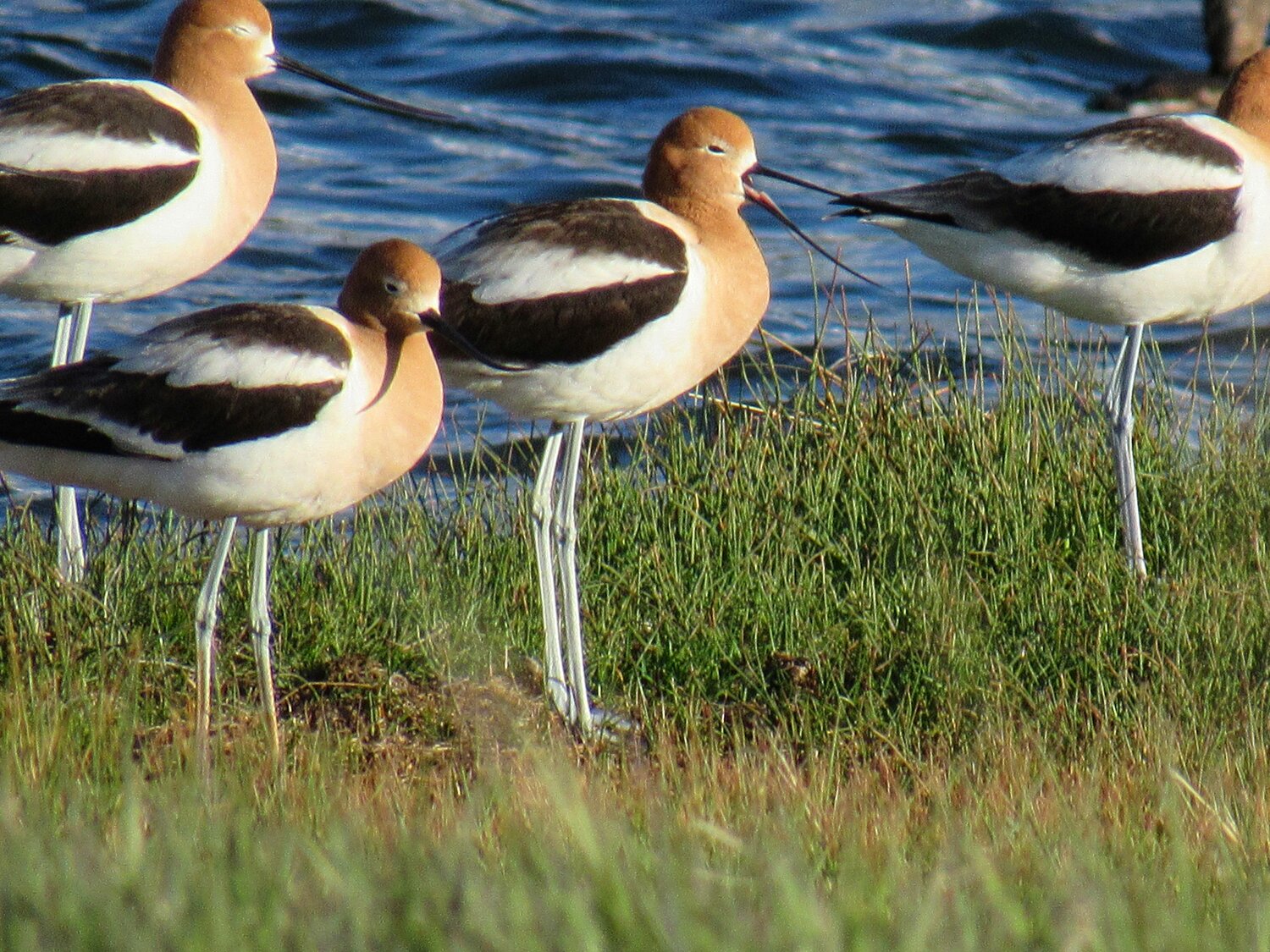
This week’s Bird of the Week, compliments of the Weminuche Audubon Society and Audubon Rockies, is the American avocet.
Avocets and stilts are elegant shorebirds grouped together in the Recurvirostridae family of birds. Both are long-legged waders with slender bills and long necks. They inhabit shallow waters, both those fresh and those extremely saline, preferring waters without fish that would compete for their food of aquatic invertebrates.
Differing feeding styles that are the result of physical differences allow stilts and avocets to occupy different niches within the same wetland habitat. With straighter bills, stilts typically pluck food items one at a time from the surface. Avocets sweep their upturned bills side to side in the water or along the surface of mud, feeding in a method known as scything. With its bill slightly open and sensitive at the tip, the avocet locates prey by touch. A female’s bill is slightly more curved than the male’s, allowing even the sexes to forage at different depths in the water column.
The name avocet is derived from the Italian word for graceful bird. The American avocet has a white body with a black patch on its back, black and white wings, and bluish legs. In spring breeding plumage, its head and neck are rusty colored, and white patches around the eyes give it a startled look. When avocets pass through on their way south in fall, these rusty colors will have turned grayish white.
In the dry parts of western and midwestern areas of the United States and southwestern Canada, American avocets nest in loose colonies in areas with little or no vegetation near wetlands. Both parents participate in building the ground nest, incubating eggs and caring for young. In these arid environments, they rely on the presence of ephemeral wetlands, many of which have significantly declined in size, suffer from selenium and methylmercury contamination, or have disappeared completely.
After breeding, American avocets may migrate as far south as Mexico or west from inland areas to winter on the coast. World Migratory Bird Day, celebrated on the second Saturday of May, strives to bring attention to the urgent need for migratory bird conservation across the globe.
For information on events, visit www.weminucheaudubon.org and www.facebook.com/weminucheaudubon/.
Photo courtesy Charles Martinez


 >
>