This week’s Bird of the Week, compliments of the Weminuche Audubon Society and Audubon Rockies, is the least sandpiper.
The most diverse group of shorebirds is the sandpiper family. Sandpipers vary in size and feeding styles but share common characteristics including long bodies, narrow wings and slender, sensitive bills. When probing in the mud or sand, nerve endings packed at the tip of a sandpiper’s bill allow it to sense hidden prey. Taste buds inside the bill tip determine if the hidden find is food to be extracted and eaten.
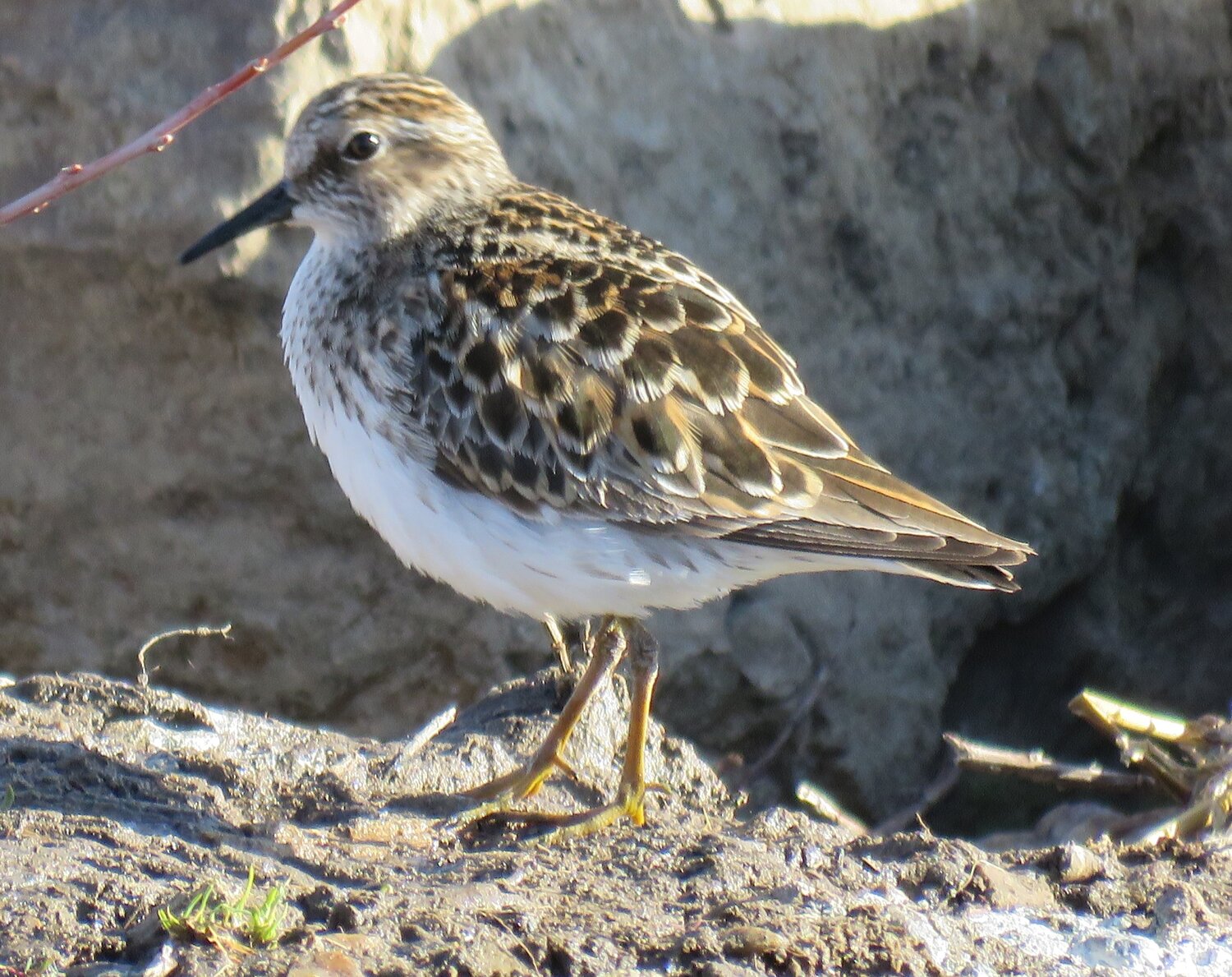
Aptly named, the least sandpiper is the smallest shorebird in the world, weighing only about 1 ounce and measuring 5 to 6 inches long. This shorebird is sparrow-sized and dwarfed by a killdeer that shares its space. In spring breeding plumage it has brown speckled upperparts and white underparts, and its dark bill is slightly decurved. Its yellowish-green legs can distinguish it from other small shorebirds that have dark legs.
Small sandpipers, lumped together as “peeps,” are notoriously difficult to identify. Good binoculars, spotting scopes and cameras with long zoom are most often a must in trying to tell one from another. Even if you can’t give them a name, you can still have fun watching them.
The least sandpiper is common on inland mudflats and wet, grassy areas. It picks up tiny food items from the ground surface or probes in the mud. On inland areas, it feeds heavily on insects and in coastal mudflats it adds crustaceans, mollusks and marine worms. It supplements its diet with seeds of marsh grasses.
This tiny shorebird migrates to the extreme northern regions of North America, where it nests on the tundra, in sedge meadows and northern bogs from Alaska east across northern Canada. Both sexes share incubation duties with the male doing most toward the end. The female may even leave before all of the eggs hatch, but the male stays at least until the young birds can fly when they are only 14-16 days old.
Winter finds these sandpipers along the coasts, in areas of southern states and through the northern half of South America. Eastern populations likely fly nonstop over the ocean at distances up to 2,500 miles to wintering grounds, an incredible feat hard to imagine such a small bird accomplishing twice yearly.
For information on events, visit www.weminucheaudubon.org and www.facebook.com/weminucheaudubon/.


 >
>