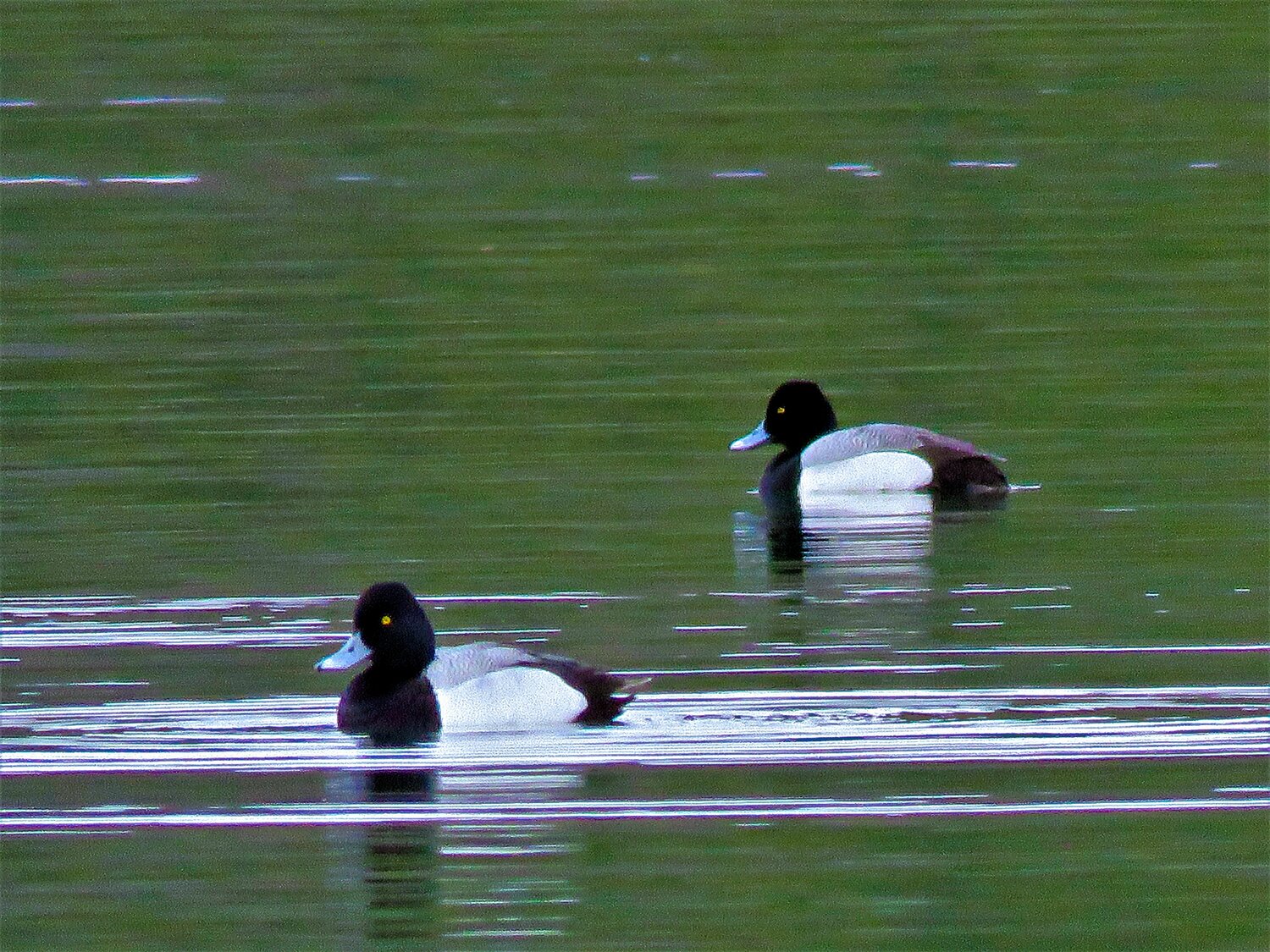
This week’s Bird of the Week, compliments of the Weminuche Audubon Society and Audubon Rockies, is the lesser scaup.
In our area, this is a relatively uncommon winter duck whose numbers increase during spring migration. Most lesser scaup spend the winter farther south than other diving ducks, with the largest numbers wintering somewhere in states bordering the Gulf of Mexico.
These ducks primarily eat aquatic invertebrates including insects, clams and snails along with some plants and seeds. They dive for their food and may stick their bills into muddy bottoms, opening and closing them to trap food while swimming forward.
Lesser scaup mainly breed in the prairie pothole region of the United States and Canada, where they nest in late May through June. They are late fall migrants that stay on their breeding grounds until late October or November when the water starts freezing over. Outside the breeding season, they are social ducks that can be found on all types of water bodies.
During their time here, these ducks have been found on the river, on wetland ponds and on large lakes like Echo Reservoir and those in Pagosa Lakes. At a distance, these male “oreo ducks” are seen as black on both ends and white in the middle. Closer views reveal fine black and white barring on the back, a bluish bill and yellow eye, and, in good light, an iridescent green or purple sheen on the head. Females are colored a rich brown and have a darker head and large white patch at the base of the bill.
There is a similar-looking greater scaup, but it is mainly a coastal bird unlikely to be seen here. Locally, the bigger ID challenge is differentiating between the lesser scaup and the ring-necked duck that closely resembles it.
With warmer winters, more lesser scaup are overwintering on the Great Lakes, where introduced zebra mussels provide abundant food and outcompete native mussels. Ships have spread this small, freshwater bivalve shellfish from native waters in the Caspian and Black seas to the Great Lakes, and from there boats have transported them all the way to the west coast. These invaders pose a major threat to aquatic infrastructure and ecosystems. Boaters are urged to be vigilant in cleaning vessels to slow their spread.
For information on events, visit www.weminucheaudubon.org and www.facebook.com/weminucheaudubon/.


 >
>