This week’s Bird of the Week, compliments of the Weminuche Audubon Society and Audubon Rockies, is the common goldeneye.
These migratory ducks, known as “whistlers” for the sound made by their wings in flight, arrive in late fall to spend the winter on open water here. In North America they winter along the coasts and on large inland rivers and lakes as far north as open water occurs.
Common goldeneyes are one of the 15 species of sea ducks that live in North America. These waterfowl have specialized salt glands that filter excess salt from their bodies, allowing them to drink saltwater and eat marine prey without suffering dehydration. This adaptation allows them to divide their time between saltwater and freshwater environments.
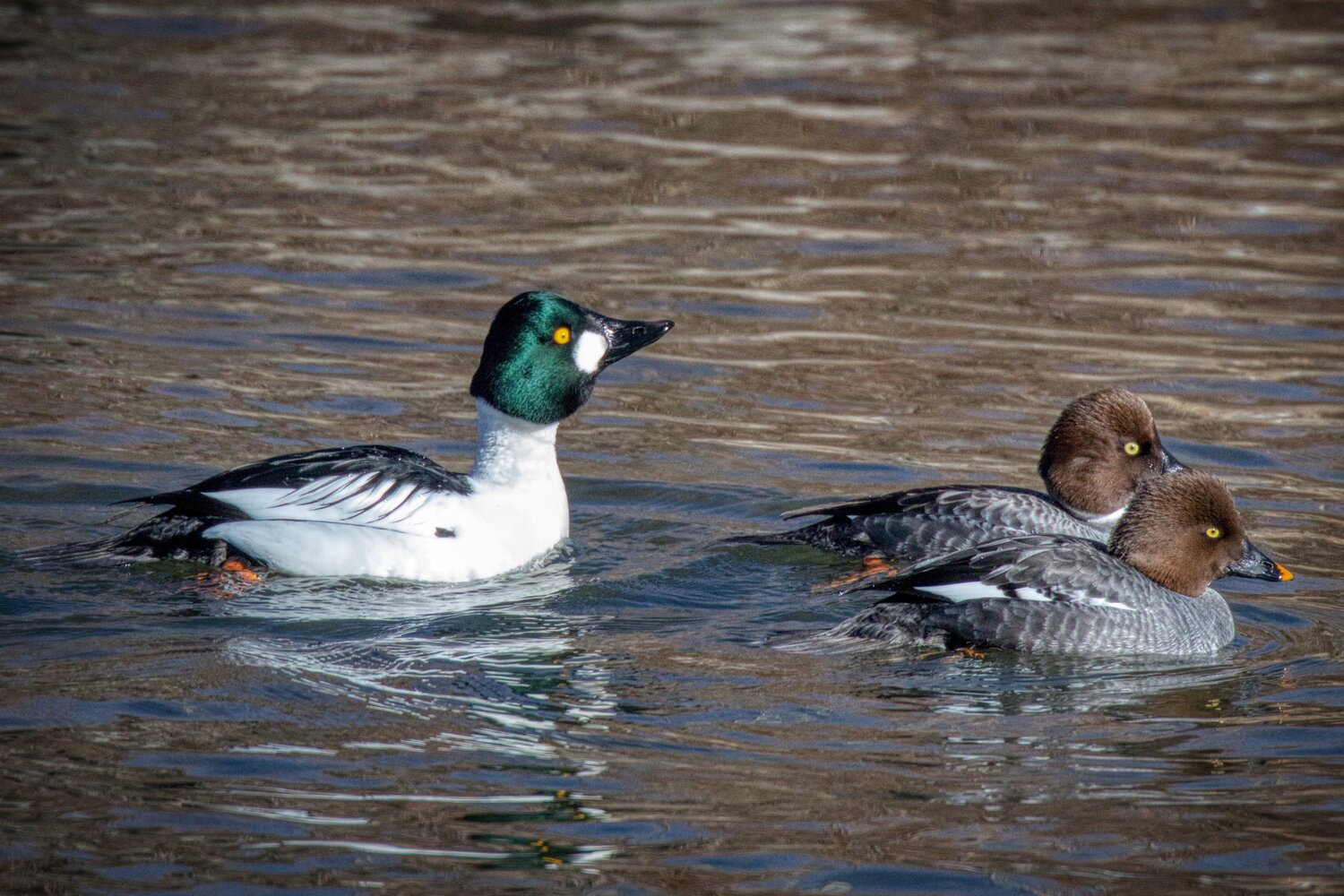
Common goldeneyes are strong divers and swimmers that in freshwater eat aquatic invertebrates, some fish and fish eggs. Males are mostly white with some black wisps from their folded wings showing on their sides. Their triangular-shaped heads are iridescent green and have a round, white spot behind the dark bill. Females have a gray body, a similarly shaped brown head and a blackish bill with orange at the tip. Both sexes have the radiant amber eyes which give them their name.
The less common Barrow’s goldeneye also winters here. These males have crescent-shaped facial marks and a black-and-white pattern on their sides that resemble piano keys. Females are very difficult to distinguish from their common goldeneye relatives.
From early December to April, common goldeneyes form monogamous pair bonds through elaborate courtship displays. Several males may compete for a female’s attention with moves that include stretching his neck out forward or straight up, or folding himself back with his head touching his rump, perhaps ending by splashing water with his feet. The female expresses interest with some head moves of her own.
In spring, these fast-flying ducks head to northern boreal forests, where they nest in tree cavities near lakes with clear water, little vegetation, lots of aquatic insects and no fish to compete for this food. Females return to the same nesting area and even the same nest year after year. Only one day after hatching, chicks drop from the nest located up to 40 feet above the ground.
Our warm winter has so far provided open water to host these winter visitors on area lakes.
For information on events, visit www.weminucheaudubon.org and www.facebook.com/weminucheaudubon/.


 >
>