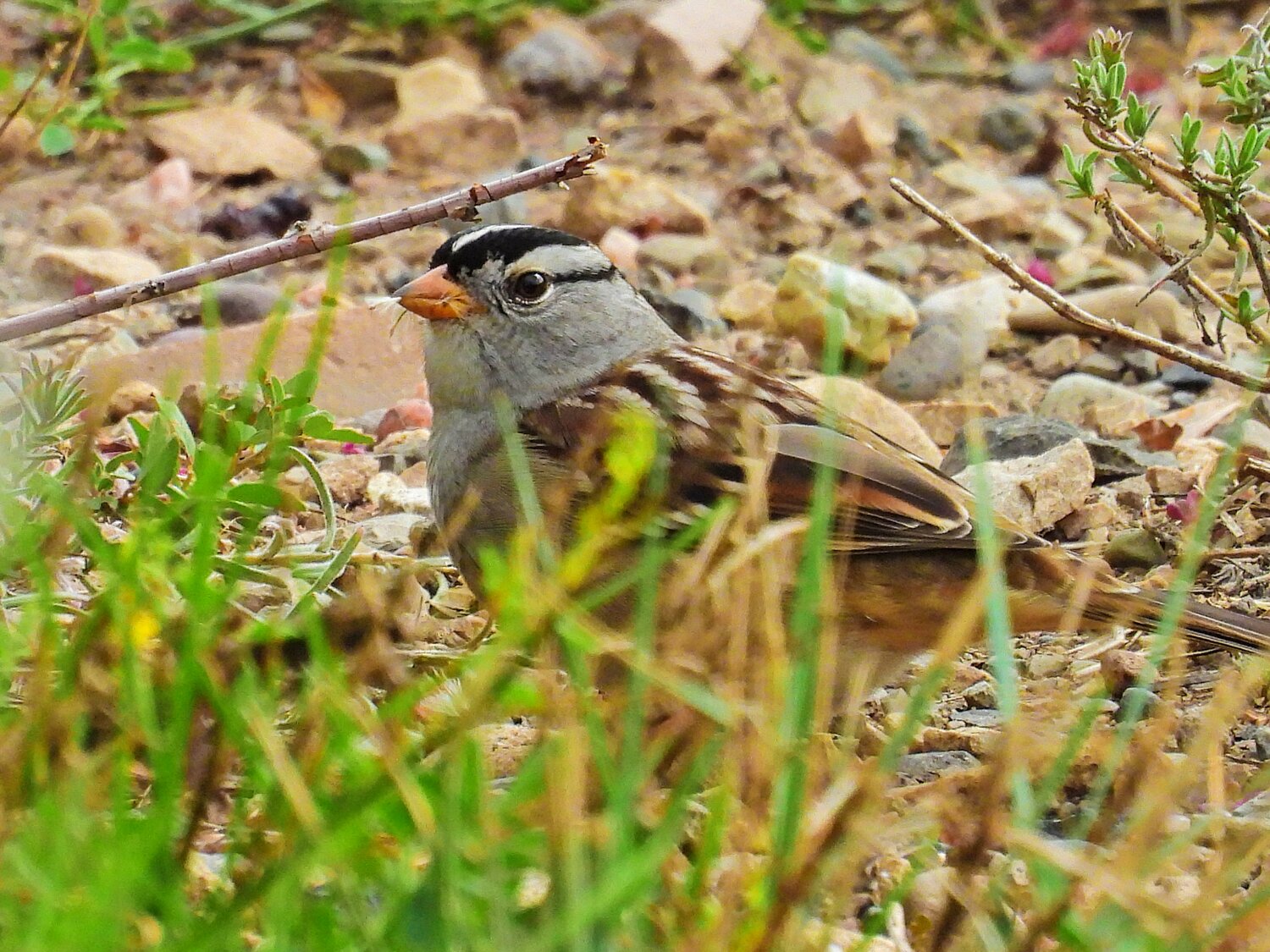
This week’s Bird of the Week, compliments of the Weminuche Audubon Society and Audubon Rockies, is the white-crowned sparrow.
The distinct field marks of this sparrow make it possible to identify it with confidence. For a sparrow, it is relatively large and has a plain gray breast and long tail. What signals “white-crowned” is the pattern of bold black and white stripes on the peaked-shaped head of an adult. In immature birds, the head stripes are rusty brown and gray.
This widespread and common sparrow is a winter bird across most of the United States. Outside of breeding season, they are often seen feeding in flocks in brushy fields, agricultural areas and roadsides, and show up in backyards searching the ground under feeders. They eat the seeds of weeds and grasses, grains and small fruits, supplementing with insects in summer.
This bird’s wide distribution, geographic variations and adaptability have made it a popular scientific study subject. Its song has been one of the most studied sounds in animal behavior. Young males learn the song of neighboring adult males during the first two to three months of life. The variation sung by a male links him to a particular place, much like regional accents do for people.
During the pandemic period in 2020 when reduced traffic made cities quieter, white-crowned sparrows in San Francisco were observed to respond by modifying the volume and quality of their song. This and other studies suggest that reducing the level of street noise in urban areas could result in higher species diversity.
As we head into winter months, keep in mind suggestions of ways to make survival easier for the birds that visit our yards. Leave those dead flower heads and ornamental grasses rich with seeds standing to provide winter food for birds. Protect over-wintering insects by raking leaves into tree and shrub beds or into small piles in your yard for winter insulation. If practical, provide a small brush pile. And plan for spring additions of native plants to your living space by checking out Habitat Hero resources on audubon.org/rockies.
For information on events, visit www.weminucheaudubon.org and www.facebook.com/weminucheaudubon/.


 >
>