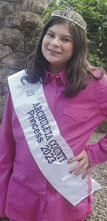
By Monica Nigon | Staff Writer
One of the crowns at the Archuleta County Fair will remain unused this year, as Honorary Princess Lilly Taylor will instead be receiving an experimental bone marrow transplant at Phoenix Children’s Hospital.
“She was really looking forward to riding her horse in the parade,” Lilly’s father, Raymond Taylor — who grew up in Pagosa Springs and is the Archuleta County Veteran Services Officer — explained. “Then that all didn’t work out.”
On June 30, 12-year-old Lilly was diagnosed with aplastic anemia — a rare failure of the bone marrow — leaving her body unable to produce new blood cells.
Aplastic anemia can be severe, even fatal. Symptoms include fatigue or tiredness; frequent infections; unexplained or easy bruising; nosebleeds, bleeding gums or any bleeding that lasts too long; unusually pale skin; weakness; and shortness of breath when exercising or being active, according to the U.S. Department of Health and Human Services.
“The pediatrician at first thought it was just growing pains,” Raymond said. “She complained of her legs hurting … We mentioned headaches and bloody noses three to four times per week, but the doctor wasn’t really concerned, just said to monitor her headaches.”
Raymond explained once Lilly started showing signs of debilitating fatigue and pale skin, her pediatrician recommended a blood test in Durango on the family’s way to Scottsdale, Ariz., for a vacation.
The next day, he reported, her pediatrician called and insisted they get Lilly to the closest emergency room immediately. She went to the nearby Phoenix Children’s Hospital for blood tests, two bone marrow biopsies, and blood and platelet transfusions. The second biopsy confirmed aplastic anemia.
“I didn’t quite understand what was going on, so it was tough even on me, and I’m not the one who’s enduring this,” Raymond said. “My wife asked the surgeon, ‘Well, what did we do?’ And he said, ‘There’s nothing you did … There’s just nothing you did.’”
Lilly’s GoFundMe page states the present standard of care for patients with aplastic anemia is immunosuppressive therapy. It shows a 70 percent success rate in the reduction of symptoms, but is not a cure.
The other option for treatment, a true cure, is a bone marrow transplant. The best outcome for this treatment is a sibling donor, Raymond noted.
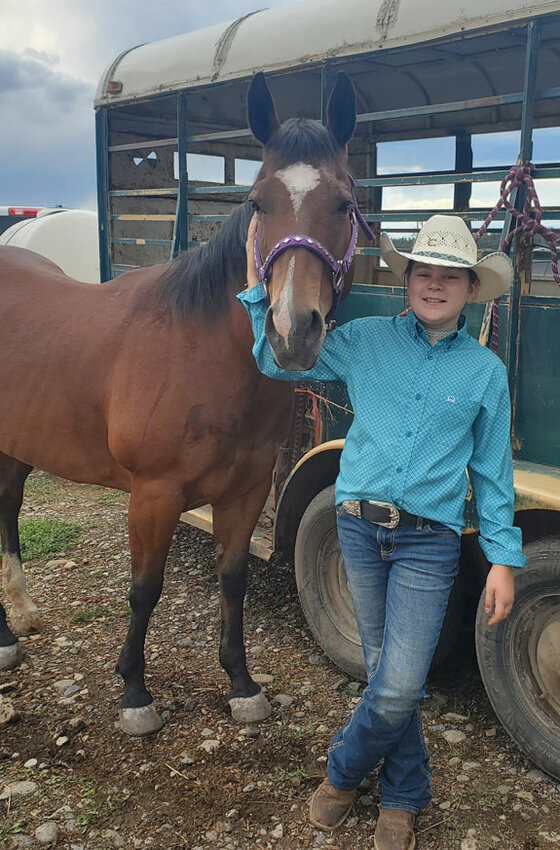
Lilly Taylor stands with her horse, Freedom, at last year’s 4-H horse show.
Raymond noted Lilly was unable to continue with 4-H projects with her dog and horses, missed summer camp and will not be present at the fair as one of the princesses this year.
He added Lilly was “incredibly excited” to be nominated for county fair royalty this year, as she faced stiff competition.
He noted the fair board has already decided Lilly will be one of the princesses next year.
Since Lilly will be unable to attend seventh grade at Pagosa Valor Academy this fall, they are working with both the school and the hospital to see if Lilly can attend virtually.
Raymond said, outside of school and her treatments, Lilly “loves her horse, likes being outdoors, is pretty good at games on her tablet — she plays with her brother across the tablets even though she’s down there — so things like that … she gets out and does a lot of things.
“She runs the heck out of me considering I’m much older than a normal parent,” Raymond said, adding that he became a father to Lilly at the age of 50.
Raymond stated he began feeling more hopeful after Lilly was enrolled in the study.
“I see the bone marrow transplant as a cure,” he explained. “The success rate is tremendous, but I didn’t realize how much trouble we’d have to go through. Of course, it’s no trouble for me, I’m not the one who’s enduring this. It’s for my daughter … I want quality of life for my daughter.”
Those who wish to can donate to Lilly’s medical expenses at https://www.gofundme.com/f/team-lilly-supporting-the-taylors, or write and take a check to the Bank of the San Juans made out to Raymond F. Taylor with “Lilly Taylor” as the memo.
monica@pagosasun.com


 >
>