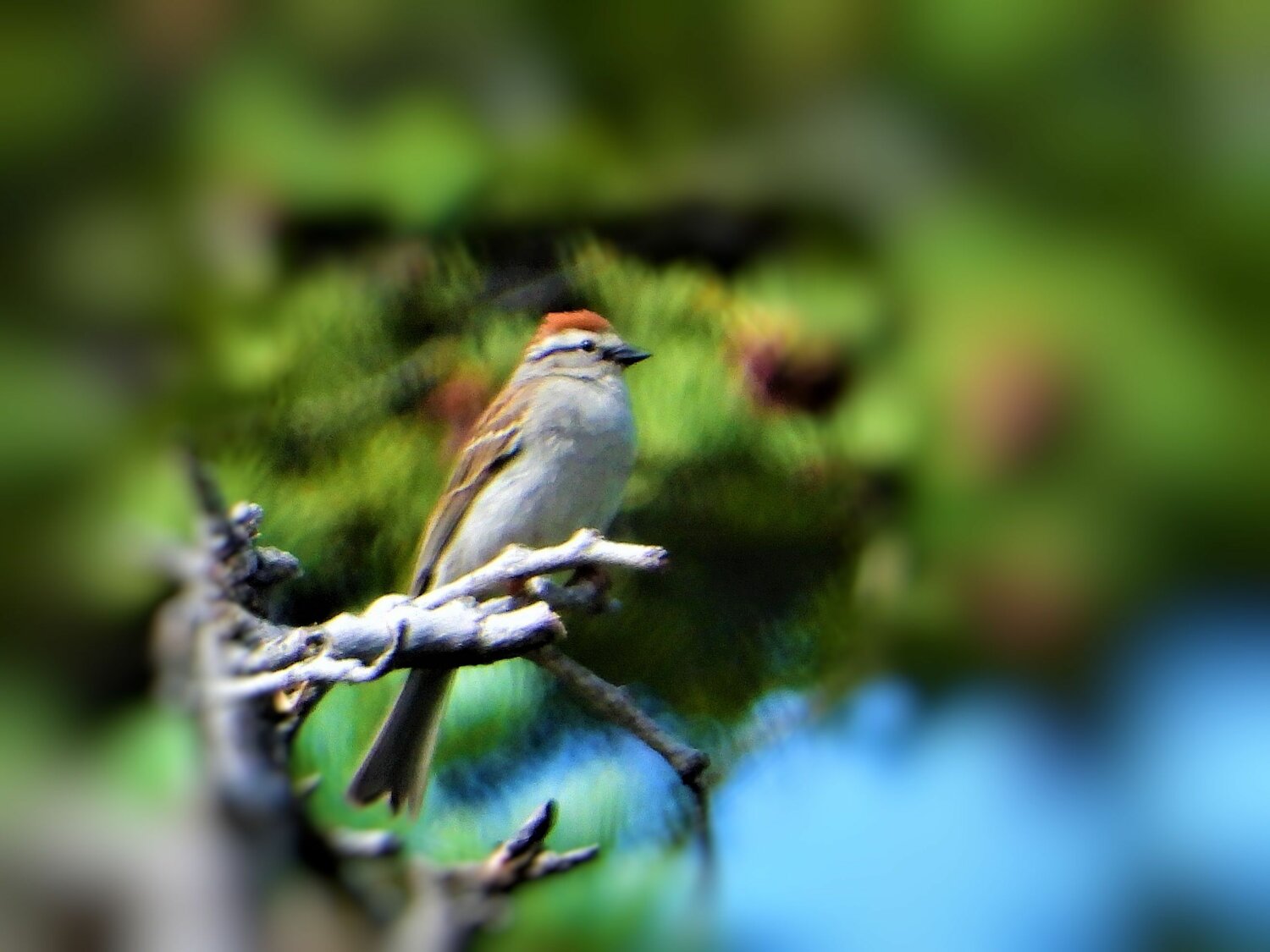
This week’s Bird of the Week, compliments of the Weminuche Audubon Society and Audubon Rockies, is the chipping sparrow.
Unlike many sparrows, this one is not typically associated with grasslands. Instead, it is primarily a forest dweller commonly found in summer across North America in areas where trees are interspersed with grassy openings. Often they can be seen pecking in the leaf litter or brush at the edge of the woods, on the side of a road or pathway. They have also adapted well to live in human-modified habitats, including gardens and parks.
Small adult chipping sparrows in summer breeding plumage are one of the easiest sparrows to identify. They have a rusty-colored cap, unstreaked gray-white underparts and a black line through the eye. It is its contact call, described as a sharp chip, which gives this bird its English name and the nickname “chippies.”
Starting in early April, male chipping sparrows arrive from winter grounds in southern states and Mexico to claim areas to nest and raise young. Males stake their claim by singing an incessant thin trill that sounds like the whir of a sewing machine. A song is only two to three seconds long, but during breeding season, he may repeat it up to 330 times in an hour.
Although they show a preference for nesting close to the ground in a conifer, a female chipping sparrow may build her flimsy nest 60 feet up in a deciduous tree, or on the ground itself. Young hatch naked with only a few wisps of down, but develop so rapidly that flight is possible by day eight. For several days the family group remains near the nest, with parents caring for the young until they are independent at around 3 weeks.
Except when nesting, chipping sparrows usually live in flocks. They mainly forage for seeds of grasses and herbs close to the ground, and also come to feeders. In summer, insects form a large part of their diet.
By the end of October chipping sparrows will have departed. Soon after, the similarly colored American tree sparrows start arriving from their far northern breeding territories to take their place for the winter.
For information on events, visit www.weminucheaudubon.org and www.facebook.com/weminucheaudubon/.


 >