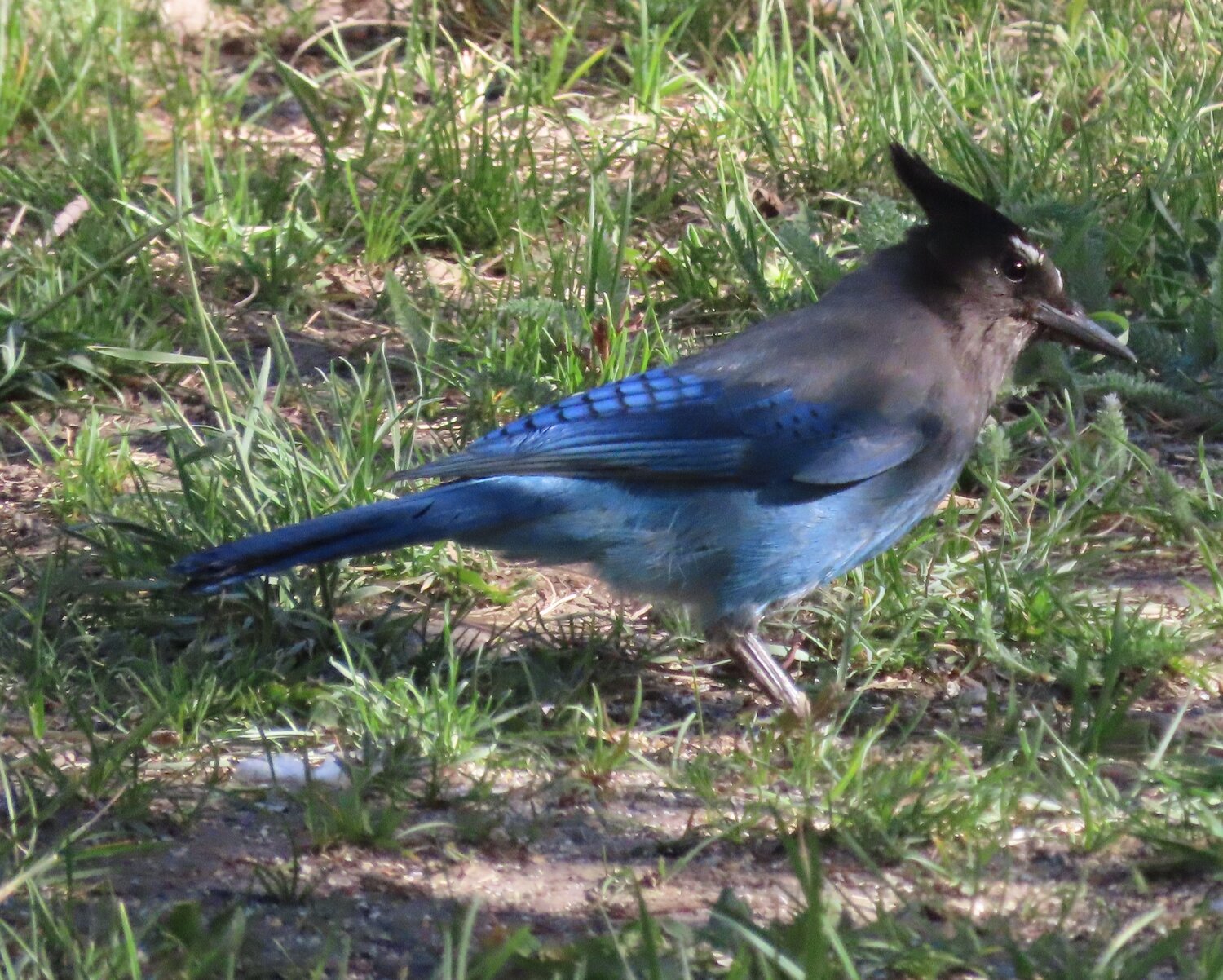
This week’s Bird of the Week, compliments of the Weminuche Audubon Society and Audubon Rockies, is the northern Steller’s jay.
Several of our most numerous year-round birds are members of the Corvidae family. We find them in our yards, in parks, in mountain forests and in parking lots. Included in this family are crows, ravens, magpies and jays. As a group, Corvids are known to be intelligent, curious and adaptable — traits that have led to their abundance and success.
Of these, the Steller’s jay is one of only two species of North American jays with crests. Until recent years, when the more eastern blue jay started to expand its range westward, it was the only crested jay living west of the Rocky Mountains.
The Steller’s black head with a triangular crest sits atop a luminous blue- colored body. Outside of direct sunlight, the blue color fades, allowing the jay to blend into the shaded tree canopy where it spends much of its time. There are many regional variations in plumage, and these jays that we see here have white streaks above their eyes and on their crests.
These highly vocal birds are identified by their harsh, distinctive calls. They are masters at imitating the sounds of other birds and animals, and are particularly adept at sounding like a red-tailed hawk. This call may scare other birds away from a guarded food source. On long legs, they characteristically climb a tree by hopping from branch to branch as if ascending a staircase.
Omnivorous Steller’s jays are not fussy eaters. They eat seeds, nuts, berries, fruits and invertebrates. One of their less-endearing habits is dining on the eggs and nestlings of other birds. They may show up at picnic spots looking for dropped scraps and readily come to bird feeders for seeds, nuts and suet. In fall, they will scoop up quantities of sunflower seeds from feeders and carry them away in their mouths and throats to be cached for the winter.
Steller’s jays are monogamous birds that form long-term bonds, and pairs stay together all year. Juveniles may stay with their parents through fall and into winter until they look for mates and start their own families as early as March.
For information on events, visit www.weminucheaudubon.org and www.facebook.com/weminucheaudubon/.
Photo courtesy Byron Greco


 >
>