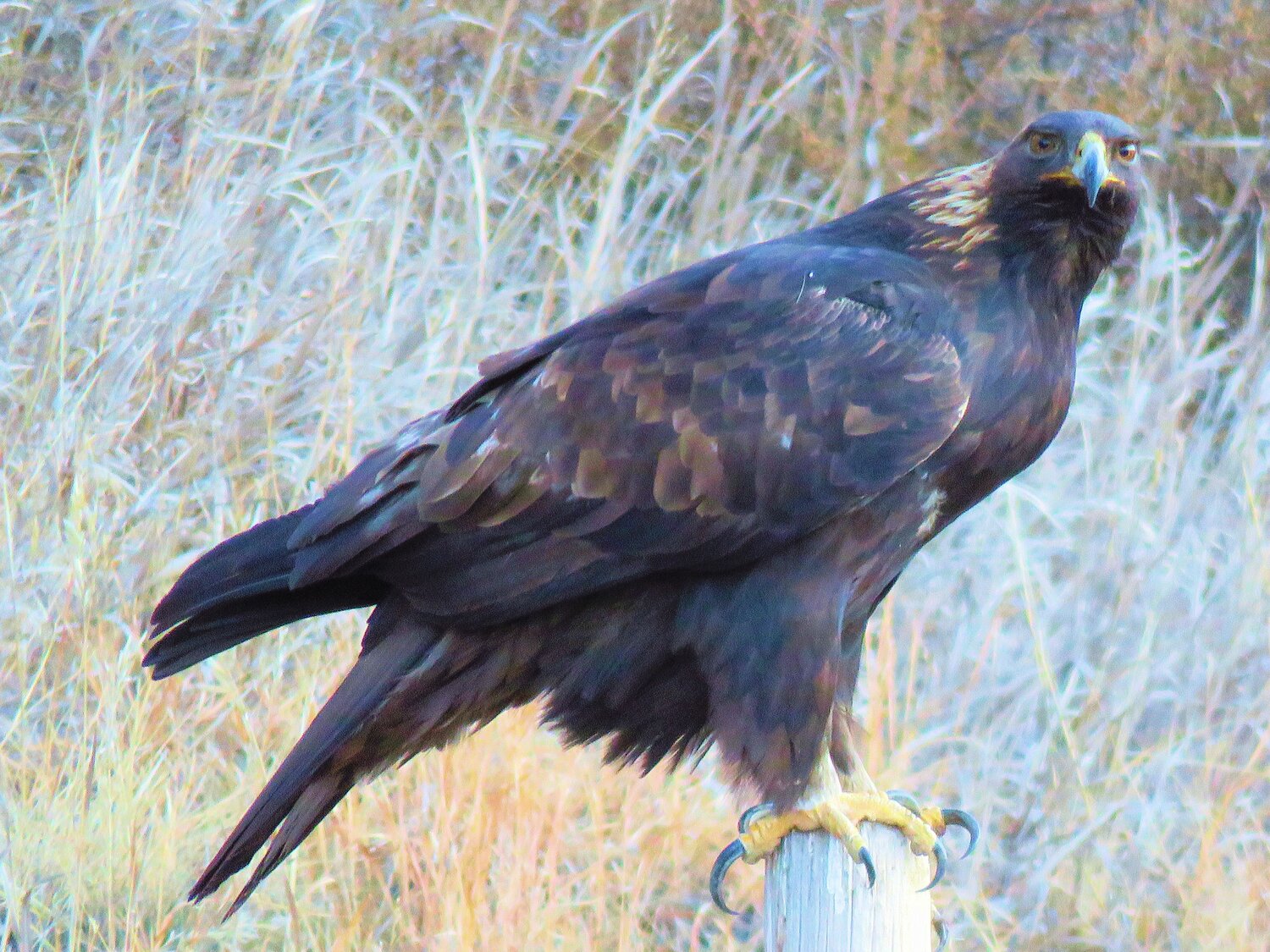
This week’s Bird of the Week, compliments of the Weminuche Audubon Society and Audubon Rockies, is the golden eagle.
We end the year with a bird regaled by many as the king of the skies. With a wingspan that ranges between 6 and 7 feet, the golden eagle is one of the largest birds in North America.
Although sharp talons, a strongly hooked bill and powerful muscles make goldens capable of taking much larger prey, most often they hunt small mammals including rabbits, hare, ground squirrels and prairie dogs. They may also feed on carrion, rob nests and steal food from smaller birds. Unlike bald eagles, which catch more insect-eating fish, golden eagles largely escaped the harmful effects of DDT in insecticides that brought so many birds of prey to the brink of extinction.
With sharp eyesight they can spot a rabbit a mile or more away and locate prey while soaring high in the sky, flying low over the ground or watching from a high perch. During breeding season, mated pairs hunt cooperatively. Mates are believed to pair for life and stay together the entire year.
In North America, golden eagles are found in open and semi-open habitats across the West and more rarely in the east. Those that breed in northern areas may migrate south and are more wide-ranging in the winter. In summer they are restricted to areas with good nest sites, including cliffs and tall trees that provide a wide view of their surroundings.
Adult golden eagles are dark brown with golden-brown feathers on the nape and variable amounts of white in the wings. Immature birds do not attain full adult plumage until the age of 5 and, until then, in flight show distinct white patches on their wings and at the base of the tail.
Although these magnificent birds are protected by the Bald and Golden Eagle Protection Act, two men in Montana were recently charged with illegally killing an estimated 3,600 eagles to sell parts. Around 70 percent of recorded golden eagle deaths can be attributed to human impact, including ingesting poisoned coyote bait and lead bullets, collisions with vehicles and wind turbines, and intentional killing.
For information on events, visit www.weminucheaudubon.org and www.facebook.com/weminucheaudubon/.


 >
>