
On March 17, the Pagosa Springs Town Council, which also sits as the board of the Pagosa Springs Sanitation and General Improvement District (PSSGID), decided to move forward with a new messaging and communications strategy instead of seeking an emergency declaration.
On March 3, the council had given town staff the direction to explore what declaring an emergency for the town’s sewer system would look like.
However, Town Manager David Harris explained at the March 17 meeting that “the immediate situation is stabilized,” after staff installed temporary bypass pumps, making pump stations #1 and #2 operational again.
But, he warned, “We still have significant work ahead.”
An agenda brief on the matter states, “Staff’s assessment is that the immediate incident is stabilized, and we are in an operational stabilization and prevention posture.”
It adds, “Regardless of labels, we are moving forward with the work that matters: stabilizing reliability now and advancing the long-term solution.”
It further states, “Our message should be clear: this is not a ‘state of emergency,’ but it is a serious infrastructure reliability challenge—and we have a plan.”
Since 2015, the town has relied on an uphill wastewater conveyance system that pumps the town’s wastewater 7 miles uphill to the Vista wastewater treatment plant, owned and operated by the Pagosa Area Water and Sanitation District, through a series of pump and lift stations.
Prior to this current system being installed, the PSSGID operated a lagoon-based wastewater treatment system.
A Roaring Fork Engineering memo states, “This system relies on two high-horsepower pump stations operating continuously to serve the District’s needs.”
Since installation, the pumps have experienced repeated failures due to several electrical issues and due to water inflow and infiltration (I and I).
The Roaring Fork memo states, “The collection system was inundated with McCabe Creek and San Juan River water and caused lift station overflow and failure events, which needed to be addressed immediately.”
Pagosa Springs Public Works Director Karl Johnson explained that after addressing the immediate problems of pump failures, Public Works Department staff have worked tirelessly to stabilize the system and make the town prepared for possible future pump failures by having bypass pumps and backups on hand.
The agenda brief states that “the real costs” the town is managing right now includes a $58,000 per month rental cost for six bypass pumps, and that “if bypass pumping is needed for a minimum of eight months, the estimated total is $464,000.”
Harris called this “a hard pill to swallow” for the town.
Another option, he explained, would be for the town to purchase eight Flygt pumps at around $1,508,000, with the total “near-term reliability package,” which includes electrical work at $200,000 and contractor installation at $400,000, costing in total $2,572,000.
Johnson said that town staff went back “and played detective,” analyzing the system’s components, and found that “some of it has been not the best product selection.”
The ultimate goal, Harris explained, would be to get away from the uphill conveyance system and for the town to build a new wastewater treatment plant downtown.
The brief states, “Thanks to voter approval of Ballot Issue 2A, we have begun design work for critical pipe replacements and are advancing long-term wastewater planning, including engineering work [for a new plant] with Roaring Fork Engineering.”
Harris explained that the revenues from the 1 percent town sales tax increase, which flows into a dedicated sewer fund, would first go toward repairing what the town has called “category 4 and 5” problems with the aging pipe system.
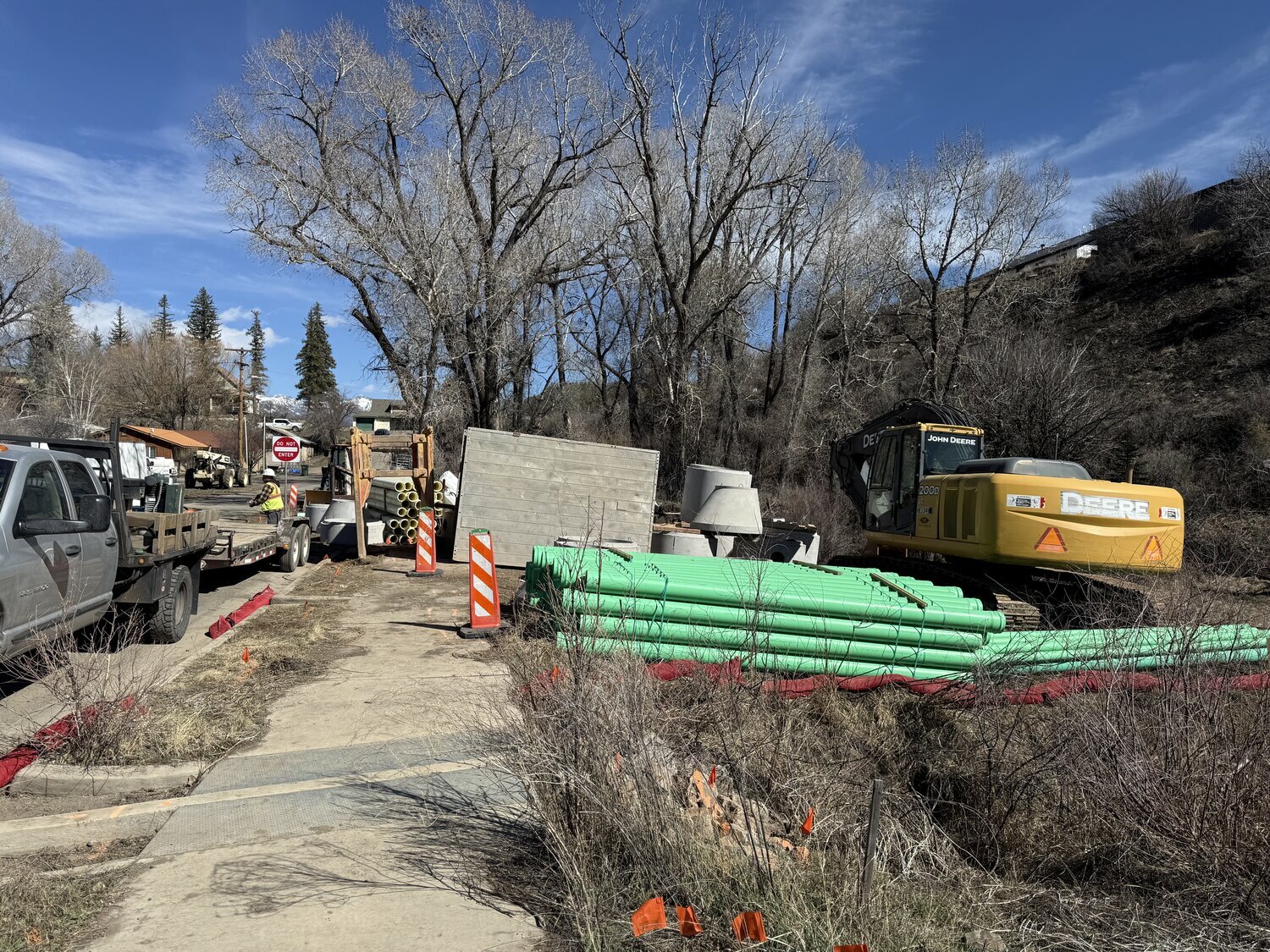
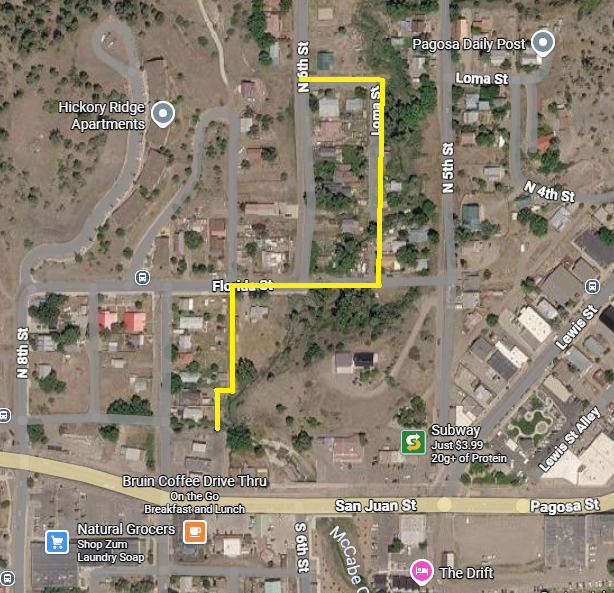
Part of this work for critical pipe replacements is currently underway at the McCabe Creek project, where work started on March 16.
The McCabe Creek project is addressing the system’s No. 1 source of I and I, which contributes to unnecessary water being pumped and treated, the brief states.
Johnson explained that once the entirety of the category 4 and 5 project is complete, I and I in the collection system should be reduced by about 50 percent.
This would reduce pressure from Iand I on the system, allowing the town to start using the sewer fund to design, plan and build a new plant downtown, currently slated for south of Yamaguchi Park, he explained.
Harris noted that as the town gets the wastewater plant project underway, it could temporarily switch to a “package plant,” which would hold the town over until it completes the new plant.
The town submitted an application for a discharge permit for the new plant, and the permit application was confirmed to be received by the Colorado Department of Public Health and Environment (CDPHE.)
At this time, “No additional information is requested. The review process is a minimum of 60 days with no updates,” the brief states.
Harris explained if the town wants to install a temporary package plant while it’s constructing a new permanent plant, the temporary plant would need to comply with the CDPHE permit.
He added that the package plant could be “a cost-effective way to do it,” but that it would take “at least a year’s time” before the town could get that temporary plant installed.
The lead time on purchasing the eight brand new Flygt pumps would be faster, six to nine months, Harris explained.
If the town chose the near-term reliability package option, which includes the purchase of new pumps, electrical work and pump installation, the town could potentially re-sell those pumps once the new wastewater plant is in operation, Johnson explained.
“We could get some money back once we get a new plant,” he said.
Regardless of whether the town continues to rent pumps or buy new ones, he explained, “we’d need to cover our bases for a few years” while the town builds a new plant.
This is where new town messaging would come in.
As the brief describes it, “The Plan” includes messaging about “Stabilization, Prevention, [and a] New Plant.”
The brief describes stabilization as “maintaining operations with bypass pumping where needed; replace pumps and harden electrical systems; continue rapid response readiness.”
Prevention is described as continuing “to ask for community help during high-risk periods (conservation steps), and continue targeted fixes that reduce inflow/infiltration and strain on the system,” with the McCabe Creek project being a major part of this.
A new downtown treatment plant would be the final phase of this plan.
Town staff is asking the council for consistent messaging on this plan, explaining that the system is currently stabilized and continuing to explain the importance of water conservation for the system and that “a long-term solution (a new treatment plant) is underway,” the brief states.
Roaring Fork Engineering has estimated that a new plant would take five to seven years to complete, so the current system would need to remain in operation at least until a temporary package plant could be installed, should the town go in that direction.
Mayor Shari Pierce asked the council to give staff some “guidance” on if “it wanted to pull back from the emergency declaration” and, instead, move forward with the new messaging strategy recommended by town staff.
The council unanimously agreed that it wanted to move forward with continuing to work on the new messaging strategy.
Council member Leonard Martinez expressed that “people who love this community,” both visitors and residents, “will help us.”
Johnson said, “We need your help,” adding that the town should continue to put out messaging urging people to think about “how much you flush, how long a shower you take.”
derek@pagosasun.com


 >
>