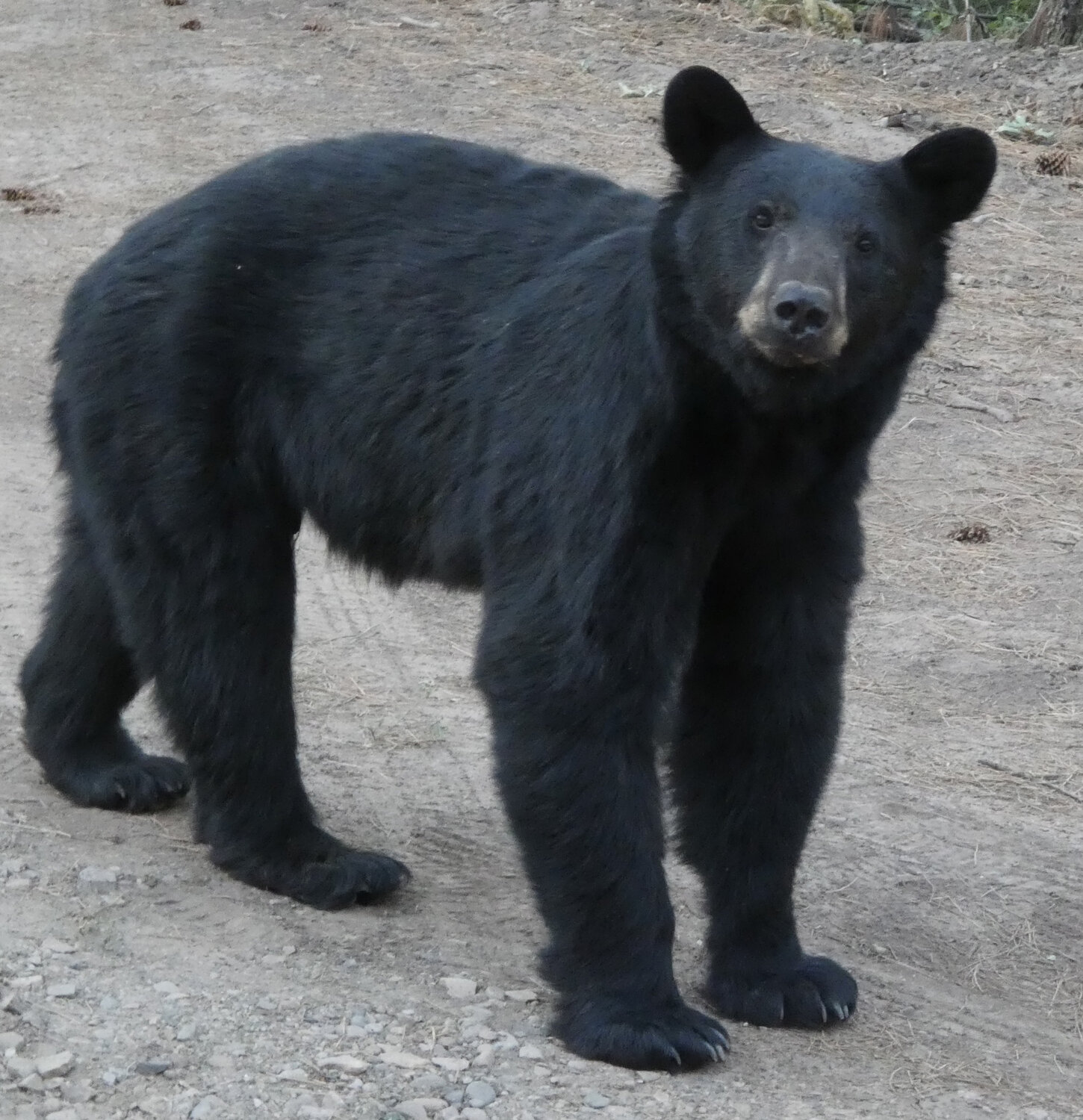
“If a State of Emergency for bear conflicts could be declared, it would be for southwest Colorado this year,” said Colorado Parks and Wildlife (CPW) Officer Doug Purcell. “Since the first week of July, we have been incredibly busy responding to human-bear conflict calls and dealing with bears desperate for food [looking] to residential communities and towns to find easy calories.”
“It’s been a tough summer for bears in southwest Colorado,” CPW Southwest Region Public Information Officer John Livingston wrote in an email to The SUN. “It’s been incredibly dry and natural forage has been spotty, at best. Acorns still are coming in for the year, and berries have been hit or miss.”
And, Livingston indicates, bears will continue to look for easy calorie sources as they prepare for winter.
“As we soon get into hyperphagia (late summer-fall), the time of year when bears are eating as many as 20,000 calories a day and looking for food as many as 20 hours per day, bears are increasingly going to be looking for easy calorie sources,” Livingston wrote, adding, “It’s been a busy year already for human-bear conflict in southwest Colorado, and the traditional busiest months of conflict are just beginning.”
Purcell indicated that people who have not had issues with bears before may have issues this year.
“If you’ve lived here for ‘40 years’ and have never had a problem with bears, this year expect it and take measures to prevent it,” he said.
He also encouraged people to be more diligent.
“Something else we hear a lot from people is, ‘I’ve always used a bungee cord before and it has worked,’” Purcell said. “Well, not this year. If you have a weak link in how you are securing any of your human food sources a bear wants to tap into, bears will find it this year. Reassess everything and step up your game.”
Livingston notes its common to see bears pass through from time to time.
“What is concerning is when the same bear is showing up multiple times a week or daily on the same streets and alleys or at the same homes,” he wrote. “This means the bear has found a food reward and it is coming to continually check to see if it can continue to find food. Black bears are incredibly smart and will remember a food source for years if it has had success.”
Livingston added that makes it even more important to haze away all bears, including mother bears with cubs.
“While they are cute and nobody wants to get in the way of a mother bear with cubs, a mother bear getting into human food sources such as trash, bird seed or worse - getting into cars and homes - can lead to a generational problem because she will teach her cubs the same behaviors,” he wrote.
Tips to avoid conflicts with bears
“It takes all of us to reduce human-bear conflict and keep our bears and communities safe,” Livingston notes. “If seven people on your block are doing the right thing but one or two aren’t, we are going to have conflict on the entire street. It truly needs to be a community effort.”
Livingston provided numerous tips for avoiding conflicts with bears, including:
• Never keep trash outside unsecured except for the morning of trash collection.
• Make sure all bird feeders are taken down.
• Clean BBQ grills after every use.
• Never feed dogs or cats or other pets outside where a bear could access the food.
• When you see bears in residential areas, haze them away by yelling, banging pots and pans, setting off a car alarm or even using an air horn. Do your best to leave a bear with a negative association of humans and make it feel uncomfortable in human spaces.
• Lock doors, both on homes and vehicles.
“Cars are especially important,” Livingston explains. “Even if you think there’s no food in your car, crumbs or scented items such as lotion, chapstick or sunscreen have all been known to attract bears to a vehicle. Bears are good at opening unlocked cars. If the door shuts behind them, they aren’t so good at getting back out.”
• Do not leave screen doors or dog doors open and night, and close first-floor windows when possible.
“If possible, also close first-floor windows, at least when you’re not home,” he wrote. “We know it gets hot and many of our homes don’t have AC, but if a bear smells something it wants inside, they are capable of opening doors and busting through screens to get what’s inside.”
• Give bears plenty of space and never try to get close to them.
For more tips on living with bears, go to https://cpw.state.co.us/living-bears.
When to report bear
activity
“If you notice a bear showing up multiple times in a week or daily, definitely call the CPW office and let us know,” Livingston suggests. “We might be able to give advice or get a better picture of what might be bringing that bear into town limits rather than staying outside of town. If you notice a bear getting into your garage, a neighbor’s garage, hitting the same trash multiple days in a row, getting too close to front porches, etc., please call the CPW Durango office.”
According to Livingston, even bear sightings should be reported to CPW.
He explained the office staff “can take reports of bear activity for things as simple as a sighting, and that helps with our data collection.”
He adds, “We are never going to set a trap and relocate a bear just because people call in a sighting or ask for advice on trying to get a bear to move along. We also aren’t going to trap a bear just because it gets into trash once or twice. But we need to know about incidents before they begin to escalate to a bear being inside someone’s home.”
He indicated a lot of people don’t call until it’s too late.
“A lot of people don’t call CPW until conflict rises to the point of a bear being in their home or killing their chickens, etc.,” he said. “The earlier we get reports of bear activity, the more likely we can prevent conflict from rising to that level. Relocating bears is a tool CPW has, but that is a major life disturbance for the bear. Moving a bear from its home area and putting it in another bear’s territory is difficult for both CPW staff and the bear. We’d rather know about bear activity before conflict rises to the level where a bear may have to be trapped and moved.”
How to contact CPW
The Durango CPW office, located at 415 Turner Drive in Durango, can be reached by calling (970) 247-0855.
In an emergency, such as a bear in a house at night, call 911.


 >
>