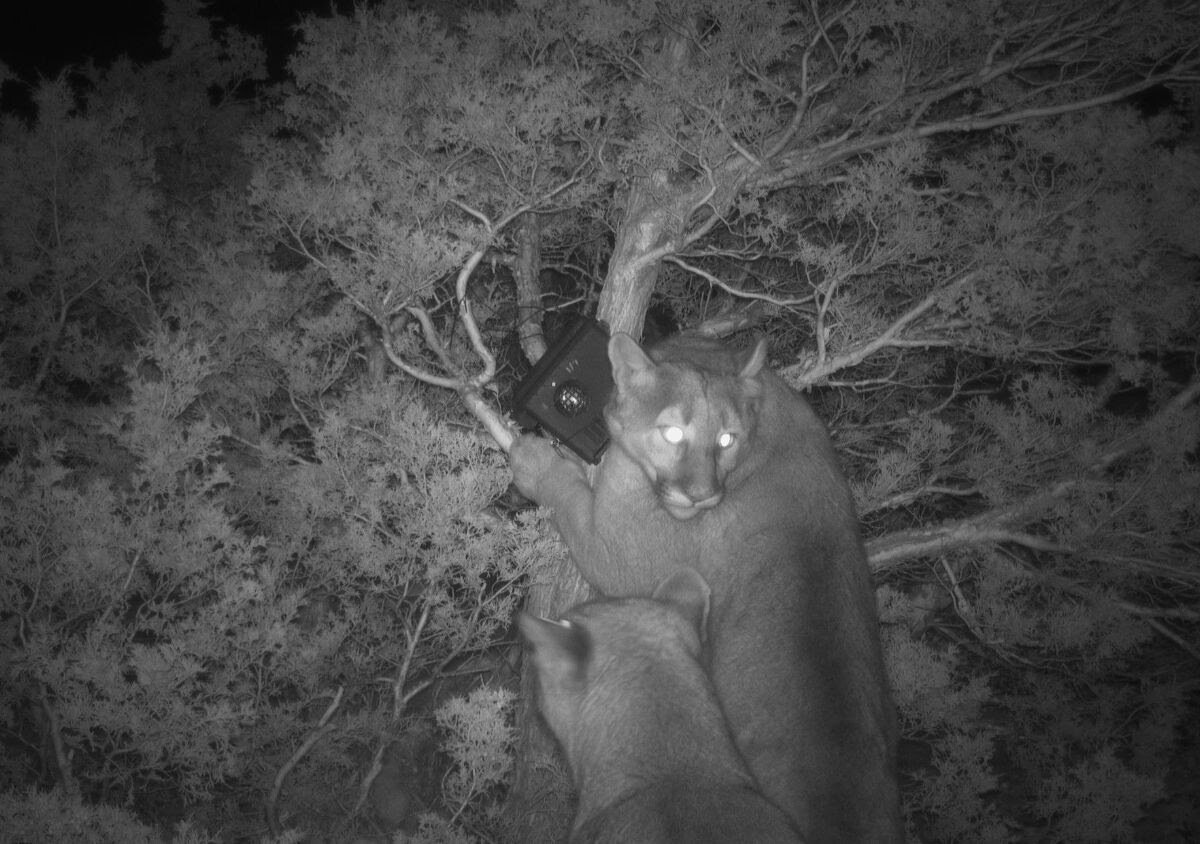
A multiyear effort to tally mountain lion populations across the Western Slope is underway between Pagosa Springs and Bayfield as Colorado Parks and Wildlife (CPW) crews begin work to locate and track adult lions throughout the region.
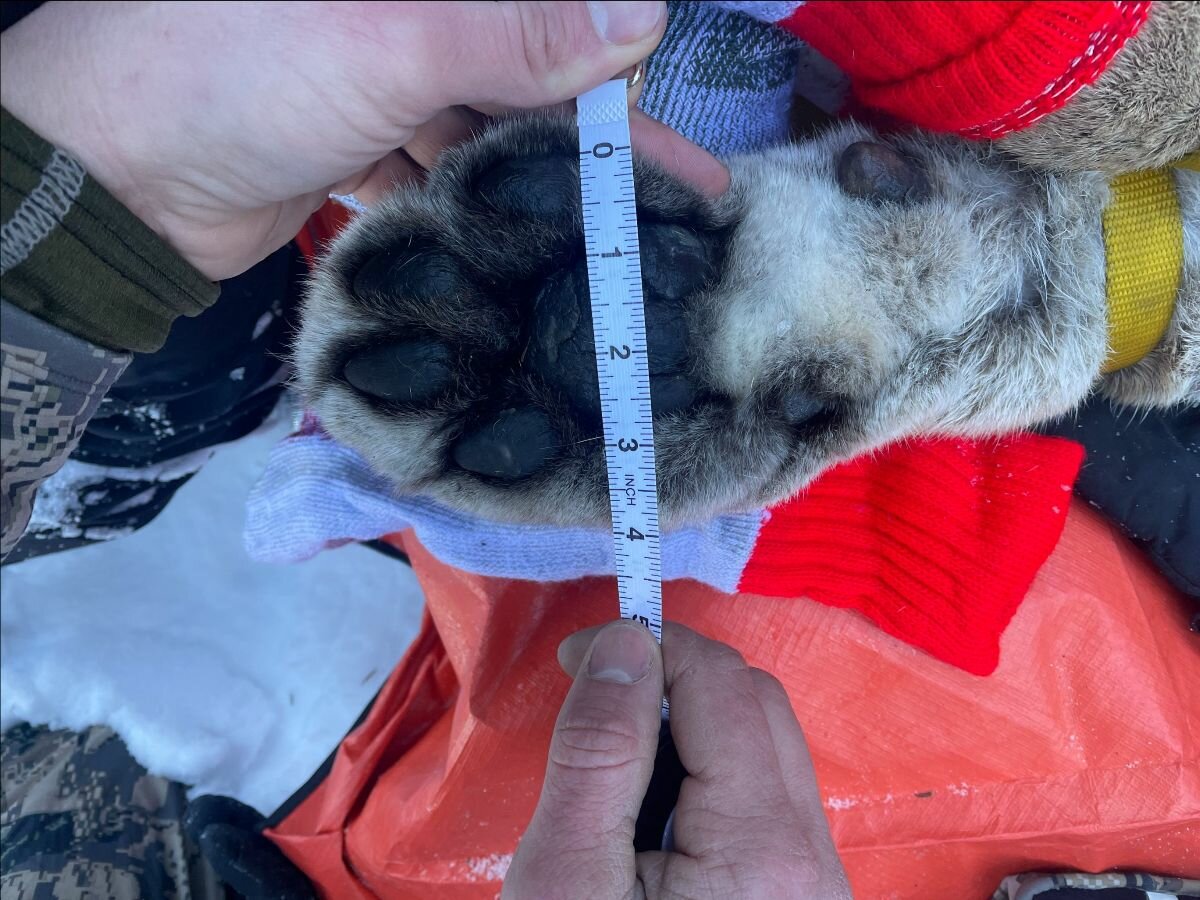
With a study area of more than 2,000 square kilometers — roughly 1,240 square miles — CPW biologists hope to equip 25 adult lions with tracking collars and ear tags this winter as part of an ongoing population density study that has visited areas across Western Colorado since 2020.
“We have successfully gotten one collar out on a lion we were able to trap on a landowner’s property closer to Bayfield,” said CPW’s John Livingston, public information officer for the Southwest Region.
He added, “We have some good partnerships with some private landowners, and we’re also working with the Southern Ute Indian Tribe with their houndsmen. It is a pretty expansive study zone.”
CPW estimates there are around 1,700 independent lions in the entire Southwest Region and about 100 within the current study area, which extends from Pagosa Springs to Bayfield and southward to just north of the New Mexico border.
Between now and March, the local study will aim to collar and tag 25 lions that will later be monitored from trail cameras and compared against non-tagged lions passing through the territory.
“That usually gives us a pretty good idea of how many lions are out there on the landscape,” Livingston said. “Plus, the GPS collars will give us data that shows us more of what their territory is and … what their overall range is.”
Mountain lion ranges can vary from 10 to 370 square miles, according to CPW, with females and kittens claiming the smallest areas and adult males occupying the largest.
Livingston noted that researchers working in the study area between Pagosa Springs and Bayfield are hoping for additional snowfall in the coming weeks to help track the animals’ prints and wider movements across the area.
Until then, the state is asking local landowners to report any sightings or evidence of lion activity to the CPW’s Durango office at (970) 247-0855.
“If landowners see a dead deer show up on their property or what looks like a mountain lion cache,” Livingston said, noting the animals’ practice of concealing a recent kill with sticks and leaves for later consumption, “we really encourage them to contact CPW and let us know about that. We’ll be able to go out and work with the landowner and maybe set a camera or a trap and try to use that fresh kill as a way to trap that lion and get a collar out on it.”
According to CPW, results from the planned three-year study will allow the state to test earlier population models and better manage mountain lion populations across the Western Slope.
“It just really helps us make more informed management decisions when it comes to setting harvest limits for hunting season and everything else like that,” Livingston said. “The better math and science we get just really helps inform those management decisions. The public can really help us out in a study like this by giving us any of that information they see.”
garrett@pagosasun.com


 >
>