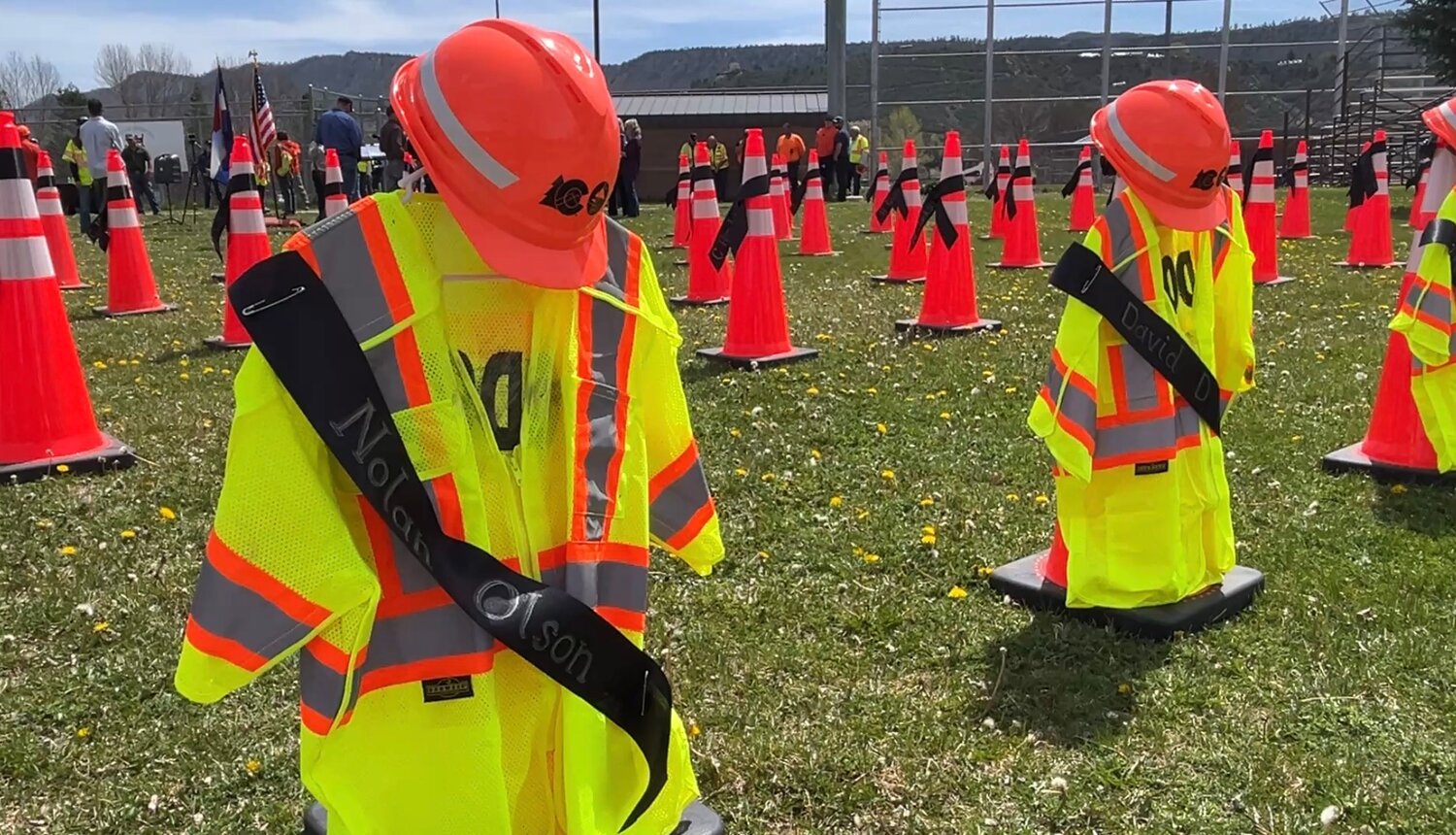
Imagine sitting, working at your office desk, but cars are whizzing by just a few feet away.
For someone who works on road construction, zooming traffic is experienced routinely. Their “office” is located on or near busy highways and for much of their day they are exposed to the high-risk danger of fast-moving traffic.
From a worker’s perspective, work zone safety is not about following abstract rules. Following road safety is about that worker going home to their family at the end of their shift.
Since taking on the role of transportation commissioner for District 8, I have found myself driving more frequently across the region and throughout the state to attend various transportation-related meetings. Serving in this position has made me become more aware of what’s happening on our roads.
Did you know the Colorado Department of Transportation (CDOT) manages as many as 200 construction projects annually? Maintenance work and repairs are performed across the state daily.
I now pay closer attention to the road work activity I encounter. Signs warn me that the speed limit is lowered. Flaggers wave at vehicles, directing them to slow down or change lanes. I now notice it is only a row of plastic cones standing between my vehicle and the workers’ construction area.
The harsh dangers of road work have been amplified for me. I now have a better understanding that safety precautions are set in place not only for highway workers, but for the safety of the traveling public. The laws are there to improve safety for all — road workers, drivers, bicyclists, pedestrians and law enforcement.
Lowered speed limits mean that motorists must slow down. Slower speeds can help a driver’s reaction time. Driving at a lower speed can help someone stop for an unexpected truck pulling out or a worker stepping into a travel lane. And, be aware: The fines are doubled when speeding in a work zone.
Distracted driving is not an option. It is illegal to hold your phone while driving. Put the phone down and give the road, work zone and workers your undivided attention. The slightest distraction could cause a crash. Workers have said it is unnerving and terrifying to see a driver go by looking down at their phone.
Follow signs and flagging personnel. The signage and flaggers’ guidance must be followed. Drivers should be patient. You may not be able to see why traffic is stopped, but the flaggers are in radio contact with the work crews to know when it is safe to travel through a work zone. The work zone must be clear of moving equipment or hazardous work activity so that traffic can flow safely through the construction area.
My interactions and conversations with transportation employees have also changed my perspective about road work and construction. I’ve been at CDOT events where I have met and talked with maintenance workers, traffic personnel and engineers. They have explained their projects. They have provided details about their work. And I see that they take pride in their careers and their public service. These personal encounters have shown me that these team members are unique, hardworking individuals with families and communities they care about. And, it makes me care more about their safety.
CDOT joins other departments of transportation across the nation recognizing the importance of work zone safety. National Work Zone Awareness Week is an annual campaign observed during the month of April. This year’s theme, “Safe Actions Save Lives,” urges every driver to slow down, stay alert and protect crews working on or next to roads.
This is the bottom line: Every cone, barrel and sign is designed to protect workers. But the cone zone is only effective and safe if drivers respect them. Those who work on our roads are husbands, fathers, brothers, wives, daughters and friends.
I urge the public to care about their safety. I challenge all drivers to show just how much they care with their actions behind the wheel. Our safe actions will save lives. And, at the end of the day, these workers deserve to go home to their families.


 >
>