Grasses are an often overlooked and underappreciated part of our ecosystems.
They are not as stately as trees and lack the “wow” factor of wildflowers; however, they provide many ecosystem services and play a larger role in the environment than just a sod-forming green lawn.
A healthy grassland provides habitat and forage for wildlife ranging from the smallest rodents, game birds and large ungulates like elk; reduce soil temperature; sequester carbon; and reduce flooding.
The deep, fibrous root systems of native grasses make them much better at reducing surface runoff than non-native grasses like Kentucky bluegrass, which have very shallow roots.
Native grasses roots help breakup soil compaction (a major plus in our clay soils), which allows water to work into the ground rather than flow over the surface. Because of this, native grasses can be used for stormwater management.
The majority of the plant’s biomass is below ground and therefore stores carbon in the ground. Less of the accumulated carbon is released into the environment in the event of wildfire; inversely, during a forest fire, trees release a large amount of carbon as most of their biomass is above ground. Of course, a tree is much larger than clump of grass and will naturally contain more carbon, but food for thought is still food for thought.
The World Wildlife Fund estimated that in 2022 1.9 million acres of grassland were converted to cropland in the Great Plains, which in turn reduces the biodiversity and impacts pollinator and bird populations.
Archuleta County may not be part of the Great Plains region, but native grasses still play a vital role in our ecosystems, urban environments and agriculture. Native grasses can be planted to form a “lawn,” which requires less external outputs such as fertilizer, requires less mowing and reduces water consumption. Species like blue gramma, little bluestem and Indian rice grass can add structure and winter interest to gardens while providing habitat for pollinators and birds.
When seeding a lawn or pasture (or revegetating after noxious weed removal) it’s best to utilize a mixture of warm- and cool-season grasses.
Cool-season grasses are active in spring and fall, and warm-season grasses come out of dormancy during the hottest months of the year. Utilizing a mix will ensure that your lawn is green for longer or that there is forage for your livestock or wildlife.
Choosing a seed mix is difficult and best left to a professional. Reaching out to a major seed retailer will pair you with an expert who can make the best recommendation for your desired use and area.
The Archuleta County Weed and Pest Department, the San Juan Conservation District, and Colorado State University (CSU) Extension have partnered for the last 5-plus years on a seed reimbursement program for those managing noxious weeds on their property. This program is funded through the Colorado Department of Ag Noxious Weed Fund Grant. Reach out to the Weed and Pest Department or the San Juan Conservation District for more information on this program.
Bioblitz
Save the date for Archuleta County’s inaugural Bioblitz and learn all about grasses and other flora and fauna found in our local ecosystem.
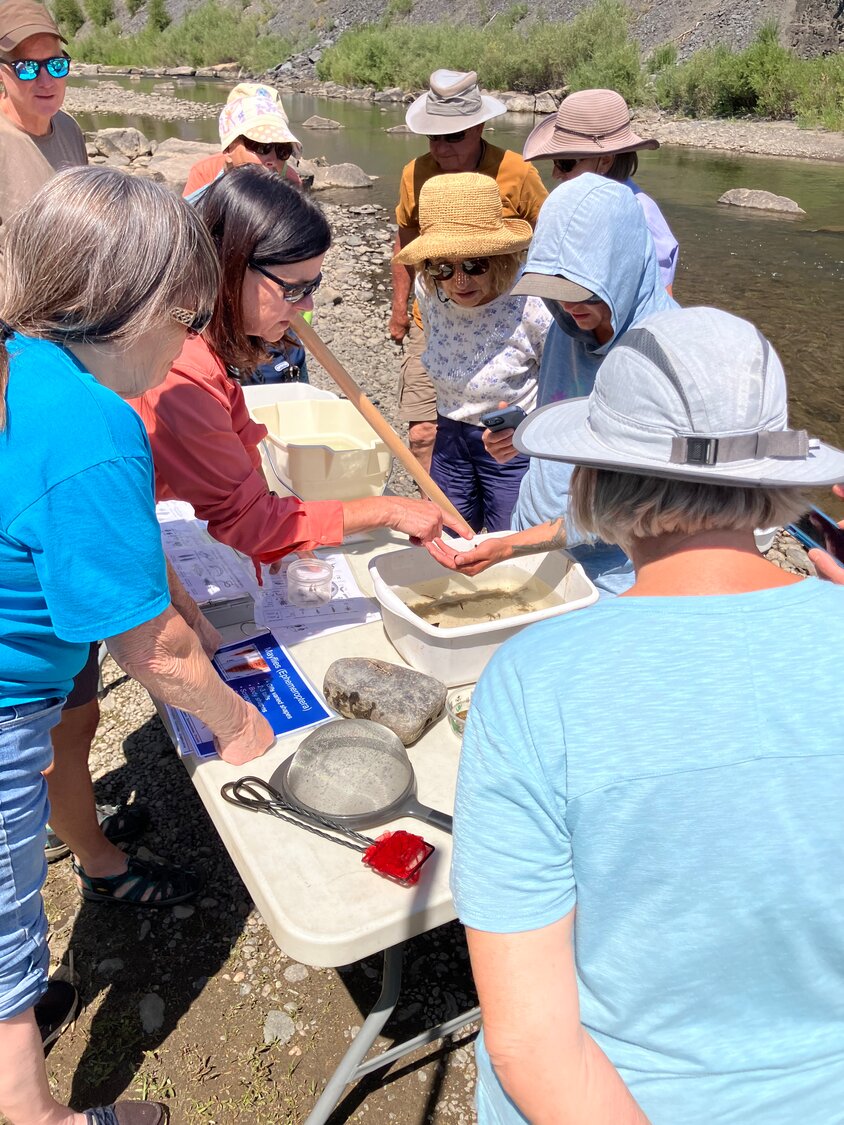
A bioblitz is a fun and relaxed community science event where experts, community members and volunteers work together to document and record the biodiversity of an area.
This year, participants will explore the natural areas near downtown Pagosa Springs along the San Juan Riverwalk and Reservoir Hill while collecting valuable ecological information on June 20 from 8 a.m. to 8 p.m.
This is a fantastic opportunity to connect with nature and appreciate the vibrant life that thrives in this ecosystem.
No prior experience is necessary; just bring your curiosity and enthusiasm for nature.
The cost is $25 per adult and $10 per student/child and includes dinner, a T-shirt and a fun day of learning.
To learn more and to register, visit https://secure.rec1.com/CO/pagosa-springs-co/catalog?filter=c2VhcmNoPTQyNjMyMzY= or email Cindi Galabota at cindi.galabota@colostate.edu.
Email list
Do you want to be added to our email distribution list to learn about upcoming programs and the latest resources? Email cindi.galabota@colostate.edu to be added to our list.
Or, to learn more about the many programs, resources and services offered by CSU Extension, visit https://extension.colostate.edu.
CPR and first aid classes
CPR and first aid certification classes are offered every other month at the CSU Extension building, generally on the third Monday and Wednesday from 6 to 10 p.m. The cost for the classes is $80 for combined CPR/first aid and $55 for CPR, first aid or recertification. Call the Extension office at (970) 264-5931 to register.
Check out the online option on our website, archuleta.extension.colostate.edu.
Volunteer for the Archuleta County Fair
Be a part of preserving the rich heritage and timeless tradition of the Archuleta County Fair and help plan the 75th anniversary Fair in 2026.
You’ll contribute to an annual tradition that brings our community together, supports local agriculture and creates lasting memories for generations to come.
To learn more, contact Tonya Steadmon at tsteadmon@archuletacounty.gov or (970) 264-5931.


 >
>