Editor’s note: This article includes references to war, the Holocaust and suicide.
“I stood in front of a smoldering synagogue on my way back from school. I was five. It was the day after the ‘Kristal Nacht’ (Crystal Night) when Adolf Hitler commanded Germans to burn synagogues and Jewish businesses,” wrote Peter Laue.
At age 5, Laue didn’t know what the smoldering synagogue was from, why it happened or the fact that his life could be in danger.
He also didn’t know his life would continue to be in danger for years to come.
It wasn’t until years later — after World War II ended — that Laue, born in Bensheim, Germany, as Dieter Laue, explained he discovered his experiences during the war were because he had Jewish roots.
He noted he knew practically nothing about the war and was never told why others in Germany were wearing stars.
“When I got home, I told my parents what I saw,” Laue wrote of Kristallnacht. “They listened silently to what I told them. I do not recall what they said or if they said anything. I did not know that our lives were in [jeopardy] until the War was over. My parents hid my Jewish roots from me until then. We lived in attic apartments and moved often. I did not know why.”
Kristallnacht, the United States Holocaust Memorial Museum’s Holocaust Encyclopedia explains, “was a nationwide, violent anti-Jewish riot that took place throughout Nazi Germany on November 9 and 10, 1938. During Kristallnacht, groups of Nazis and other Germans targeted Jewish places of worship, stores and businesses, homes, and people.”
In 1939, Laue’s family moved from Bensheim to Bremen.
Bensheim, Laue wrote, was a town of about 15,000 located between Darmstadt and Heidelberg in southern Germany, and Bremen is a large city of the River Weser that was known for building dive bombers.
It was in Bremen that Laue saw more death and destruction.
“Bremen was the target of many air raids,” Laue wrote. “A number of times I stood on the flat roof of our apartment house and watched the city around us burn. That was before bunkers were built and we were required to go there until the sirens let us know it was safe to go back home.”
Laue remembers the apartment house he lived in was burnt to the ground.
“I was not there at the time, but the rest of the family was. My father was able to rescue a few of our belongings,” he wrote.
Laue’s parents then hid him with neighbors in Bensheim.
“Only one bomb was ever dropped on that city and it was less [than] 200 feet from where I lived,” he wrote. “Everyone died except a girl my age that I tried to play with.”
Laue recalled he was not allowed to play with the girl.
“My father only let me visit with [her] through the fence,” he wrote, explaining there was a chain-link fence around the property.
Of the bombing, he wrote, “When the neighbor’s house was destroyed, I was hiding in the cellar. I remember the house violently shaking.”
Laue was 11 at the time. He was 12 when the war ended.
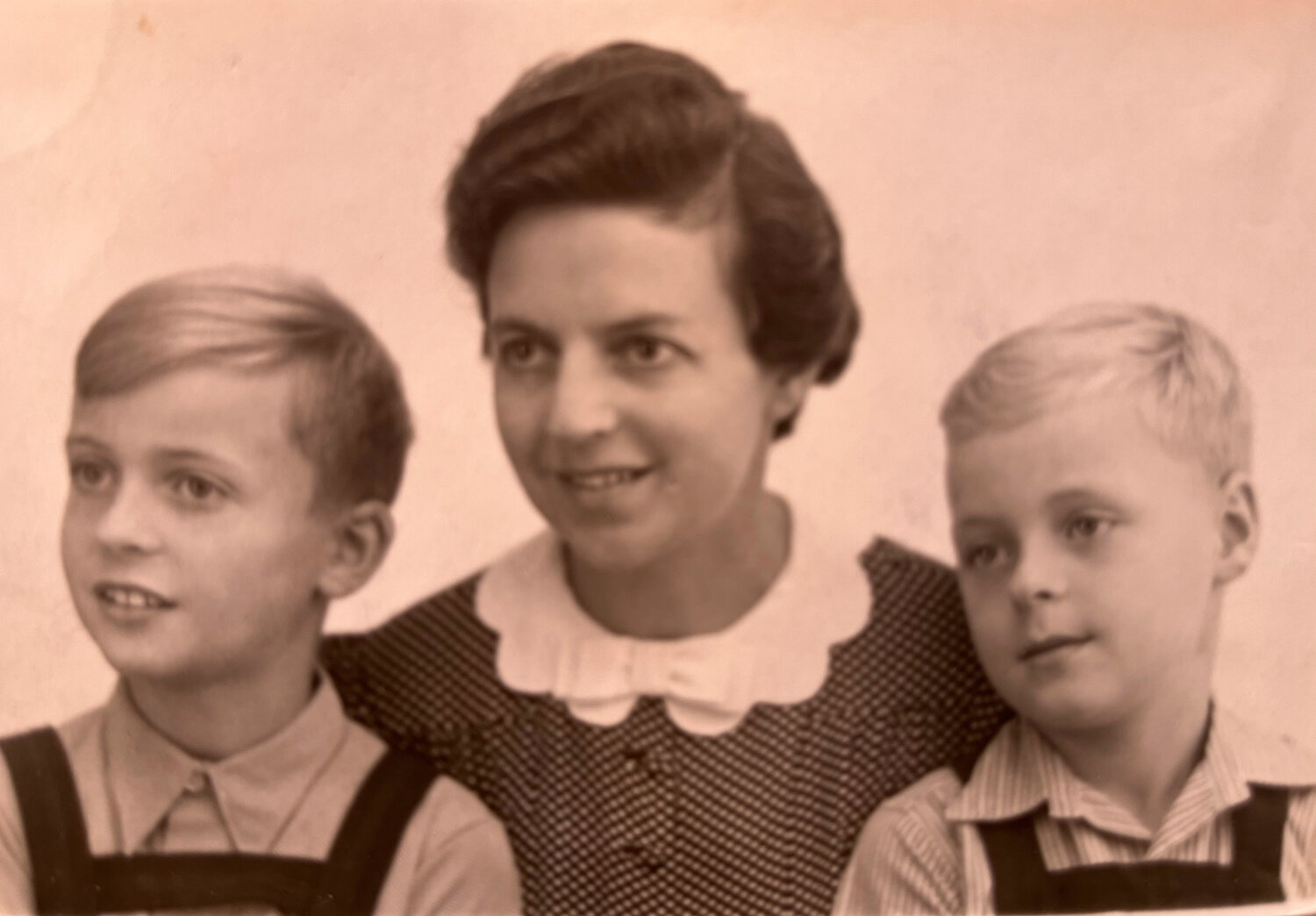
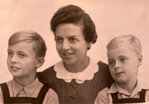
Laue noted his mom often stayed with him and his brother, but at other times stayed with his dad while the boys were in hiding with neighbors.
He had no idea why he was “farmed out” to live with other people. At one point, he stayed with others for a year.
Reflecting
“Now when I reflect on it, I see what a miracle it is that I’m alive,” Laue said.
In his writing and in interviews over the summer, Laue relayed aspects of his experience during the Holocaust.
“My mother looked very Jewish,” he said, recalling his mother considered surgery to help her appear less Jewish.
He noted his father, a Lutheran German, was not comfortable with her Jewish heritage and would often walk ahead of her.
Laue relayed his parents had so much fear they tried to commit suicide, but her sister found them and called for help.
He noted they felt it was the only solution. Laue was about 8 at the time.
His mother, a concert pianist, also got blood poisoning and lost the use of her hand.
Laue stated he saw Hitler one time when he paraded through town with a motorcade.
He also recalls starting class by looking at a photo of Hitler and reciting, “Heil Hitler.”
Laue indicated his family’s connections to the war were varied and included those who were pro-Hitler and others who died in concentration camps.
“My sisters were 12 and 13 years older than I was,” Laue said. “And they were different. In fact, ... my second oldest sister was a Hitler fanatic. And she tried to get me involved in the Hitler Youth. She was a different breed.”
Laue noted he did not know if she knew of her Jewish heritage at the time.
“We never talked about it,” he said, adding he never knew if their parents told her, but that they probably did.
He noted she went on to be on national radio programs in America due to her talent with the accordion.
Laue explained his oldest sister, Ruth, married a man before the war who was killed in Russia, but had a baby girl, Renate, who is now the only surviving relative Laue has who remembers his past.
Laue also noted his father’s brother, who was “very German,” had a great love for Jewish people and helped a “great number” of Jewish people escape being drafted into Hitler’s army.
He was imprisoned after the war, according to Laue.
“I always loved him very much, and his wife,” Laue said, noting he was a respected man in Bremen.
Laue said his father was not drafted into Hitler’s army because he was “sneaky.”
When his dad got his draft notice, Laue relayed, he was about 50 and drank a lot of coffee to give himself an erratic heartbeat, which allowed him to not be drafted.
“He faked a heart problem in order to stay out of the draft,” he said, adding his dad also helped a lot of Jewish people.
“Some of our relatives on my mother’s side died in concentration camps. My grandparents on my mother’s side were originally from Germany,” Laue wrote.
Laue noted his parents knew people who were sent to concentration camps.
After the war
“I did not begin to understand until after the war was over and my parents told me I was Jewish,” Laue said, adding he was told as soon as his parents knew it would be safe to tell him.
Then he learned why others were wearing stars.
Laue explained that finding out he was Jewish was just information. At that point, he didn’t know about the concentration camps.
It wasn’t until he was about to finish his own military service that he found out about concentration camps and the “brutality” was revealed.
“I was a fighter,” Laue said about looking back at what he lived through, adding it’s by God’s grace he’s still alive.
Laue, whose mother was American (Laue’s parents met in Atlantic City, N.J., with the pair marrying in 1918 or 1919 and moving to Germany), immigrated with his mother and brother to America in 1946 with the help of his mother’s sister.
His father and sisters made the move a few years later.
Laue noted when his mom learned how much his aunt hated his father, they moved out, and the three of them were on their own for two years.
The family became caretakers of the place where they rented a room, then his mom became a filing clerk in New York, making $25 a week.
“In retrospect, I see my mother was an incredible fighter,” Laue said.
She also took piano lessons from someone who could help her learn to play with one hand and one finger.
Laue explained he adopted the name Peter when he was in junior high in America because classmates had a hard time with his name.
The draft and beyond
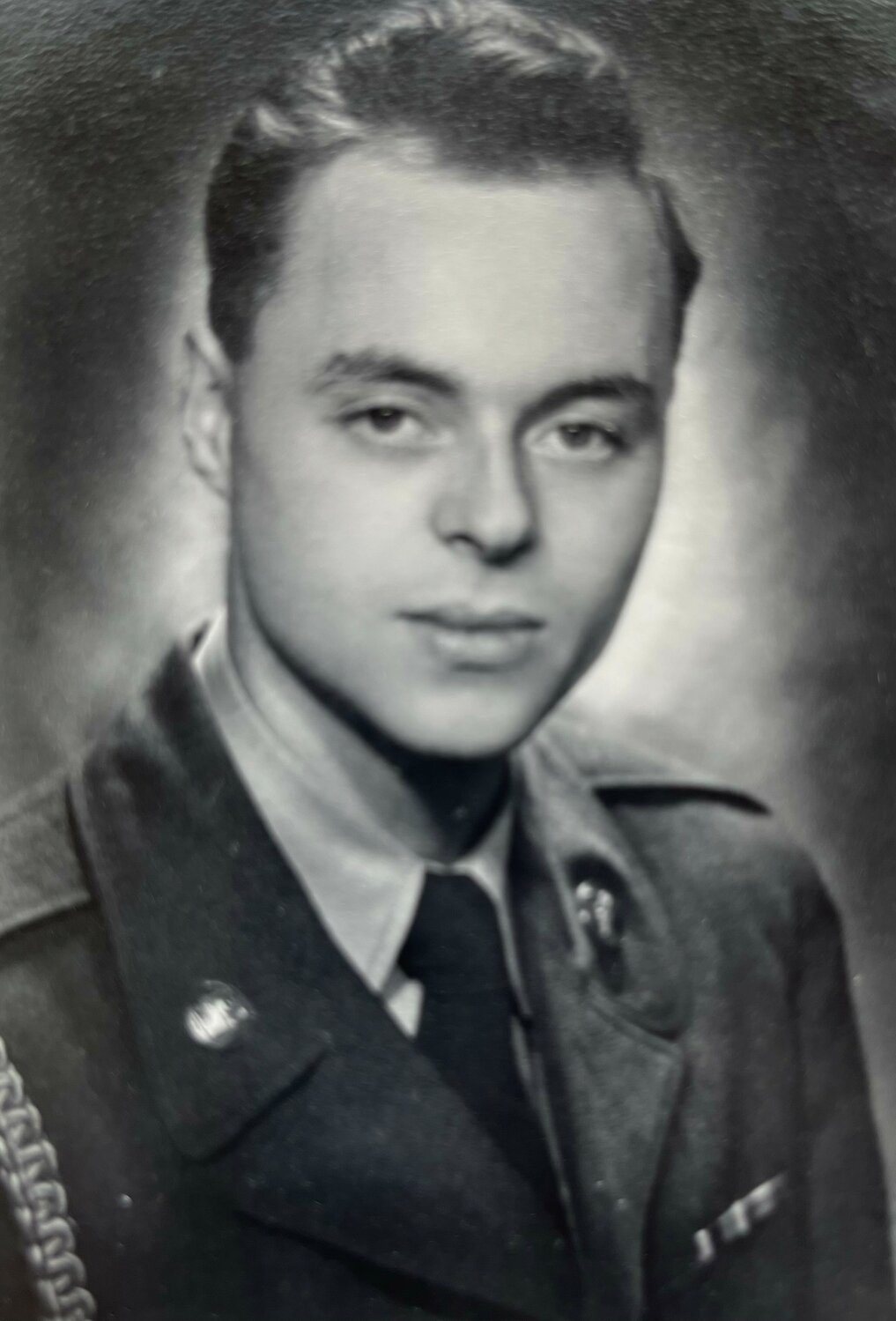
In 1953, at age 19, Laue was drafted into the U.S. Army during the Korean War.
Letters from Laue to his family during his time in the service (his mother saved every letter he wrote home) indicate he was a conscientious objector, which led to him serving as a clerk typist in the office of admission at the Army hospital in Nuremberg, Germany.
Laue did not revisit the letters to his family until he was 77.
At that point, he bound them in a volume that also includes a reflective introduction and epilogue where Laue reflected on his old self.
He wrote, “Although foreign born, he loved America and considered it an honor to serve his adopted country as a soldier. He spent all of his active duty in Germany, the country of his birth.”
The volume also notes it was a difficult time in Laue’s life.
“Life as a soldier was a daily challenge for the author,” it states. “His religious leanings and idealism made him conspicuous amongst his comrades and superiors. He was a conscientious objector and a vegetarian at the time he was drafted. At first he was able to demonstrate that this should not disqualify him from being an asset to the army. Eventually, however, he ‘caved in.’”
Laue notes in 1953 an “inner struggle began to ravage his soul” and while he was able to hide it at first, it ultimately led to his hospitalization for a few weeks until he was able to resume his duties.
Laue was honorably discharged in 1955.
But, before that discharge, Laue was able to take a trip down memory lane.
“I went to visit my home and my friends,” Laue said of revisiting where he used to live as a boy in Germany.
He notes he visited many of his relatives and friends and the places where he grew up and hid.
Refuge
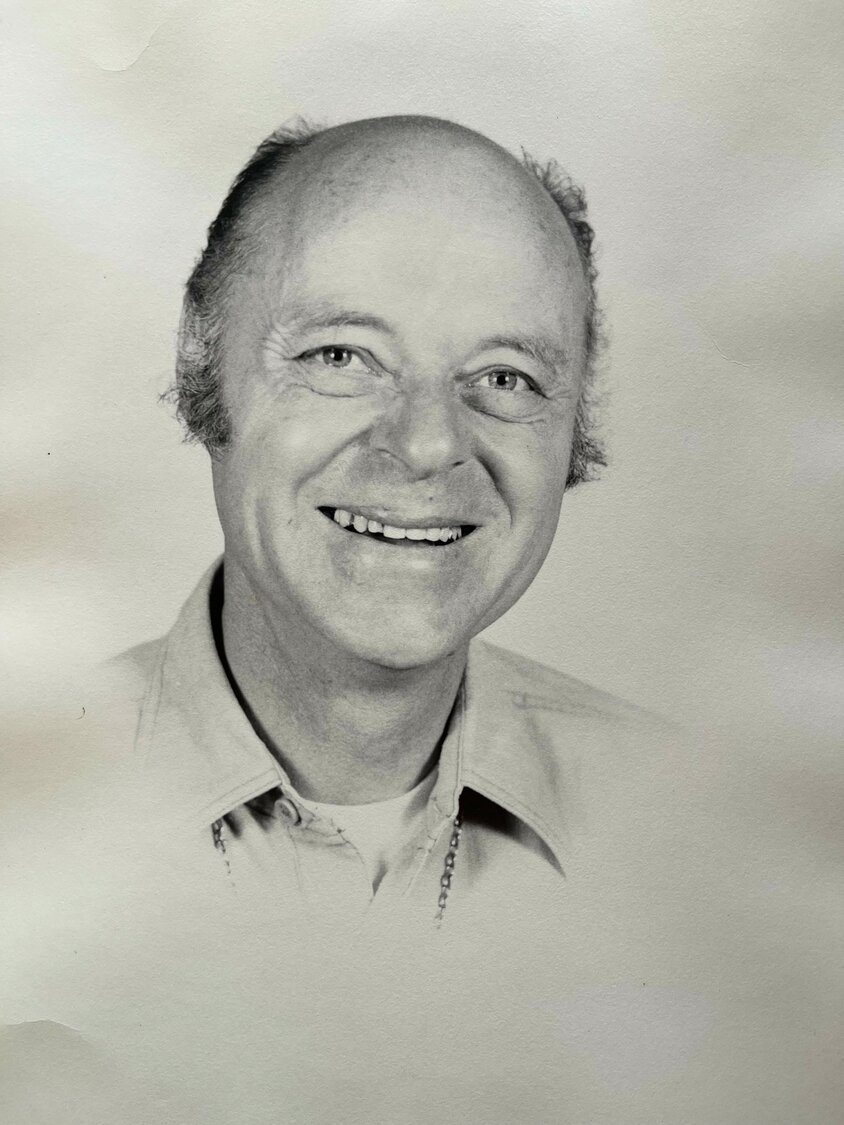
For the last 48 years, Laue has called a cabin on Lake Pagosa home — and a refuge.
Laue went on to marry Rebekah MacArthur Laue— a relative of Gen. Douglas MacArthur. The two were married 52 years before her passing on Oct. 26.
Rebekah Laue, Peter Laue noted, survived the Pearl Harbor attack when she was 6. Her father was an engineer hired by the U.S. Navy to build a power plant.
Peter Laue noted he is who he is because of his marriage to Rebekah Laue.
The pair opened their home to thousands as a place of refuge, Peter Laue, explained, and began multiple ministries.
Laue said he’s grateful for the school of life, noting he is who he is because of what he’s lived through.
He added the memories are strong and real, but are not disturbing anymore and are instead part of who he is.
randi@pagosasun.com


 >
>