Photo courtesy Charles Martinez
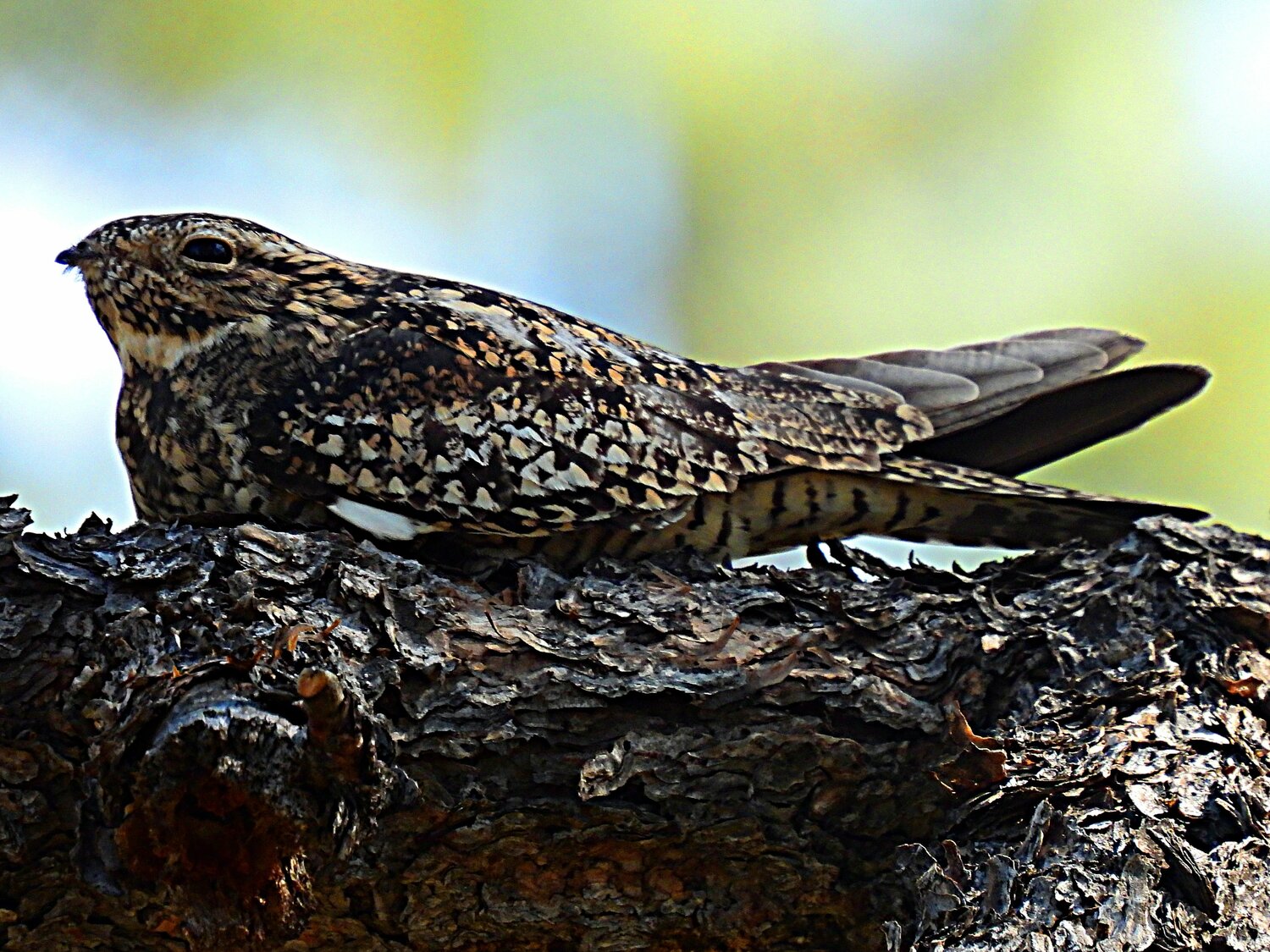
This week’s Bird of the Week, compliments of the Weminuche Audubon Society and Audubon Rockies, is the common nighthawk.
Neither common nor active at night, and not related to hawks, this is an amazing bird with an unfortunate, misleading name. Common nighthawks undertake one of the longest migration routes of any North American bird, traveling from winter grounds in South America. One of the last migrants to arrive in spring, they breed across the United States and Canada.
On the breeding grounds, the male performs a “booming” display flight in which he dives toward the ground and at the bottom of the dive flexes his wings downward. Air rushing across his wingtips creates an eerie, deep, boom sound. These flights are part of the bird’s courtship ritual and also defines his territory.
Adults are long-winged and flat-headed with a tiny bill, big eyes and short legs. They are cryptically colored in gray, black, white and buff tones with a white patch on the wing visible in flight. They can be identified by their nasal peent call.
Camouflage is the nighthawk’s defense against discovery. Studies have determined that common nighthawks have an awareness of their own appearance. Females lay two tiny eggs that resemble pebbles on bare ground out in the open. Their choice of a “nest” site may seem haphazard to us, but the female carefully chooses it based on a match to her plumage and to the shells of her eggs.
Females incubate the eggs and brood the chicks, but she must leave them unattended while she feeds. Chicks are not very mobile and extremely vulnerable to exposure and predation in the first days of life. When the male roosts nearby, nest success improves.
Flying with tiny beaks and wide, bristled-fringed mouths open, common nighthawks eat flying insects almost exclusively. Hunting primarily near dawn and dusk, they locate prey by sight and forage near the level of ground or water, or up to 500 feet above. Birds that eat flying insects are among the fastest declining groups in North America. In Canada these nighthawks are listed as threatened.
Eliminating your use of pesticides and preserving insect habitat are two measures that you can take at home to improve life for birds.
For information on events, visit www.weminucheaudubon.org and www.facebook.com/weminucheaudubon/.


 >
>