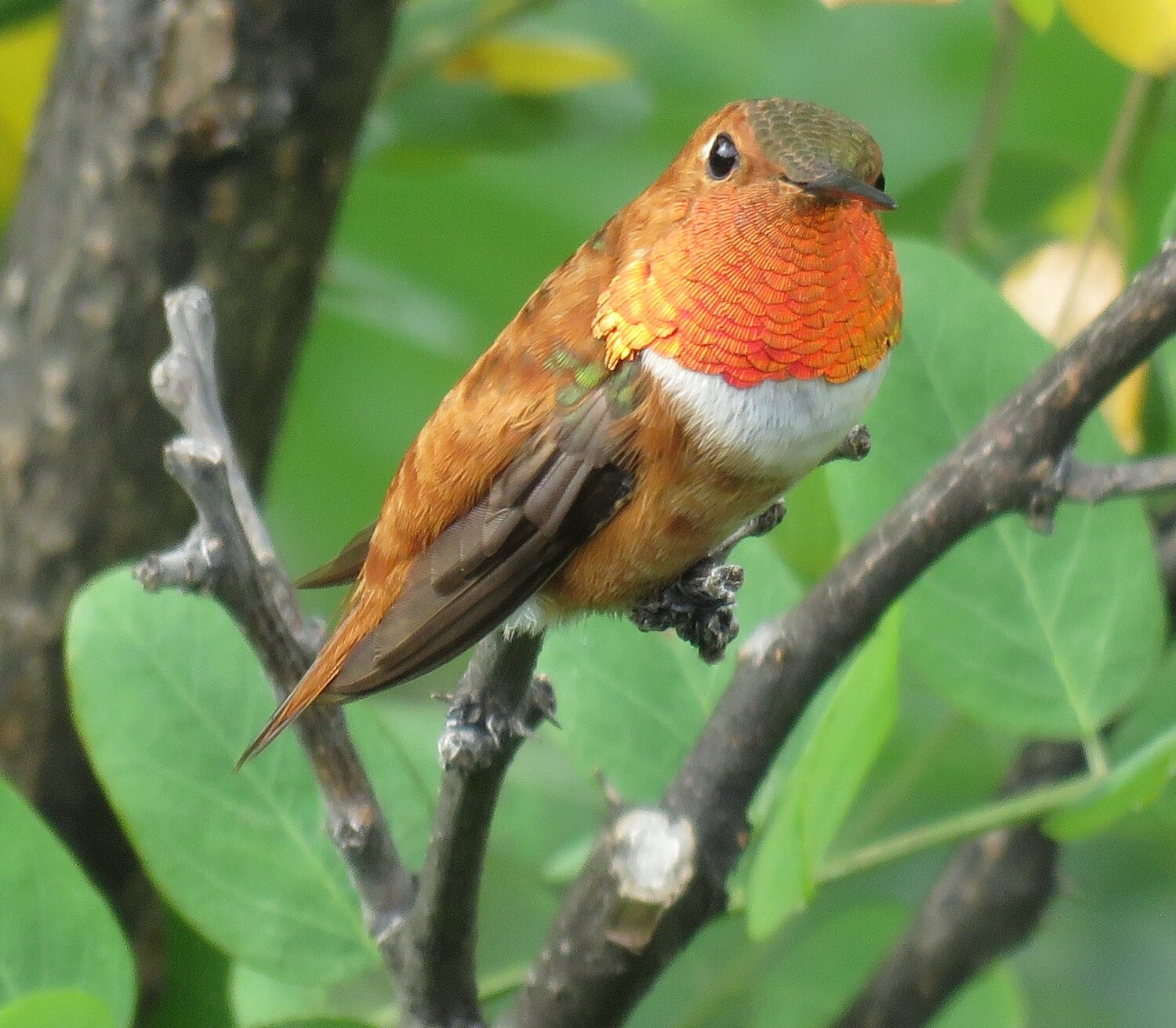
This week’s Bird of the Week, compliments of the Weminuche Audubon Society and Audubon Rockies, is the rufous hummingbird.
These feisty hummingbirds who are relentless defenders at flowers and feeders are back in town. Males and females are extremely territorial all year and not afraid to go after even larger hummingbird species. When they are not feeding, they may perch nearby to keep an eye on things. Broadtail and black-chinned hummingbirds, who have been here since spring, now must sneak in for a drink at feeders and flowers.
Adult rufous males are rusty orange colored on the back and tail. In sunlight their throats flash iridescent red. Females and immature males have rusty washes on the flanks and tail, and often an orange spot on the throat. Their backs are greenish.
To fuel their high-energy requirements, rufous hummingbirds must feed almost continuously in short spurts during the day. They feed primarily on nectar produced by tubular flowers, extending a long bill and tongue deep into the center of the flower while hovering over it. They obtain protein and fat from insect prey, which they pick off in the air, glean from leaves and bark or steal from spider webs. A slurry of nectar and insects is fed to young birds in the nest.
Among birds its size in North America, the rufous hummingbird completes one of the longest migrations, breeding further north on the continent than any other hummingbird species. During their annual circuit in the west, they are found in spring traveling north through California and in summer breeding in the Pacific Northwest and from western Canada to southern Alaska. In these cool climates they are important plant pollinators. Their southern migration route takes them through the Rocky Mountains and they spend time here on their return trip to winter range in Mexico.
The 2025 State of the Birds report includes the rufous hummingbird in its list of “Orange Alert Tipping Point Species” due to its loss of more than 50 percent of the population in the last 50 years with accelerated declines in the last 10. This report, prepared by scientists from United States bird conservation groups, warns that despite evidence that conservation can work, we are not doing enough to reverse the trends in the continued decline of America’s bird populations.
For information on events, visit www.weminucheaudubon.org and www.facebook.com/weminucheaudubon/.


 >
>