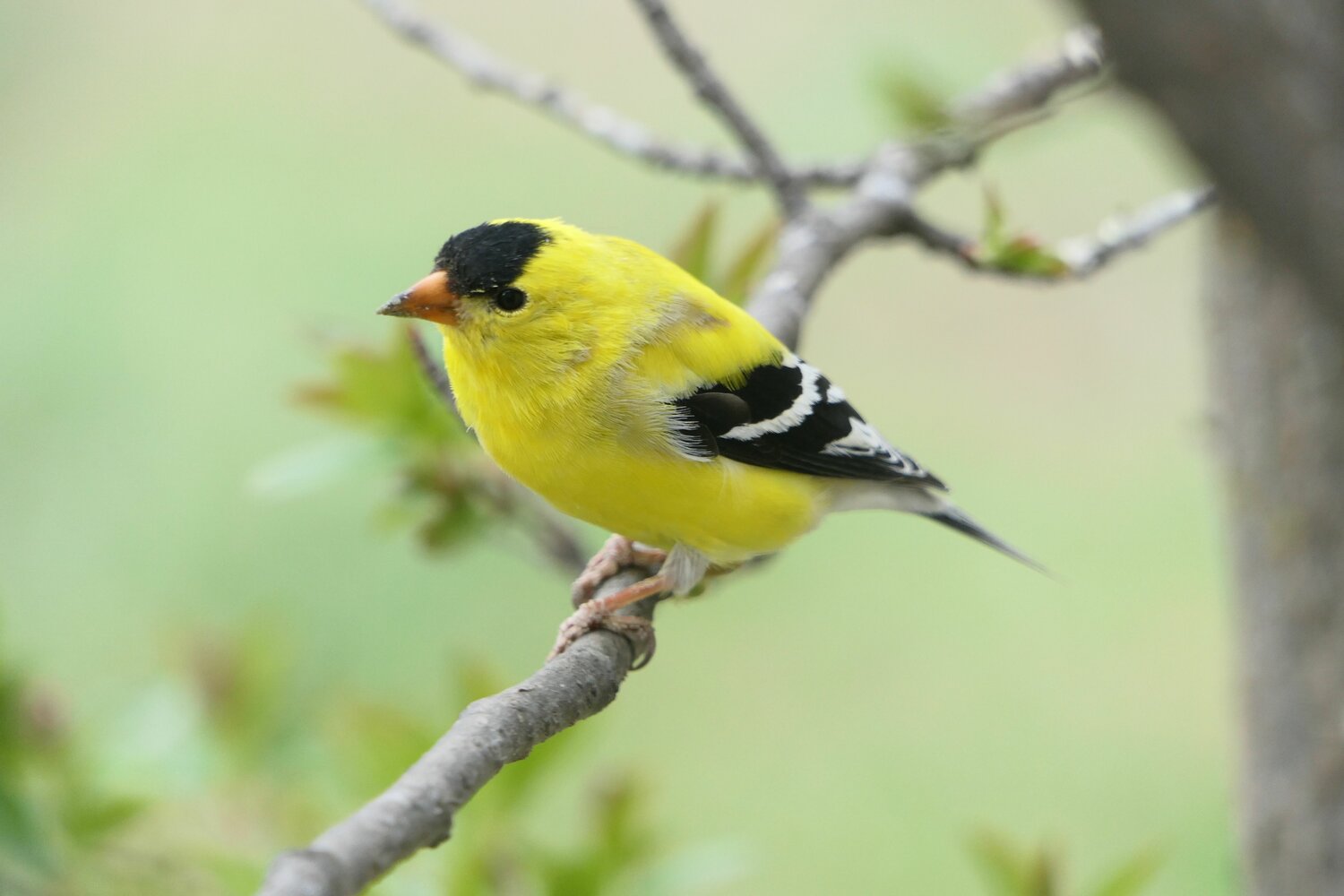
This week’s Bird of the Week, compliments of the Weminuche Audubon Society and Audubon Rockies, is the American goldfinch.
The finches of North America is a diverse group of species that includes the rosy-finches of alpine tundra; siskins, crossbills, house and Cassin’s finches, and evening and pine grosbeaks of forested areas; and the goldfinches that inhabit more open, brushy areas. Its members are colorful birds with stout, conical bills adapted to eating seeds.
American goldfinches breed later than most other North American songbirds. Not until late July and August, when many young of other songbirds are already on their own, does this one nest. They time their breeding to coincide with the abundance of seeds in late summer and use the down of thistle to line their nests.
Unlike many migratory bird species that travel long distances to take advantage of a bounty of insects to feed their young, American goldfinches are vegetarians that only eat an insect inadvertently. They eat a variety of seeds from weeds, flowers, trees and grasses. Parents feed regurgitated seeds to young in the nest. On this strict vegetarian diet, cowbird chicks that hatch in a goldfinch nest cannot survive.
Goldfinches rely on small size and dexterous legs and feet to climb plant stems and hang onto seed heads to harvest seeds unavailable to heavier birds. They display a preference for composite flowers with tightly packed seeds in the center. They love the plant we often fight, musk thistle. At feeders, they prefer Nyjer and black oil sunflower seeds.
Male American goldfinches molt into their canary yellow plumage in spring, so different from their drab brown winter colors that it seems they have just migrated in, when in fact they have been around all the time. A black forehead and black wings with white markings set off his bright yellow. Breeding females have black wings, but their yellow is duller and their backs are olive-colored.
You can plant for goldfinches and other seed eaters with native wildflowers like coneflowers, sunflowers, asters and native thistles. Just don’t deadhead your flowers when they have gone to seed. Leave them standing for late-season food.
For information on events, visit www.weminucheaudubon.org and www.facebook.com/weminucheaudubon/.


 >
>