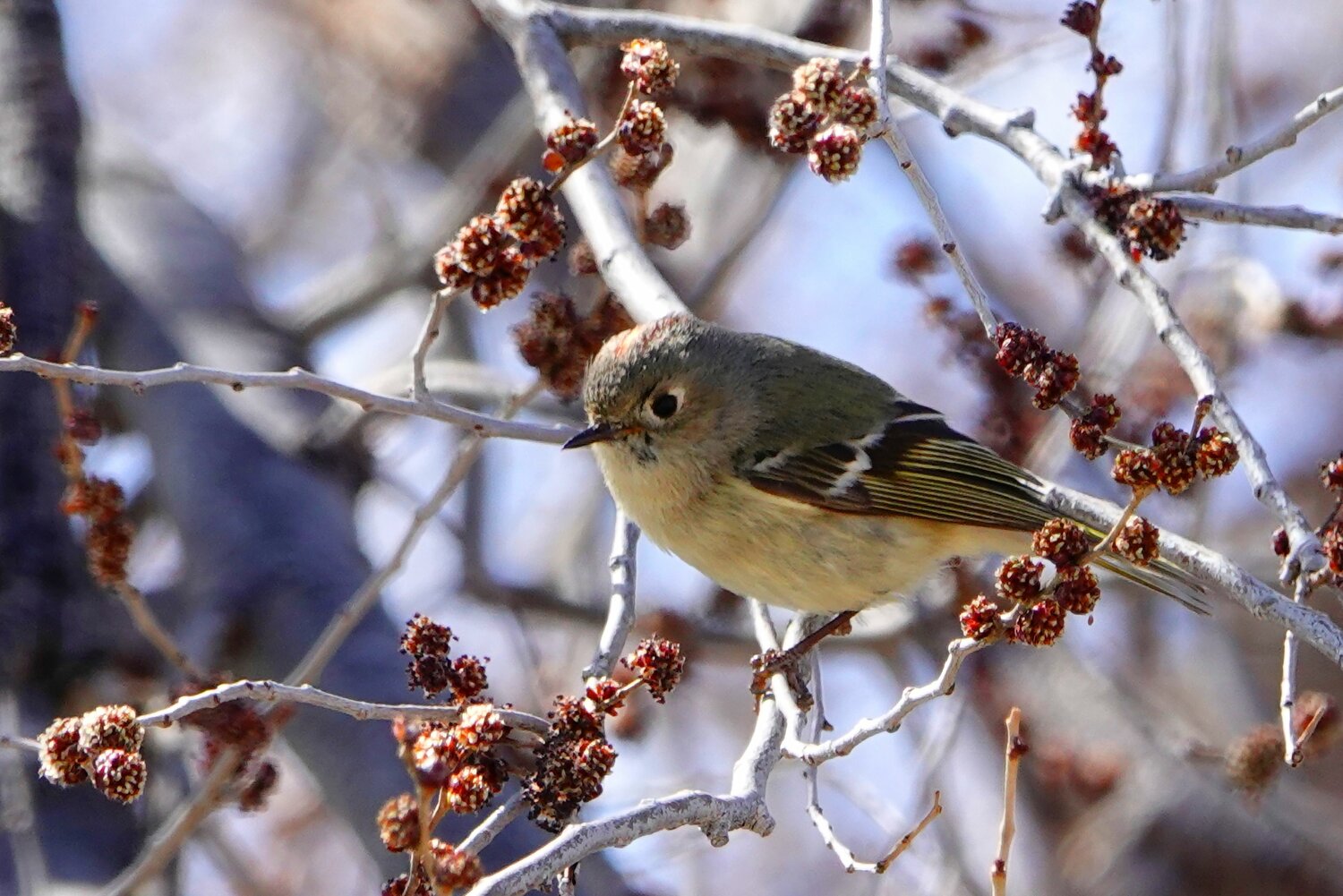
This week’s Bird of the Week, compliments of the Weminuche Audubon Society and Audubon Rockies, is the ruby-crowned kinglet.
Kinglets are tiny birds, even smaller than some types of hummingbirds. Two species of kinglets live here, the ruby-crowned and the golden-crowned. Neither are very colorful birds, but their actions are anything but subdued. They don’t ever seem to calm down, foraging almost frantically and constantly flicking their wings.
The diminutive ruby-crowned kinglets are olive green overall with prominent white eyerings and a white wingbar with black underneath. The ruby crown of feathers worn by males is usually hidden but raises up when he is agitated or excited. His jumbled, bubbly song in summer starts out soft and high-pitched before shifting to a loud ending that seems out of proportion to the size of the bird.
The summer breeding range of the ruby-crowned kinglet includes most of Canada and Alaska and dips down into western mountain ranges. In this season it prefers older, taller, denser stands of spruce-fir forests. Our Audubon chapter summer bird surveys on Jackson Mountain demonstrated this preference in habitat types. Their inaccessible nests, high and hidden in conifers, have provided little opportunity to study this bird’s breeding biology. It is known, however, that a female lays up to 12 eggs, a clutch that can weigh as much as she does.
As winter approaches, this kinglet moves out of the tall conifers into low woods and streamside thickets. It’s amazing that a bird that mainly eats insects can spend the winter in areas where few other insect eaters can survive. The ruby-crowned kinglet locates food while pecking at bark in trees and hovering to glean insects, spiders and eggs from leaves and needles. They can find food so small that other birds don’t want it or can’t find it. In order to stay warm and replenish energy stores, they must eat constantly. They aren’t really attracted to seed feeders, but can show up to eat suet.
Exceptionally harsh winters may take a toll on numbers, but ruby-crowned kinglet populations seem stable, with the species widespread and common.
For information on events, visit www.weminucheaudubon.org and www.facebook.com/weminucheaudubon/.


 >