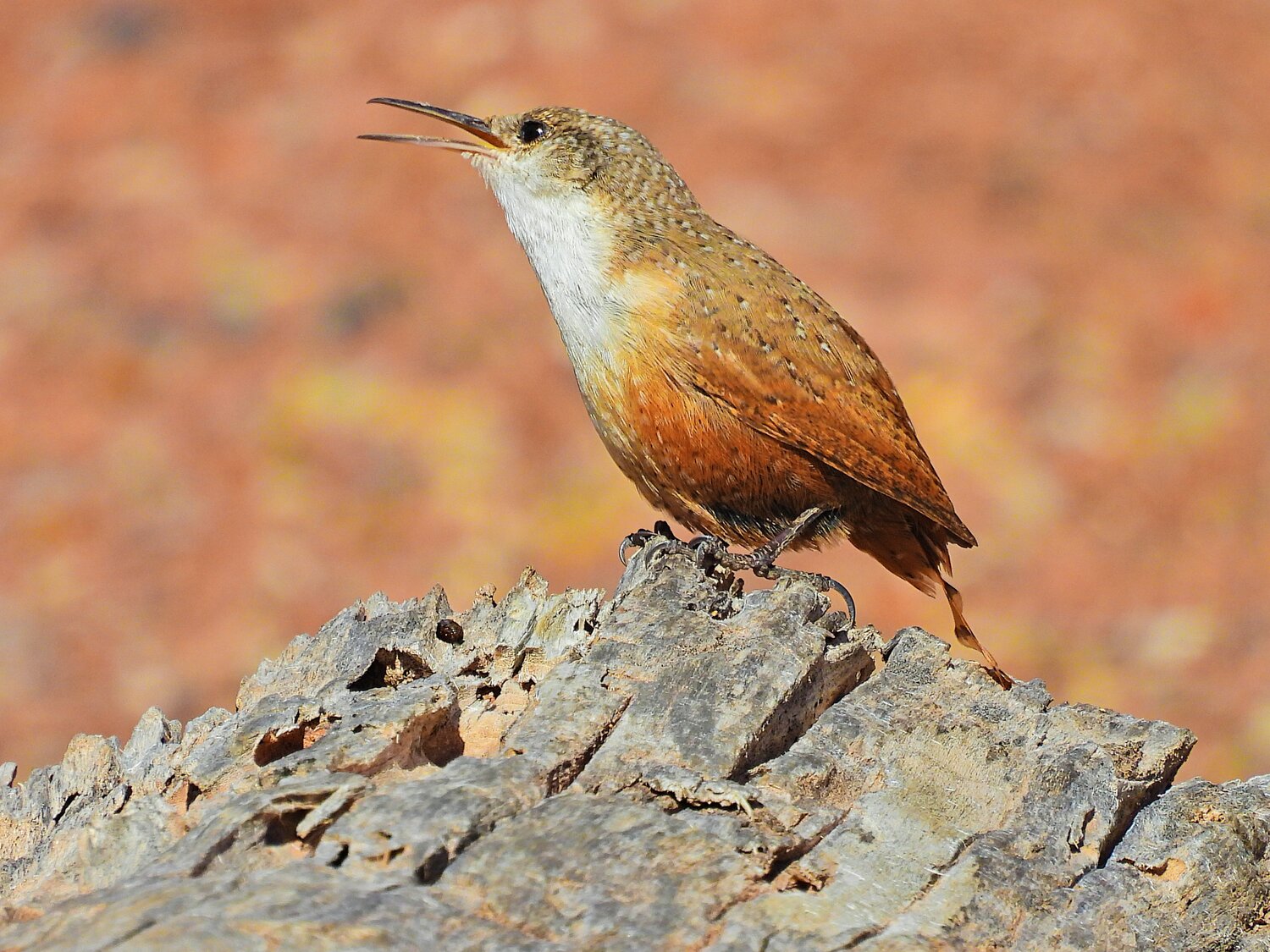
This week’s Bird of the Week, compliments of the Weminuche Audubon Society and Audubon Rockies, is the canyon wren.
In North America, wrens occupy habitats as diverse as northern boreal forests, deserts of the southwest, and marshlands. The family name for this group of small brown birds, Troglodytidae, translates to “cave dweller” in Greek, a reference to the tendency of wrens to forage in dark places and crevices. This descriptor is especially fitting for the canyon wren.
Named for the places where it is found, the canyon wren is a resident bird of dry, rocky canyons in western North America and Mexico. In this steep, often inaccessible environment, crevices and crannies in the rocks provide places to rest, forage and nest. With short, strong legs; a long hind toe; and long, sharp toenails, the agile canyon wren is able to cling to and scale sheer rock surfaces.
Canyon wrens are not known to drink water and are at home in very dry environments. They eat mostly insects and spiders, which they hunt among the rocks. A long, slender bill and flattened skull are adaptations which allow them to probe for food in tight crevices. Flattening the body against the rock, spreading the legs and extending the neck allows them to reach even deeper.
If there is one thing that wrens excel at, it is singing. Canyon wrens sing a sweet descending cascade of whistles, often while perched on an exposed boulder. Both sexes sing, sometimes in duet. Hearing their song is your clue to start scanning the canyon walls for this small, active bird disappearing in and out of sight among the rocks.
These wrens are sparrow-sized and rusty brown with a white throat and chest. The tail and wings are barred with black. Within their range, they stay year-round. Pairs remain together throughout the year and fiercely defend a breeding territory of one to four acres. Young may remain with their parents for several weeks or longer before dispersing into their own territories.
Although they are not reported often or in large numbers, these elusive birds have been seen at all times of year in our area.
For information on events, visit www.weminucheaudubon.org and www.facebook.com/weminucheaudubon/.
Photo courtesy Charles Martinez


 >
>