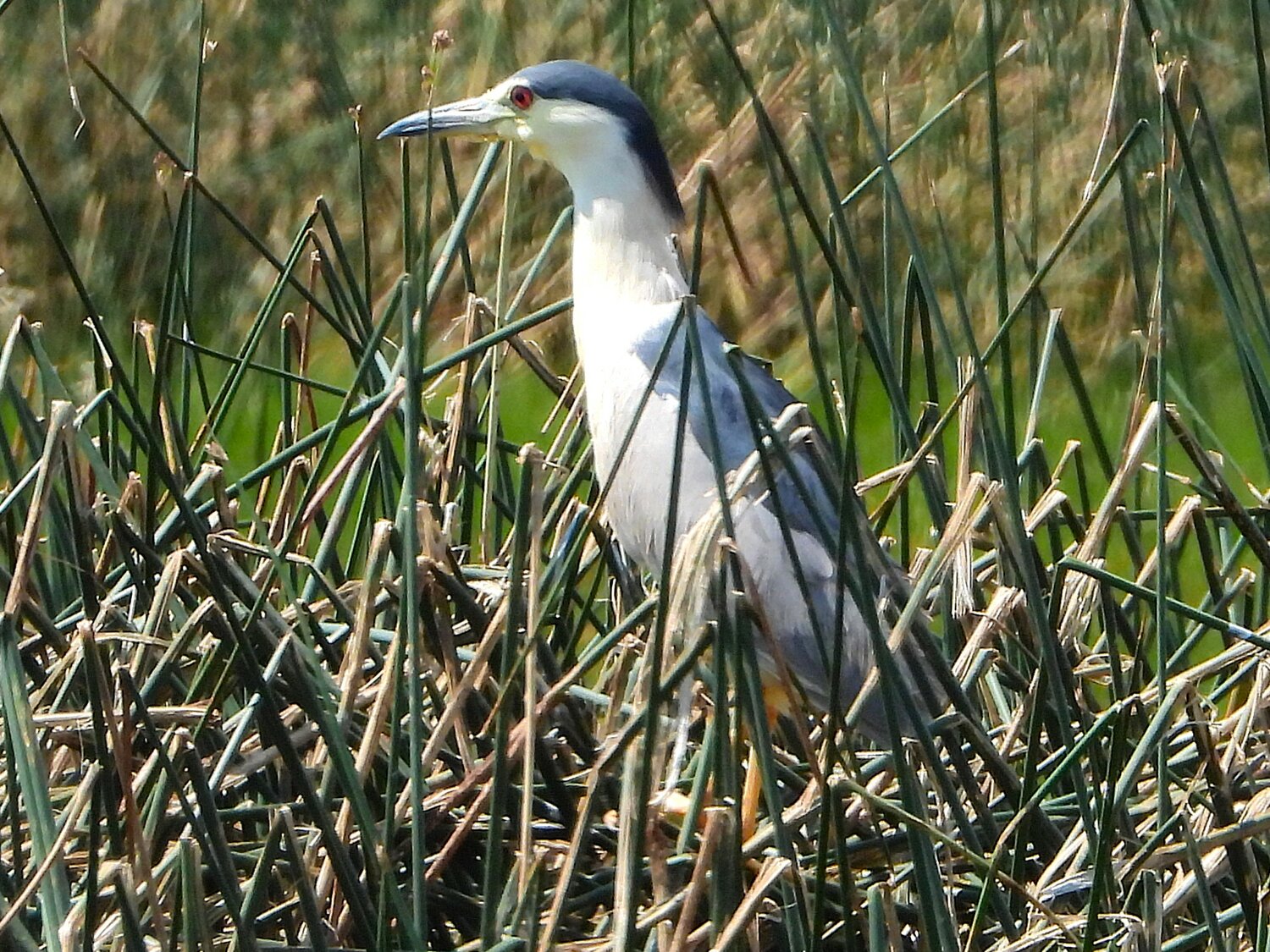
This week’s Bird of the Week, compliments of the Weminuche Audubon Society and Audubon Rockies, is the black-crowned night heron.
This is a bird whose name is descriptive of both its habits and its physical appearance. Typically, during the day groups of these birds sit hunched and motionless resting in trees near water. As dusk falls, they fly out of their daytime roosts to spend the night feeding. Feeding at night reduces competition from other herons and egrets that use the same habitat and dominate during the day.
Black-crowned night herons are opportunistic feeders that live in a variety of both fresh and saltwater wetland types. Although they eat mainly fish, they also consume crustaceans, aquatic insects, frogs, snakes, clams, rodents, carrion and even garbage from landfills. They forage by standing still or walking slowly at the edge of shallow water, or perch above it while looking for fish. Like the related green heron, they have been observed using objects to bait for fish.
Unlike the great blue heron that we commonly see here, this heron is stocky and short necked with a hunchbacked look. Adults have a black back and crown, red eyes and whitish belly. Their legs are short, and their bills heavy and pointed. In breeding season, long white plumes grow from the back of their heads. Immature birds display a transition from juvenile to adult plumage with streaked chests and a dark gray cap.
Black-crowned night herons are the most widespread heron in the world, nesting on every continent except Australia and Antarctica. In North America, they breed throughout the lower 48 states and live full-time on both coasts. In winter, interior northern populations head south as far as Mexico and Central America. In our area, individuals have been spotted stopping by from late spring to early fall.
These social birds nest in colonies in groves of trees or on the ground, preferring islands or places above water to deter predators. They can be urban birds in places as populated as New York City, where they nest on islands in harbor areas, but are currently facing a concerning population decline from causes not yet determined.
For information on events, visit www.weminucheaudubon.org and www.facebook.com/weminucheaudubon/.
Photo courtesy Charles Martinez


 >
>