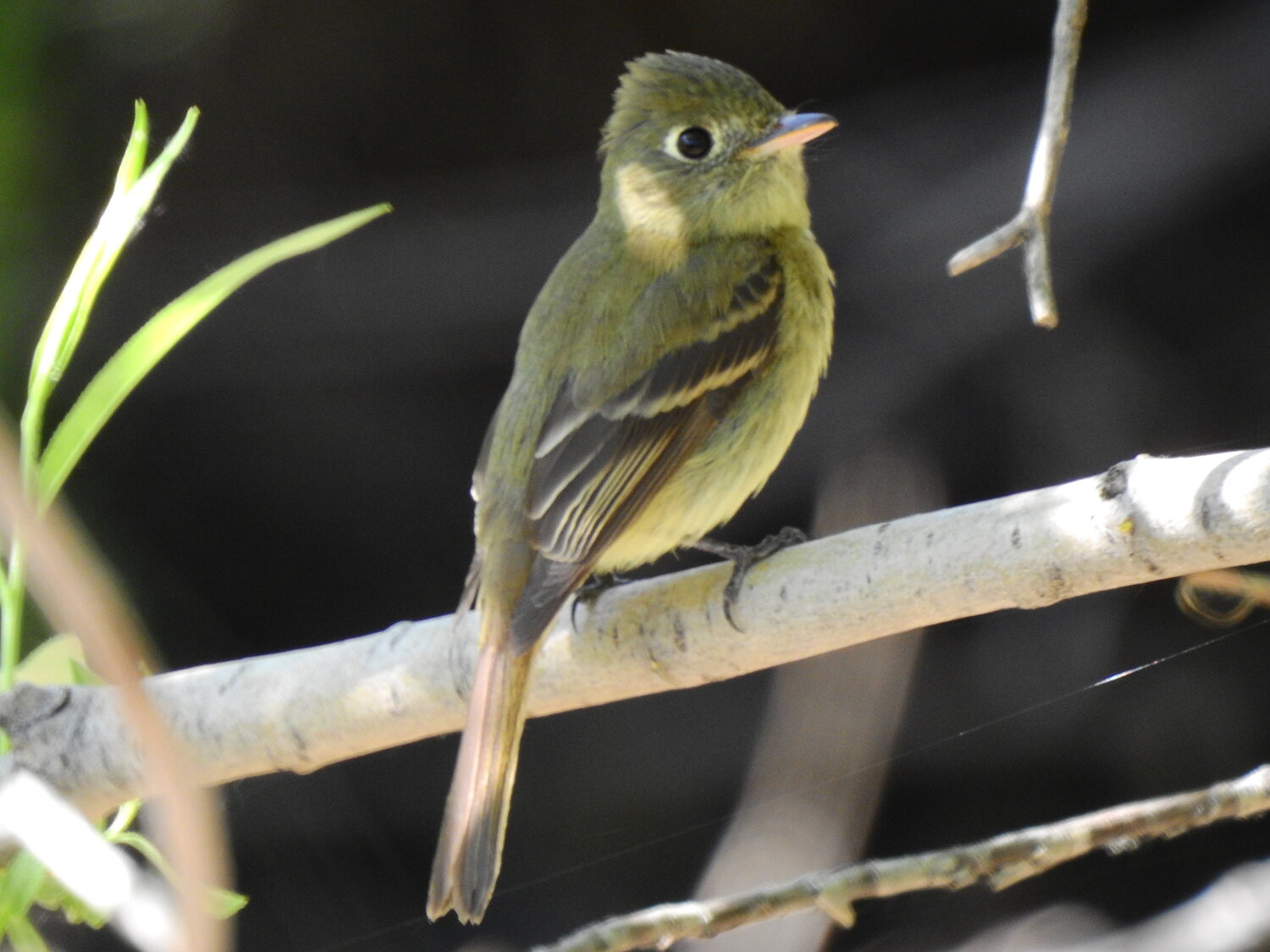
This week’s Bird of the Week, compliments of the Weminuche Audubon Society and Audubon Rockies, is the western flycatcher.
Every year, a committee of the American Ornithological Society publishes updates to the Checklist of North American Birds, the official authority on the names and classifications of regional birds. In 1989, it split the western flycatcher into two flycatcher species, the Pacific Slope and the Cordilleran, but, in 2023, the name western flycatcher was returned to both when studies concluded that similarities between the two groups were greater than differences.
The distribution of this small flycatcher is widespread in the West. Summers find it in areas from the Pacific coast to the Rocky Mountains from southeastern Alaska to southern Mexico. Along the coast they breed primarily in humid coniferous forests, and away from the coast in shaded mountain forests.
A variety of structures can support this bird’s moss-covered nest. Natural nest sites include the fork of a small tree, a vertical streambank, on top of a stump or in the roots of a fallen tree. They are the most likely of our small, green flycatchers to nest near people on ledges, rafters or other parts of buildings. Young have been documented being fed in the nest here in early August.
Western flycatchers eat mostly insects, captured in flight or picked from vegetation. Look for them to fly out from branches in the low to mid-level of trees. Prey species include beetles, bugs, wasps, bees, flies, moths, leafhoppers and spiders.
The western flycatcher looks like several of the other notoriously similar-looking small birds in the Empidonax genus. It is olive backed, has a peaked crown, white wingbars and a teardrop-shaped eyering. It is best pinpointed by its simple, two-note whistle that rises on the second syllable. The use of sound ID phone apps like Cornell Lab’s Merlin has been a game changer for the identification of flycatchers and is a great tool to use in training your ear to learn their calls.
Western flycatchers show up in our area in May and stay into September. Although they are still numerous, loss of mountain coniferous habitat on their breeding grounds and on their winter grounds in Mexico poses a threat to their conservation.
For information on events, visit www.weminucheaudubon.org and www.facebook.com/weminucheaudubon/.
Photo courtesy Charles Martinez


 >
>