This week’s Bird of the Week, compliments of the Weminuche Audubon Society and Audubon Rockies, is the gadwall.
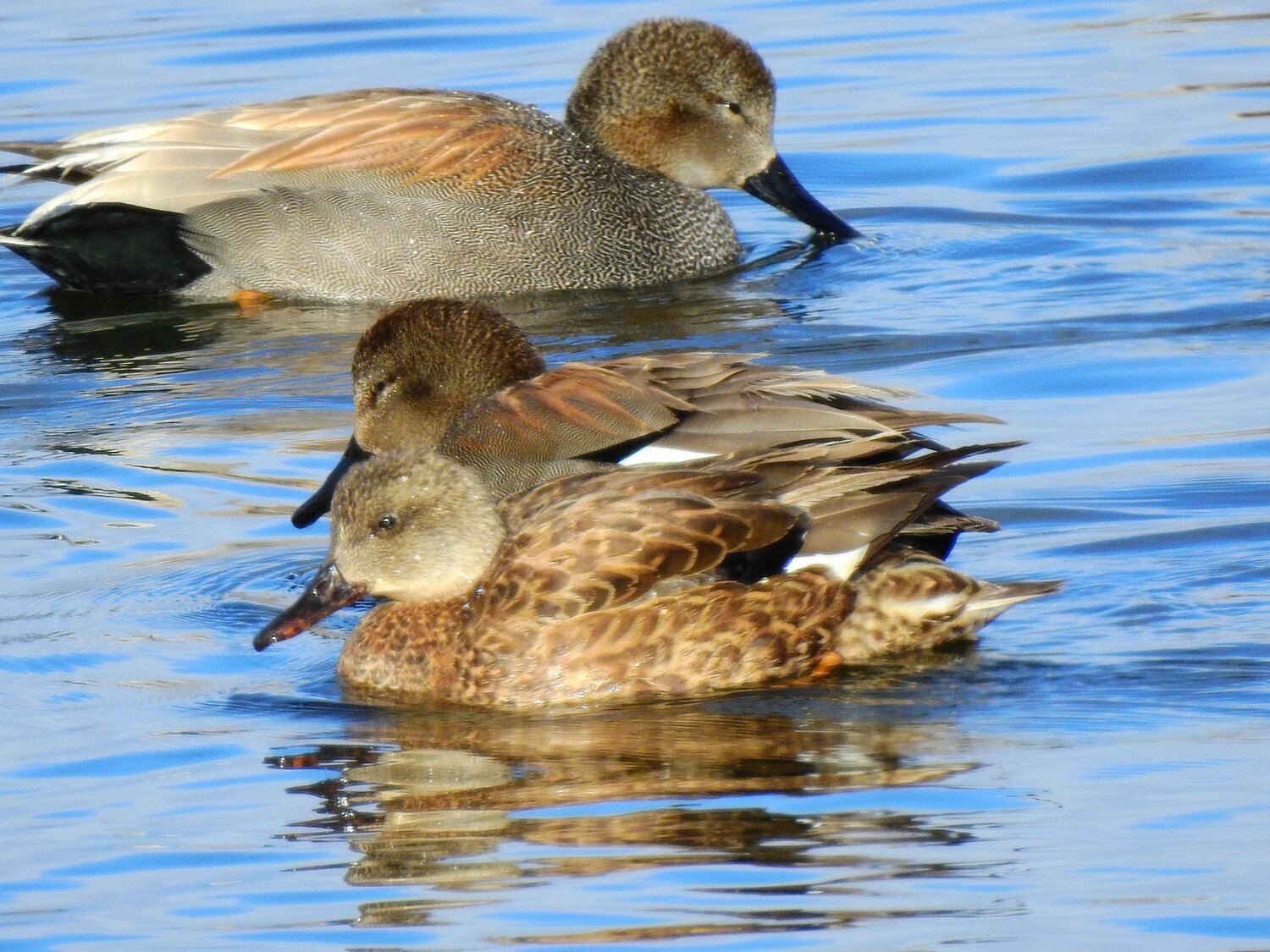
The male gadwall’s colors are less flashy than those of many other duck species, earning it the nickname of gray-duck. But his beauty is underrated, and magnification reveals a fine pattern of wavy lines all over his gray body. He has touches of brown and rust colors on his head and back, and a black rump — a distinctive field mark even at a distance.
Brownish females resemble mallards, but often display a small white patch of folded wing feathers at the rear. Courtship displays and pair bond formation occur in fall, four to five months before breeding occurs. If you can pick out the male gadwall in winter and spring, the female is often close by.
Gadwalls are dabbling ducks that rarely dive and primarily feed on the leaves and stems of submerged aquatic vegetation. When these foods are out of reach, they will wait for coots and diving ducks to surface and snatch food from their mouths. During the breeding season, invertebrates are added to their diet. Females especially need the extra protein for egg production.
Outside breeding season, gadwalls can be found on small bodies of water with submerged vegetation across the United States. Breeding occurs primarily in the prairie pothole regions of the Great Plains states and the Canadian prairies, where they require areas of well-vegetated wetlands for feeding that are adjacent to areas of dense brush and grasses to hide their nests and ducklings. More than other ducks, they prefer to nest on island areas within a wetland for protection from predators.
As is typical with many duck species, the pair bond breaks when incubation of the eggs begins, and the male leaves to molt his breeding plumage. Females care for their young until they are independent at around 10 weeks old.
Related to their requirement to seek habitat with well-hidden nest sites, gadwall have higher nest success rates than other prairie-nesting birds. Since the 1980s, their numbers and range in North America have increased.
For information on events, visit www.weminucheaudubon.org and www.facebook.com/weminucheaudubon/.


 >
>