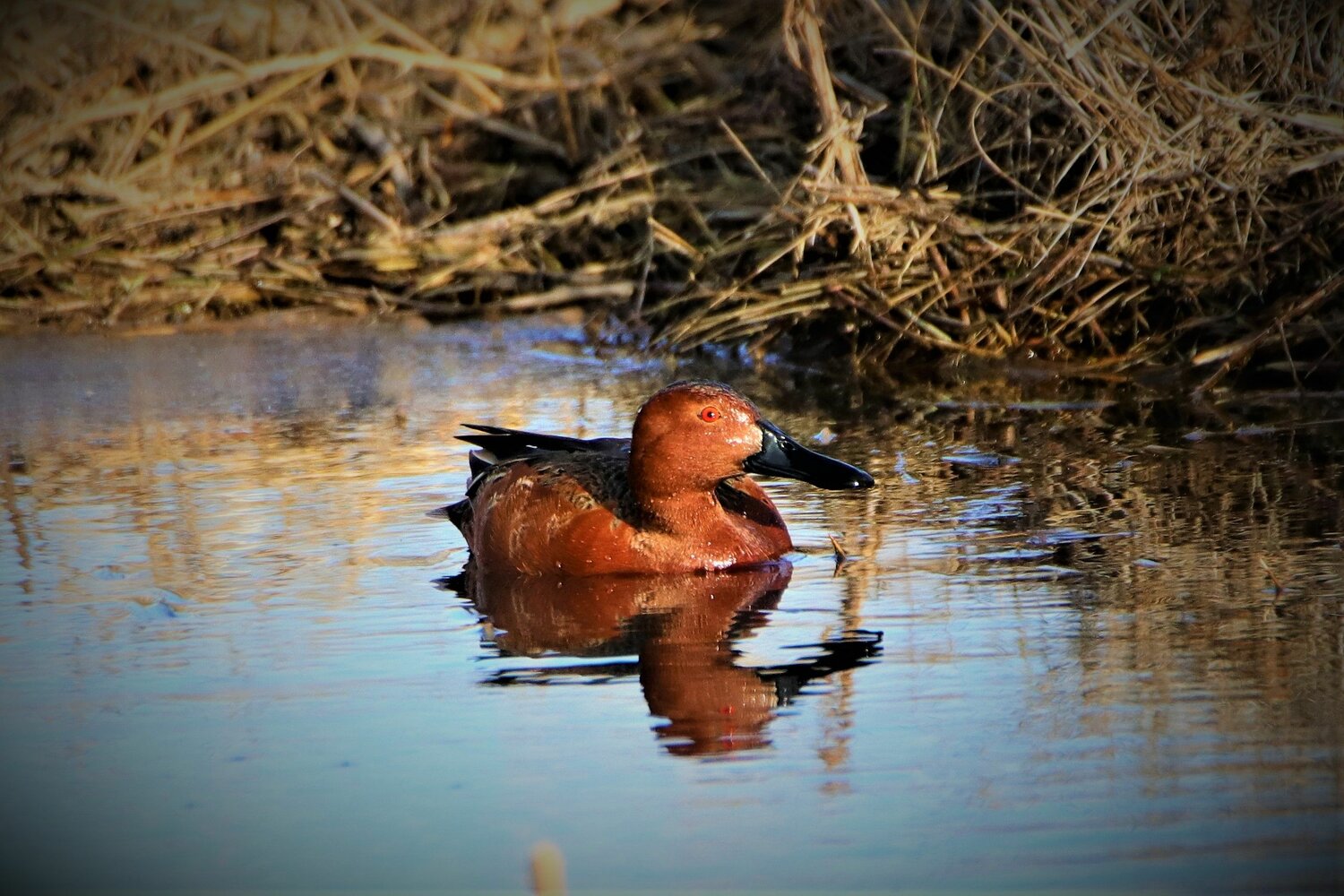
This week’s Bird of the Week, compliments of the Weminuche Audubon Society and Audubon Rockies, is the cinnamon teal.
In breeding season, it’s difficult to confuse this male duck with bright cinnamon-red plumage with anyone else. He is a relatively small duck with a long, somewhat spatulate, black bill and red eyes. Females have the same long, black bill but are mottled gray-brown and have dark eyes. In flight, both sexes display a sky-blue shoulder patch on their open wings. In late summer, when the males molt out of their bright summer colors, they resemble females and, even for experts, both sexes become difficult to distinguish from related blue-winged teals.
The cinnamon teal is a western species of freshwater wetlands. In North America they breed in Great Basin and Intermountain West regions, with the majority wintering in Mexico. A separate, distinct population lives in South America. In our area they show up in late February and stay into September.
They are most often found feeding at the edges of shallow wetlands with rushes, sedges and reeds. Here they dabble at or near the water’s surface for seeds, aquatic vegetation, zooplankton and insects. They often swim forward with heads partially submerged, straining food from the water through their large bills. They may feed socially in a line, with the second bird taking advantage of food stirred up and brought to the surface by the first.
Females build a nest over water that is concealed on all sides and from above by wetland vegetation. To thwart detection by predators, she approaches the nest indirectly through tunnels in the vegetation. The male guards the female and the nest through most of the incubation period, longer than many other species where males typically depart once the eggs are laid.
Cinnamon teal are one of the least abundant dabbling ducks, in large part due to a massive loss of wetland habitat within their western range. Partners in Flight includes them on their Watch List Species of birds with steep population declines.
Purchasing a $25 federal duck stamp is a cost-effective method of helping wetland wildlife. More than 98 percent of the money raised from sales goes to help acquire wetlands and conservation easements for the National Wildlife Refuge System.
For information on events, visit www.weminucheaudubon.org and www.facebook.com/weminucheaudubon/.


 >
>