This week’s Bird of the Week, compliments of the Weminuche Audubon Society and Audubon Rockies, is the American dipper.
You’re near a clear, cold mountain stream or river when you hear a loud song of bubbly trills. Your eyes search the bushes and trees for this cheerful songster when movement near the water’s edge catches your eye. It’s the American dipper, North America’s only aquatic songbird.
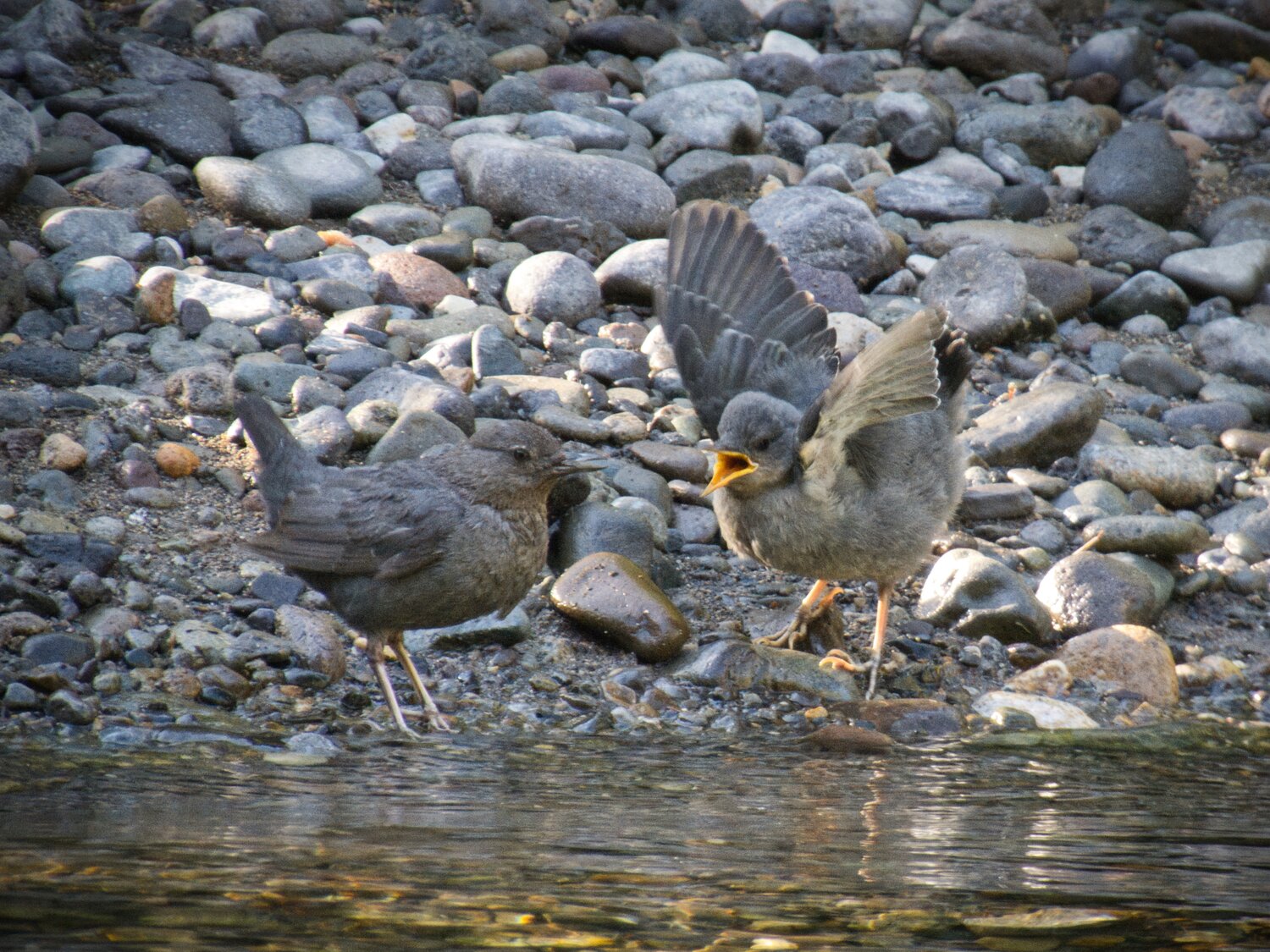
Both sexes of this medium-sized, round-bodied bird are colored slate gray with some brown tones around the head. They would blend right into the equally gray river rocks were it not for their constant up-and-down bobbing motion. In fact, some researchers believe that this characteristic movement of the dipper serves as a kind of communication used by the bird to announce, “Here I am,” in the noisy stream environment it inhabits.
Several adaptations allow this bird to survive and feed in cold waters sourced from snow melt. Among them are a low metabolic rate, extra oxygen-carrying capacity of the blood and an extra-thick feather coat. A large preen gland produces an oily wax that the dipper spreads to waterproof its feathers. Dippers are almost never seen away from water, following cooler temperatures upstream in summer and moving downstream when ice covers the water in winter.
American dippers feed on the larvae of aquatic insects that are often found in the oxygenated cascades, riffles and waterfalls of fast-flowing streams. Dippers are good swimmers that dive from a rock headfirst into the water. Short, strong wings assist them in swimming underwater or paddling across the top, and long legs with sharp claws allow them to walk across the bottom in search of prey. Nostril flaps block out water, and a transparent third eyelid and enlarged eye muscles help them focus underwater. They are able to stay submerged for up to 15 seconds.
A dipper pair builds a dome-shaped nest of moss, grass and leaves on inaccessible vertical surfaces over water, under bridges and in culverts. Since 2021, Pagosa volunteers have monitored the nesting success of American dippers on local rivers. Volunteers for the current season are being recruited now. See the related article in The SUN for information on the project and how to join. You will fall in love with this bird.
For information on events, visit www.weminucheaudubon.org and www.facebook.com/weminucheaudubon/.


 >
>