This week’s Bird of the Week, compliments of the Weminuche Audubon Society and Audubon Rockies, is the Canada goose.
Perhaps we don’t intend to invite this grassland-adapted bird into our living spaces when we manicure our grass lawns, parks and golf courses, but this is exactly what we do. In spring and summer, Canada geese feed on grasses and sedges on land and sometimes dabble for aquatic plants. Mowed expanses provide a preferred habitat with the wide open views they need to spot predators, and all the better if its waterfront property. Who can blame them for taking it as a welcome sign?
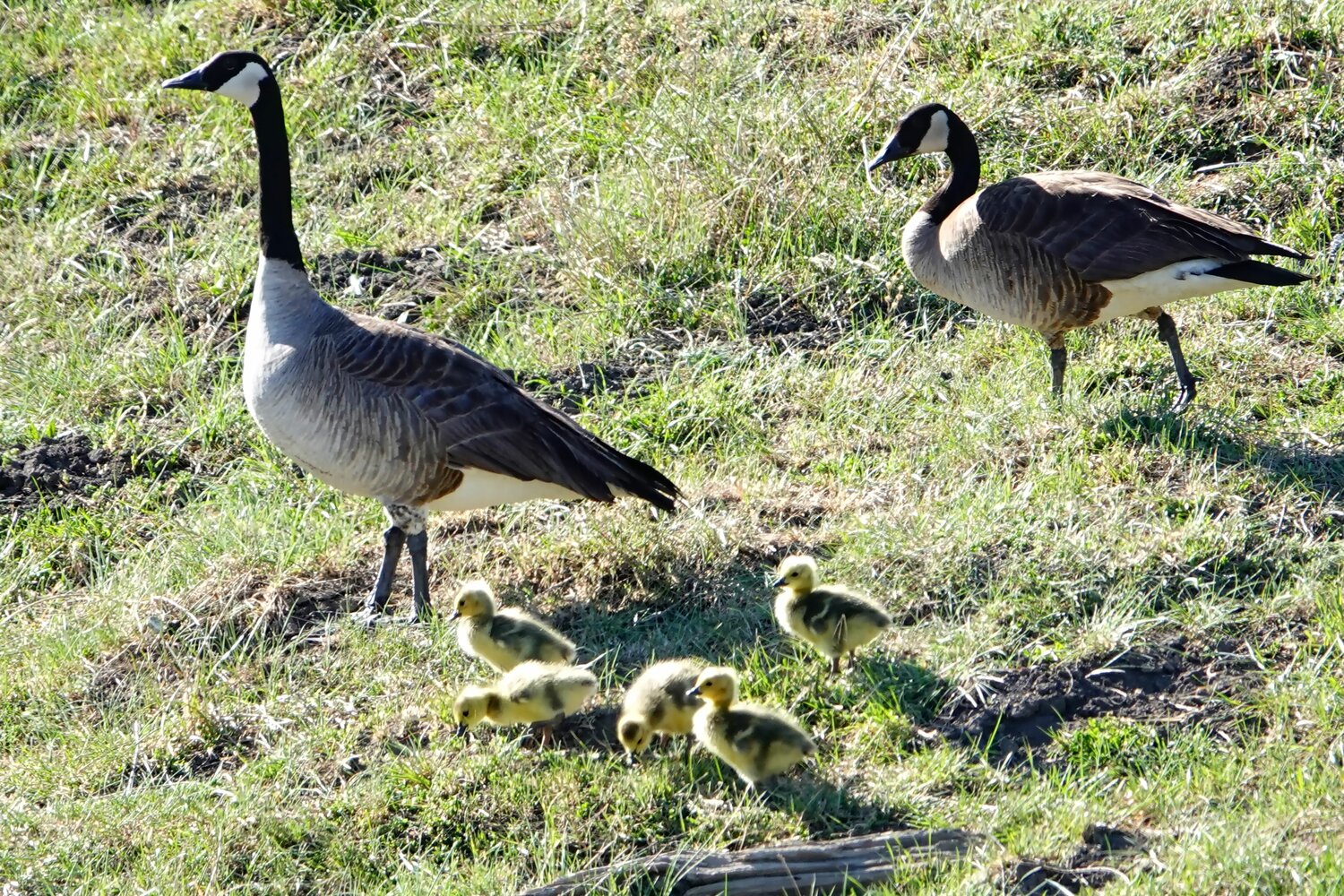
During much of the year Canada geese live in large flocks where many are related. The white cheek patch contrasting with a black head and neck and brown body are marks of the Canada goose. Sexes are identical, but the male is noticeably larger than his mate.
Most do not breed before their fourth year. Pairs mate for life and stay together year-round. As spring approaches, pairs break off from the flock and begin seeking out a spot near water to build a simple ground nest. Defense of a nesting territory can be a noisy affair involving threat displays with hissing, honking and splashing in the water, and may get physical if the intruder doesn’t back off.
Only the female incubates the eggs while the male stands guard nearby. Cute, yellow hatchlings leave the nest after one or two days, already able to walk, swim, feed and dive. At this stage, the family group is never far from the protection of a getaway on water, and young often remain close to the parents for the first year.
Adults gradually replace the worn feathers of the head and neck with fresh ones, but in late summer they drop many wing feathers at once. This shortens the molt period, but leaves them flightless for three to five weeks. During this time they are quiet and mainly on the water.
Canada geese migrating in V formations to and from northern breeding grounds were once considered a symbol of wilderness. While thousands still continue these north and south journeys each year, urban lawns and farming practices which make waste grain more available in fall and winter have eliminated the need to migrate for many Canada geese.
For information on events, visit www.weminucheaudubon.org and www.facebook.com/weminucheaudubon/.


 >
>