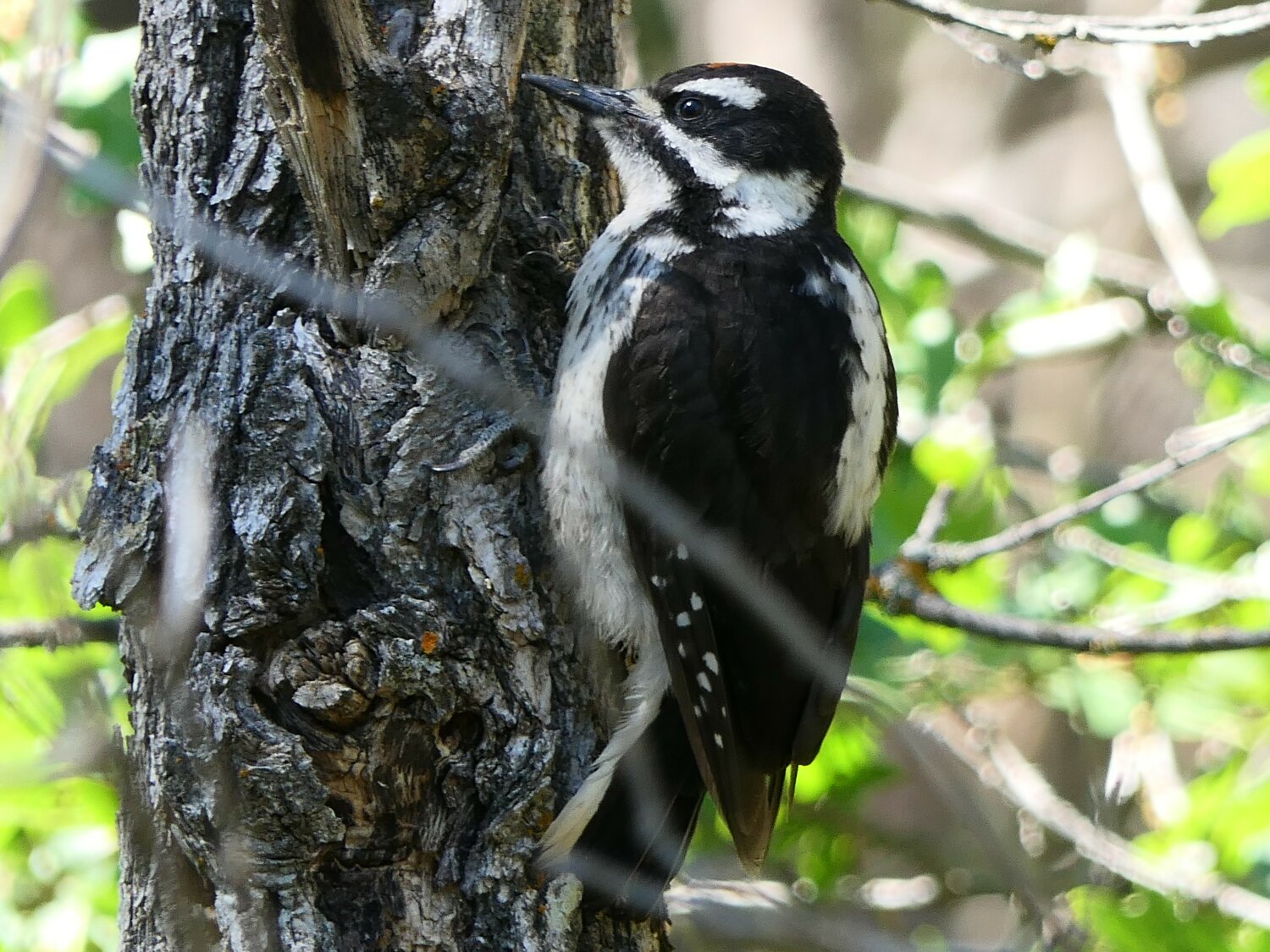
This week’s Bird of the Week, compliments of the Weminuche Audubon Society and Audubon Rockies, is the hairy woodpecker.
From sea level to high in the mountains, across North America this woodpecker is a resident bird in forests with large trees and is equally common in coniferous, deciduous and mixed forest types. With toes that can rotate to the front, back or side, and stiff tail feathers for a brace, they are well-adapted to cling to a tree trunk in an upright posture and spring upward with both feet.
Insects make up more than 75 percent of this woodpecker’s diet. With a taste for the adults and larvae of wood-boring and bark beetles, they consume large numbers of these forest pests. Hairys may appear in numbers in forests with bark beetle infestations and in burned forests where these insects move in. They can locate prey inside the tree by rapidly tapping on the wood to hear the difference in sound above an insect tunnel. They forage for insects by using a chisel-shaped bill to probe into wood, flake bark or excavate into dead wood.
In winter in Colorado, hairy woodpeckers feed extensively on the seeds of ponderosa pine. Seeds are wedged into the bark crevice and pecked open before they can be consumed. Hairys are common birds at suet and sunflower feeders, sometimes drink at sapsucker wells, and use their long tongues to lap nectar from hummingbird feeders in summer.
Hairy woodpeckers are robin-sized black and white birds named for the white patch on their backs formed by long, hair-like feathers. Their black wings are checkered with white, and two white stripes divide the head. Males have a patch of red feathers on the head, making the sexes easy to tell apart.
Around the world, many woodpecker species have a twin, with one type usually being larger, and this is true of the hairy woodpecker. It is considerably larger than the look-alike downy woodpecker, but this may not be obvious unless they are side by side. While the long bill of the hairy is about the length of its head, the smaller downy’s bill is much shorter. It is believed that looking like a larger, more aggressive bird may confer some protection to the smaller downy.
For information on events, visit www.weminucheaudubon.org and www.facebook.com/weminucheaudubon/.


 >
>