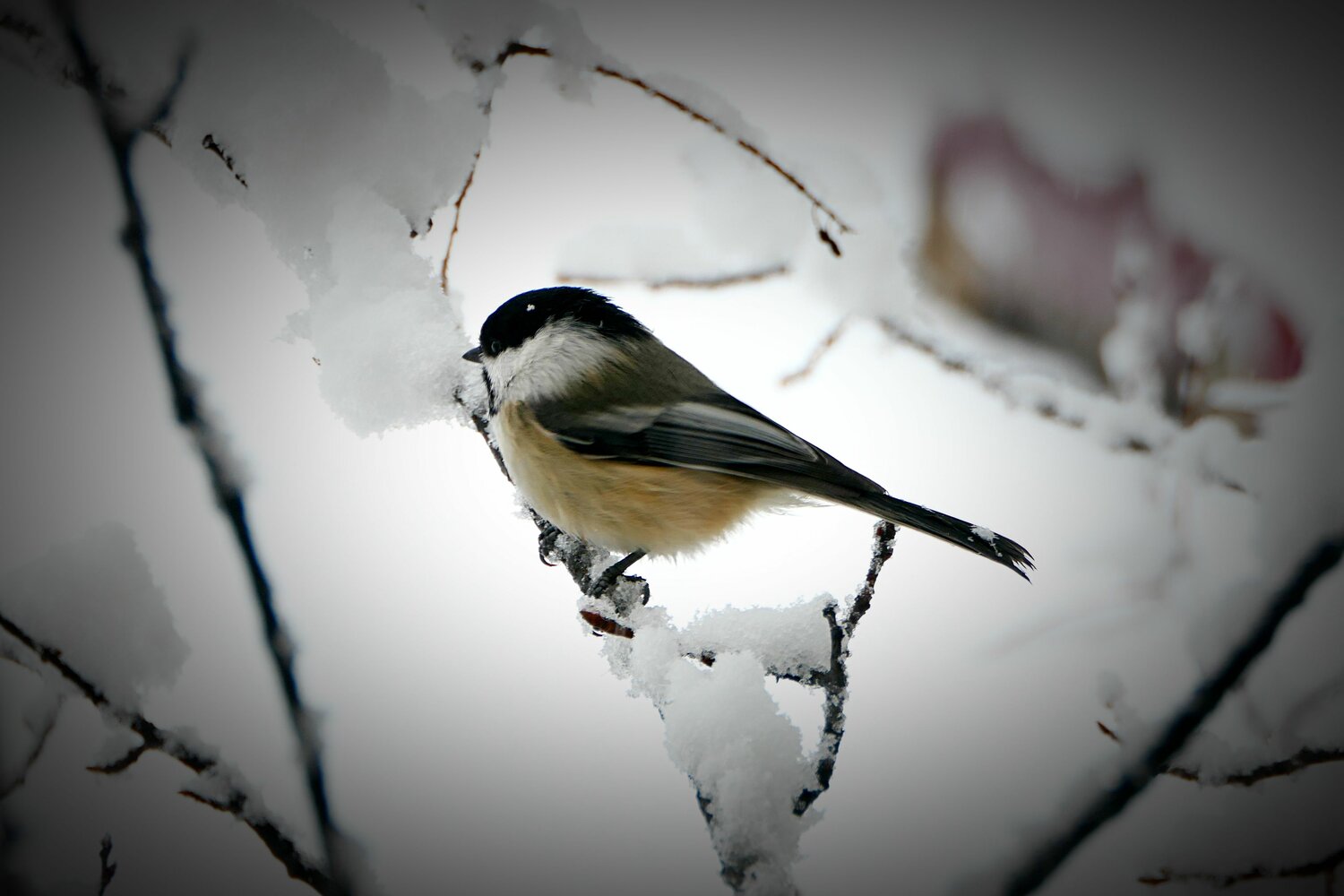
This week’s Bird of the Week, compliments of the Weminuche Audubon Society and Audubon Rockies, is the black-capped chickadee.
The familiar chickadee is one of the first birds that most people learn and easily one of America’s favorites. It’s the bird that sings its name. The black-capped is one of North America’s seven chickadee species. Of these, it and the closely related mountain chickadee are at home in Colorado.
A small bill and long tail give these cute, round-headed birds a rotund look. The black-capped’s solid head cap extends through its eyes and contrasts with white cheeks, gray back and buffy underparts. The mountain chickadee’s cap is cut by a white stripe over the eyes and buffy colors are not pronounced.
Actively investigating changes in their territory, they are quick to discover feeders and not afraid of humans. They fly in to snatch a sunflower seed and then dart into the cover of a tree or shrub to eat. Perched on a branch, they hold the shell between their feet while chipping at it to eat tiny bits of the exposed seed. In a tree, they hop acrobatically, often hanging upside down from a branch in search of insect eggs and pupae in winter.
Like many of our resident birds, chickadees hide food to survive the winter when less is available. Every autumn, neurons in the brain that store outdated information are replaced with new ones. This allows them to remember thousands of current hiding places of stored food.
Studies of the vocalizations of black-capped chickadees have increased our understanding of the complex language of birds. Chickadees are often the first to sound the alarm when a predator is detected, and their calls convey information about the threat. Some calls encourage other birds to join in mobbing a perched larger bird, letting the predator know it has lost the advantage of surprise attack and might as well move on. A flying raptor might elicit an alarm call to duck into cover and freeze. In winter, mated black-capped chickadee pairs live within mixed flocks of other small birds including nuthatches, kinglets, creepers and downy woodpeckers. More than 50 different species have been shown to respond to the chickadee’s alarm calls.
Especially in winter, you may benefit resident birds by providing water, food and shelter in your living space.
For information on events, visit www.weminucheaudubon.org and www.facebook.com/weminucheaudubon/.


 >
>