This week’s Bird of the Week, compliments of the Weminuche Audubon Society and Audubon Rockies, is the northern shoveler.
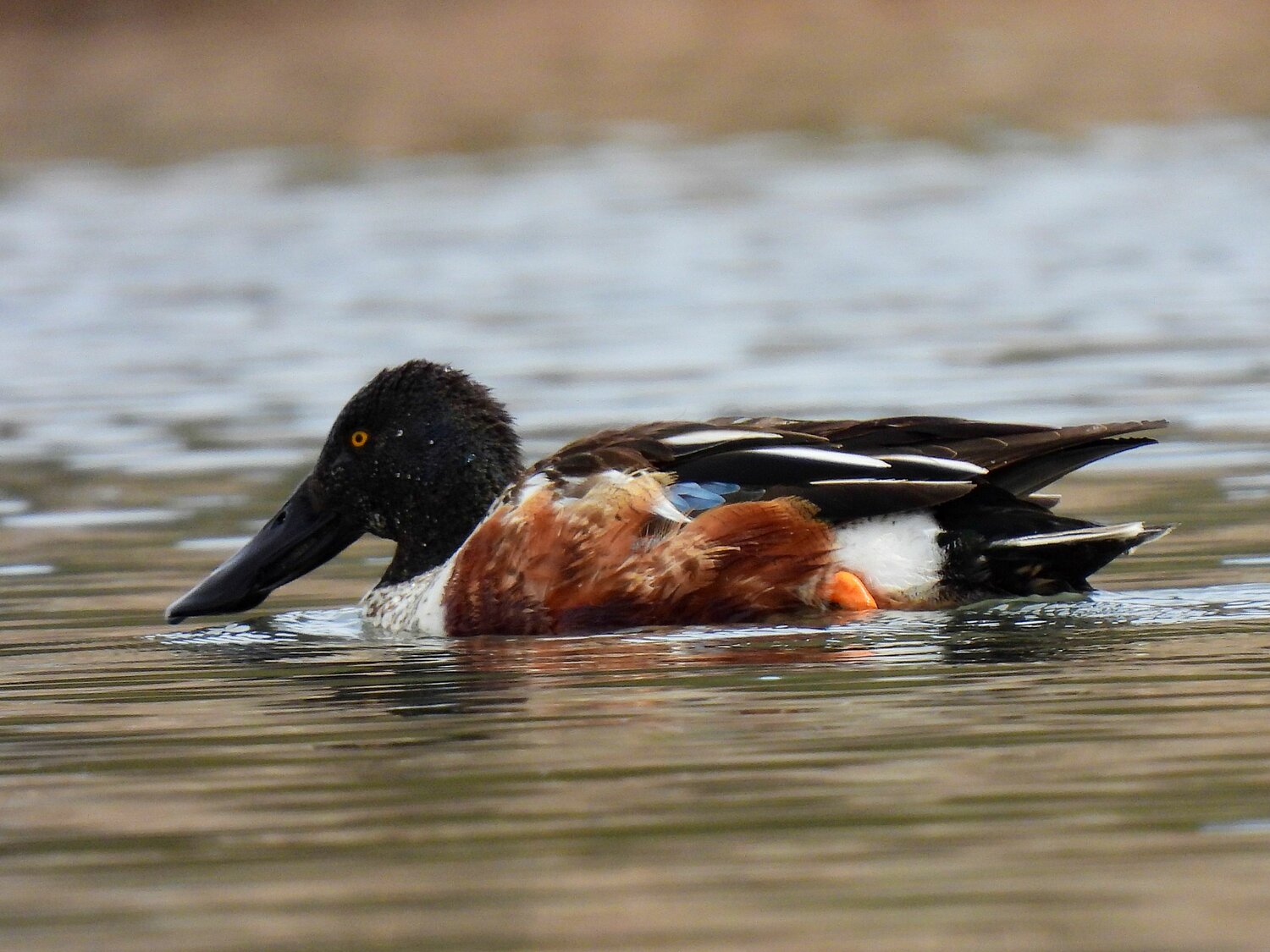
Looking at this bird across the water, it often will be the bold white of the male shoveler’s chest and lower sides that first catches your eye. His head is green, eyes are yellow and a rusty brown side patch separates the white areas. Females, nonbreeding males and immatures have mottled brown coloration similar to that of female mallards.
Even at a distance the very long and wide bill that gives these ducks their name can be distinguished. The male’s bill is black and the female’s is orange, but in both the bill is twice as wide at the tip as at the base, giving it a spoon shape. Its genus name, Spatula; its common name, shoveler; and its nickname, spoony, are all a reference to this prominent bill design.
Northern shovelers are filter feeders that suck water into the front of the bill and squirt it out the sides. Comblike projections on the edges of the bill filter out of the water the tiny crustaceans, seeds and aquatic invertebrates that these ducks eat. They often swim with their bills down in the water while swinging them from side to side. Groups can be seen swimming together in circles to create whirlpools that bring food to the surface.
In winter, these ducks occupy a variety of wetland habitats with open water, and some will winter here. They are also found in the southern regions of the United States, through Central America and into northern South America. Pair formation may begin as soon as December with male courtship displays that include turns, dips, wing flaps and head pumping. Bonds between partners are mostly monogamous and they stay together through the breeding season.
In the Western Hemisphere, the core of the northern shoveler’s breeding range is found in the prairie pothole wetlands filled in spring by snowmelt and rain. This area in Canada and the upper Midwest formed from depressions created by glacial movements. These wetlands are considered one of the most important regions in the world for migratory and breeding waterfowl.
For information on events, visit www.weminucheaudubon.org and www.facebook.com/weminucheaudubon/.


 >
>