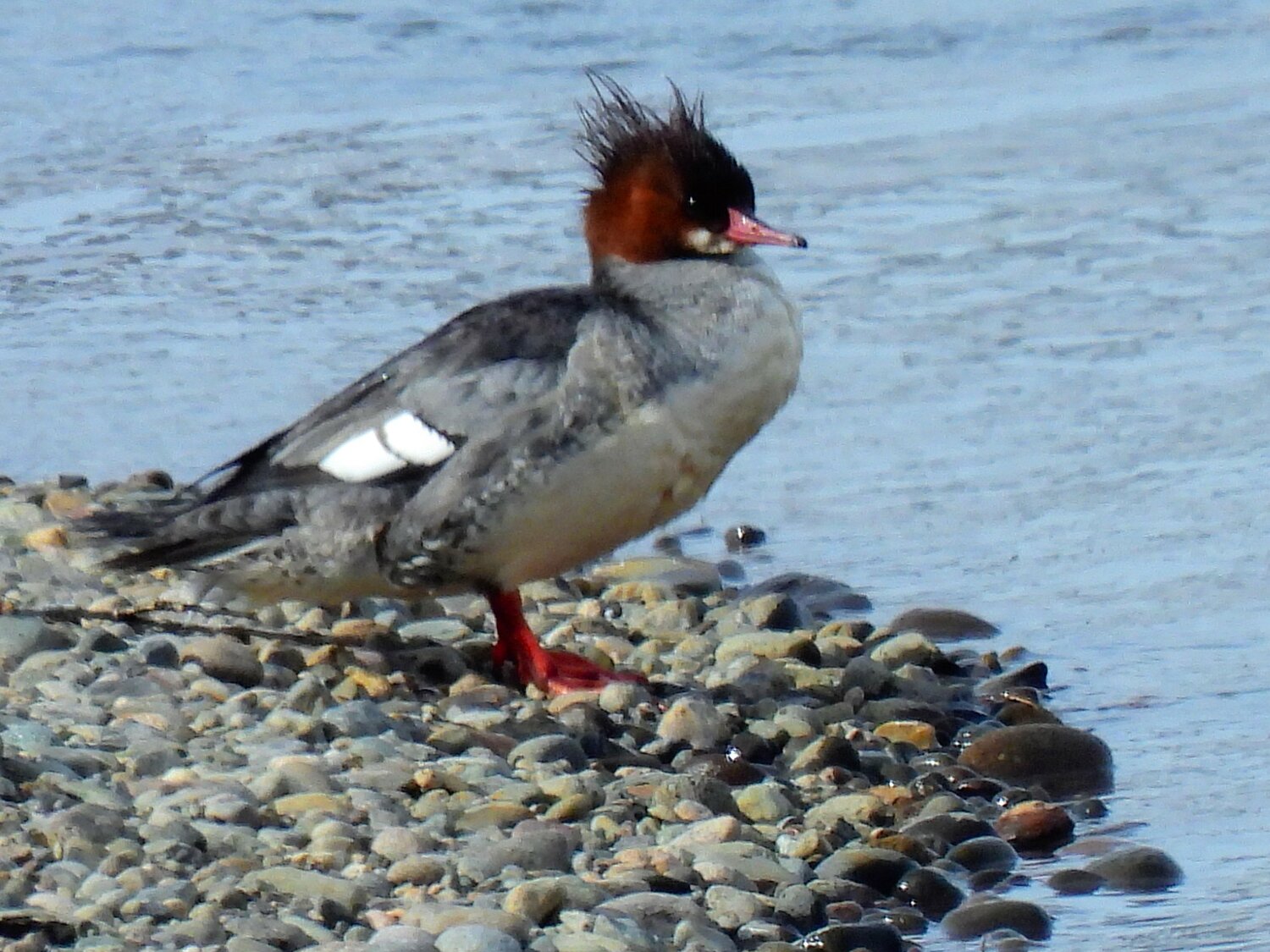
This week’s Bird of the Week, compliments of the Weminuche Audubon Society and Audubon Rockies, is the common merganser.
Often referred to as the “fish duck” in old texts and references, the common merganser is certainly the most ubiquitous fish-feeding diving duck in our region. Found on rivers and large lakes, these birds possess toothlike serrations on their bills designed for holding on to slippery, writhing fish, which have also earned them the name “sawbills.”
As for identifying these pescatarians, females and immature males have a notable punk rock crest of disheveled, rusty-red head feathers, white chin, orange bill and a largely gray body. In mature plumage, males have an iridescent dark green head and back, a brilliant red bill and a largely white body. At the end of breeding season (late summer), the males become temporarily flightless, resembling female birds while they molt and replace feathers before resolving into their breeding plumage by late fall. All birds have a distinctive white wing patch and very straight bill, notably pointing them forward in flight.
Females lay approximately six to 12 eggs, one brood per year. Amazingly, the young nestlings waste no time venturing from the nest to seek food sources, leaving as quickly as two days from hatching. Much like wood ducks and goldeneyes, mergansers seek out natural cavities in dead trees or hollow logs, oftentimes excavated by woodpeckers initially. With the right habitat characteristics and proximity to water, they will utilize an artificially constructed nest box.
In 2018, a video of one female common merganser caring for 76 young, known as a “crèche,” went viral. Known as both a cooperative breeder, females will often take in the young of other breeders. They’ve also been documented utilizing brood parasitism, meaning that they may drop their eggs in the nest of other species (goldeneye sp. or other merganser sp.), possibly to ensure better nesting success. A little-known fact, common mergansers have historically been monitored as an aquatic environmental health indicator, as their diet and condition can echo issues ranging from acidification to the presence of toxic metals or pesticides. Fortunately, their population appears to be semi-stable currently.
On Nov. 19th, the Weminuche Audubon Society chapter will gather to review bird identification for this year’s Christmas Bird Count. The session will focus predominantly on waterfowl species. If you’re interested in shoring up your duck ID or contributing to the count, join in. For information on events, visit www.weminucheaudubon.org and www.facebook.com/weminucheaudubon/.
Photo courtesy Charles Martinez


 >
>