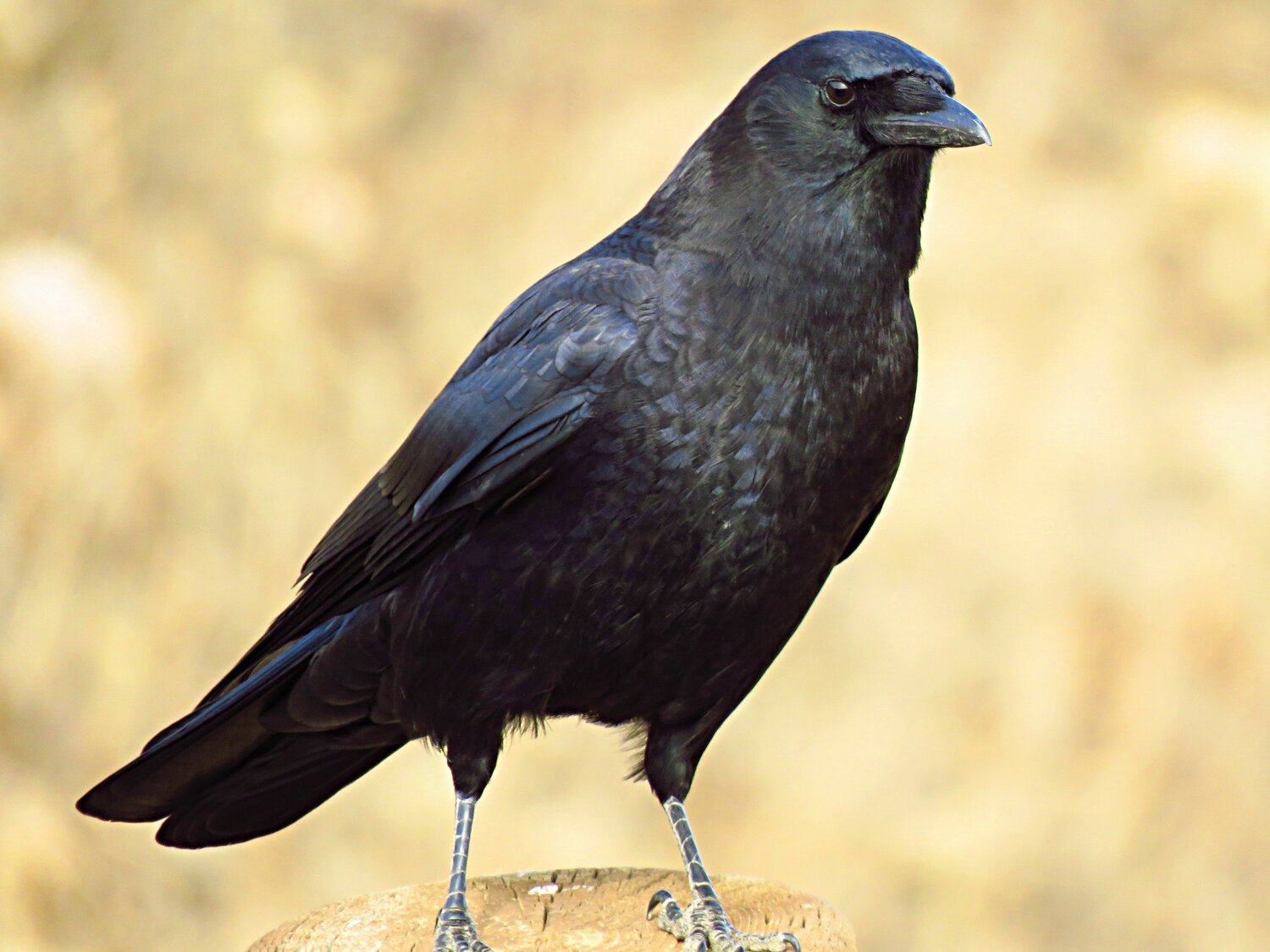
This week’s Bird of the Week, compliments of the Weminuche Audubon Society and Audubon Rockies, is the American crow.
In most of the United States, from open woods to the middle of town, this is a familiar bird. Their requirements are few: some trees for perching and a reliable food source. About the only places you won’t find them are desert areas. They eat almost anything: earthworms, insects, aquatic animals, seeds, fruit, pet food, garbage, carrion and the nestlings of other birds.
Scientific studies have shown American crows to be highly intelligent birds with excellent long-term memories. Their ability to recognize and remember human faces has been experimentally documented. Even more impressive is their capacity to categorize faces as threatening, neutral or caring based on their interactions, and react to people accordingly. In other words, the crow in your yard may have an opinion of you.
Crows are highly social birds that learn from each other and share information and skills across generations. They are more often seen in groups than they are alone. Year-round related crows share a family territory that may number up to 15 individuals and contain young from up to five different years. Crows do not breed until they are between 2 and 4 years old, and for the first few years of life help their parents raise new siblings.
In winter, American crows sleep in communal roosts that can number from a few hundred to up to 2 million birds. Large numbers can often be seen feeding together on the ground. Young birds take a relatively long time to grow up and learn survival skills and build bonds within these large flocks.
A common identification question asked about these related large, black birds is “crow or raven?” Behavioral clues include the observation that crows are often seen in groups and ravens singly or in pairs. Crows fly with methodical flapping and ravens often soar. Also noticeable in flight is the crow’s even-edged tail and the raven’s wedge-shaped one. The calls of crows are higher pitched than the deep croaks of ravens.
The success of the adaptable American crow usually gains it the No. 1 spot in our annual Christmas Bird Count. We hope that you will participate in this fun tradition in mid-December.
For information on events, visit www.weminucheaudubon.org and www.facebook.com/weminucheaudubon/.


 >
>