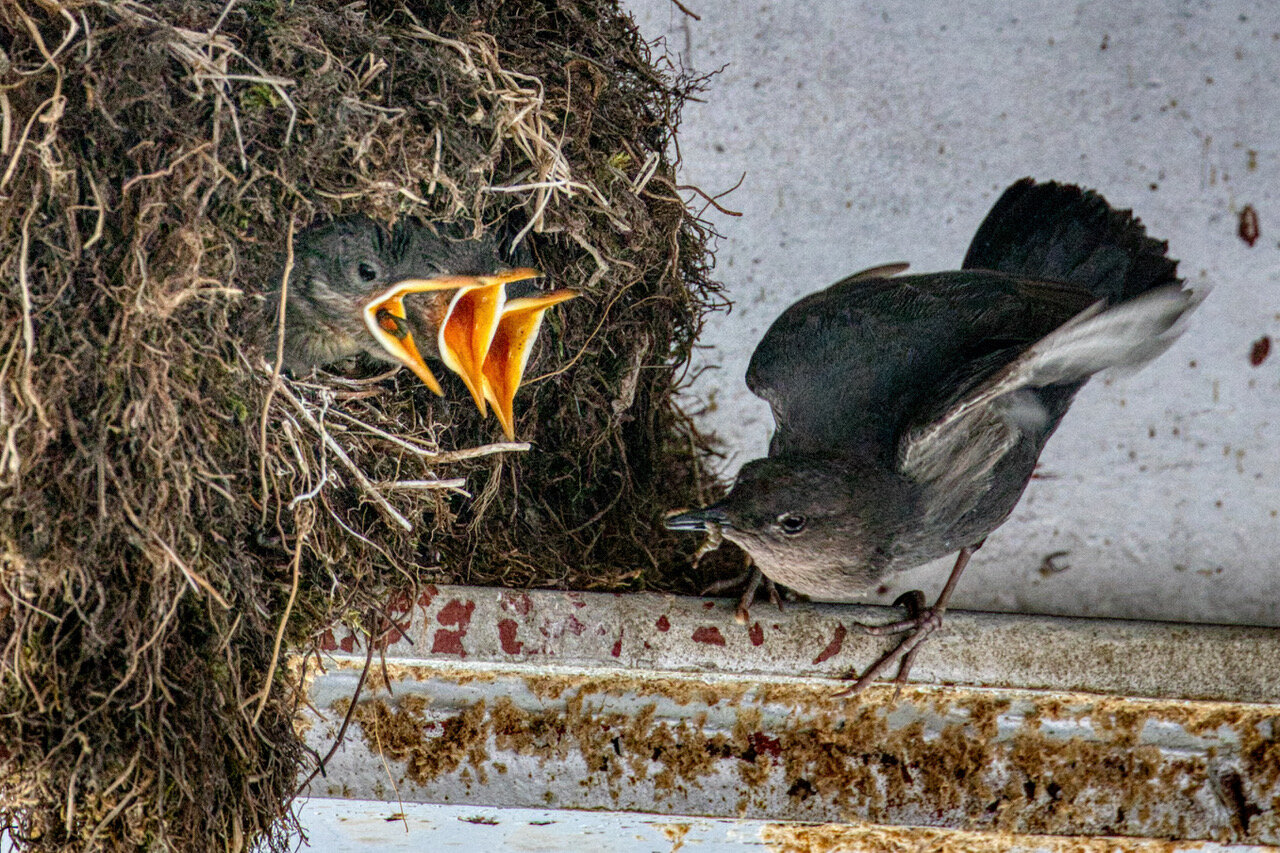
The Weminuche Audubon Society and the American Dipper Project in Durango have announced an ambitious new research project aimed at better understanding the influences on breeding success of the American dipper, a charismatic mountain songbird known for its habit of diving into icy streams in search of food.
Set to launch this spring, the study will examine how mountain stream macroinvertebrates — a primary food source for dippers — along with air temperature, water temperature and water turbidity affect nesting outcomes in southwest Colorado.
Researchers hope the findings will shed light on how changing environmental conditions may be affecting local dipper populations in the Animas and upper San Juan River watersheds.
Macroinvertebrates and American dippers are excellent indicators of stream health. By looking closely at the relationships between aquatic insect life, stream conditions and breeding success, we can gain valuable insight into the overall health of our mountain ecosystems.
Pagosa Springs volunteers are being recruited to assist with fieldwork, including monitoring several known nest sites throughout the Pagosa Springs region. Participants will help collect data on stream conditions and observe nesting activity during the breeding season.
Those interested are invited to attend an informational meeting at 1 p.m. on March 28 at the Community United Methodist Church, where teams will be formed and project details outlined.
A riverside workshop is also planned in April to learn how to collect and analyze macroinvertebrates.
This project will also be discussed at the monthly Weminuche Audubon Society meeting at 6 p.m. on April 15.
Organizers say no prior scientific or birding experience is required — just a willingness to observe carefully and contribute to community based conservation research. Binoculars are a beneficial tool to have available.
Come join us if you can.


 >
>